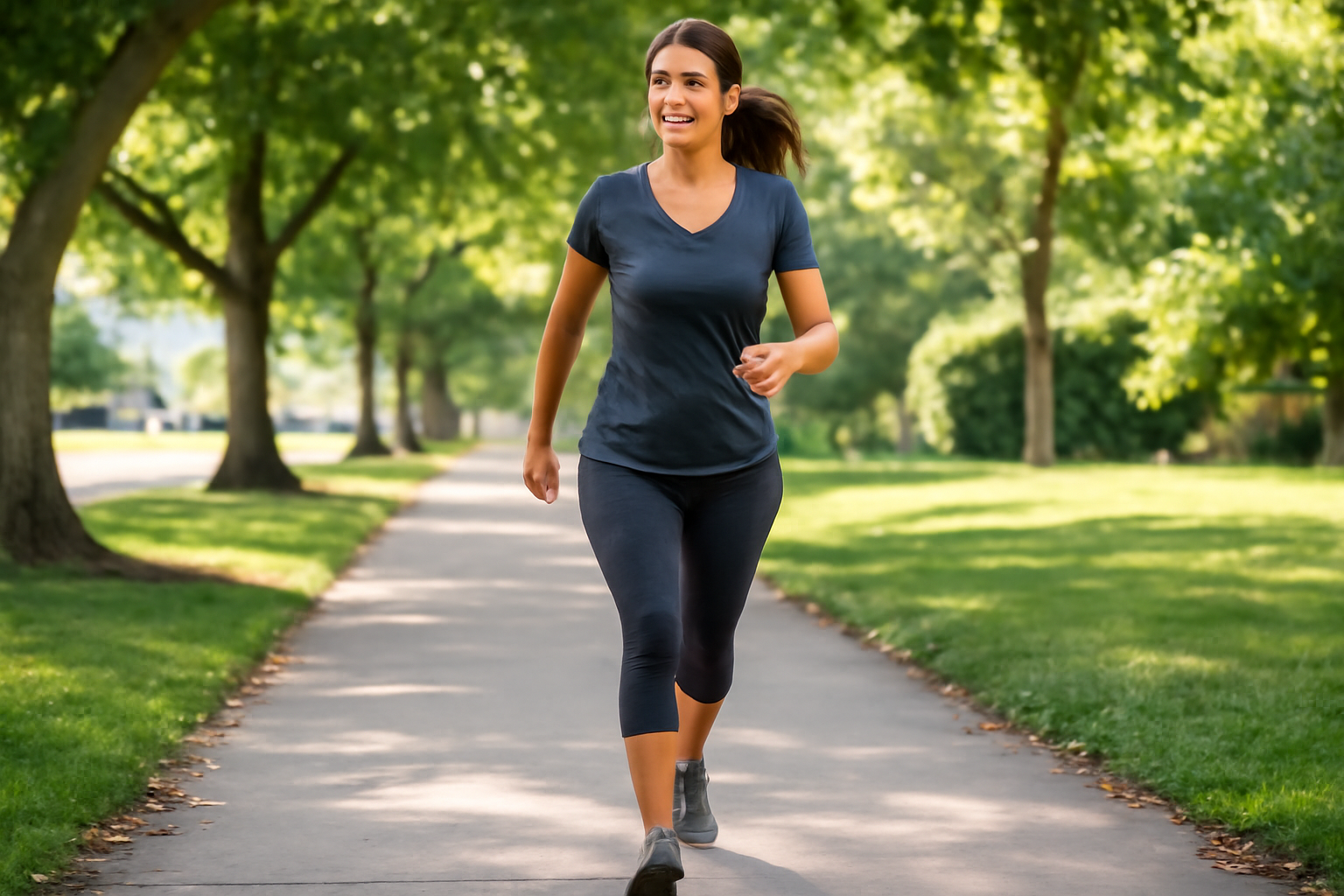
Walking for Weight Loss: The Complete Science-Backed Guide
You don’t need a gym membership, a personal trainer, or a complicated plan — sometimes the most effective fitness tool is the one you’ve been doing since you were a toddler.
Here’s a number worth sitting with: nearly 60% of American adults say they want to exercise more but feel overwhelmed by where to start. Between high-intensity trends, expensive equipment, and social media fitness culture, it’s easy to think that unless you’re dripping sweat in a spin class, you’re not doing enough.
But what if the most sustainable fat-loss strategy you could adopt was a 30-minute walk after dinner?
Walking for weight loss isn’t a consolation prize for people who can’t run. It’s a clinically supported, low-impact movement strategy that fits into real life — without wrecking your joints, tanking your energy, or requiring a two-hour recovery window. In this guide, you’ll learn exactly how walking supports weight management, what the research actually says, how to structure your walks for better results, and the common mistakes that keep people stuck spinning their wheels.
Whether you’re just getting off the couch or looking to add a smart recovery tool to an existing fitness routine, this guide gives you a clear, honest path forward.
Why Walking for Weight Loss Matters More Than You Think
Walking gets dismissed constantly. It’s "too easy." It’s what your grandparents do. It won’t "count" unless you’re huffing and puffing. But that thinking has cost millions of people years of consistent, effective movement.
The reality is that walking is one of the most accessible and adherence-friendly forms of exercise available — and adherence is everything when it comes to weight management. You can’t out-intensity a habit you can’t sustain.
According to the American College of Sports Medicine (ACSM), moderate-intensity aerobic activity — which includes brisk walking — is a foundational component of both weight loss and long-term weight maintenance. Their guidelines recommend 150 to 300 minutes of moderate-intensity exercise per week for general health, with higher volumes recommended for significant weight loss outcomes.
A landmark study published in the Journal of the American Medical Association (JAMA) followed over 10,000 participants and found that those who walked more steps daily had meaningfully lower body mass indexes and waist circumferences, independent of other activity. Even without dietary changes, increased walking was associated with reduced visceral fat — the metabolically active fat stored around your organs that carries the greatest health risk.
The key insight here: walking lowers the barrier to consistent movement. And consistent movement, compounded over weeks and months, produces real change.
The Science Behind Walking and Fat Burning
Let’s talk about how this actually works — because there’s a common misconception that walking "doesn’t burn enough calories" to matter. That thinking is both mathematically and physiologically incomplete.
Walking at a brisk pace (roughly 3 to 3.5 miles per hour) burns approximately 250 to 400 calories per hour depending on your body weight, terrain, and pace. A 180-pound person walking 45 minutes a day, five days a week, burns roughly 1,500 additional calories over seven days — without a single burpee.
More importantly, walking taps into fat oxidation more efficiently than people realize. At moderate intensities, your body preferentially burns fat as its primary fuel source. High-intensity exercise burns more total calories, but a larger percentage of that fuel comes from glycogen (stored carbohydrates). This doesn’t mean high-intensity exercise is worse — but it does mean that brisk walking is genuinely effective at mobilizing fat stores.
A study published in the British Journal of Sports Medicine found that participants who engaged in daily walking programs for 12 weeks showed significant reductions in body fat percentage and waist circumference, even without major dietary intervention.
One myth worth busting directly: the idea that you must exercise in your "fat-burning zone" for a specific duration before your body starts using fat. Fat oxidation begins almost immediately during low-to-moderate exercise — the so-called fat-burning zone isn’t a switch that flips at minute 20.
Walking also has a meaningful effect on what researchers call NEAT — Non-Exercise Activity Thermogenesis. NEAT refers to all the calories you burn through movement that isn’t formal exercise. People who walk more throughout the day tend to move more in general, which creates a compounding calorie-burn effect that goes well beyond the walk itself.
How to Get Started: A Practical Walking Plan
One of the best things about walking is that the entry point is wherever you are right now. Here’s how to build a structured approach based on your current fitness level:
Beginner (Weeks 1–2):
- Goal: 20–30 minutes of continuous walking, 4 days per week
- Pace: Comfortable — you should be able to hold a conversation
- Focus: Building the habit, not burning maximum calories
- Tip: Choose the same time each day to anchor the habit
Intermediate (Weeks 3–6):
- Goal: 35–45 minutes per session, 5 days per week
- Pace: Brisk — slightly breathless but still conversational
- Add: Inclines, hills, or intentional speed intervals (2 minutes faster, 3 minutes normal)
- Target: 8,000–10,000 steps daily
Advanced (Weeks 7+):
- Goal: 45–60 minutes per session with varied terrain
- Add: Weighted vest (5–10% of body weight), hiking trails, or walking lunges on flat stretches
- Combine with: Resistance training 2–3 days per week for body recomposition benefits
- Track: Pace, heart rate, and weekly step count for progressive overload
If you’re already doing strength training, check out our Strength Training for Beginners: The Complete Starter Guide for guidance on pairing these two modalities effectively.
Common Mistakes That Sabotage Walking Results
Walking is simple — but that doesn’t mean it’s mistake-proof. These are the most common errors that keep people from seeing progress, and they’re genuinely easy to fall into.
Mistake 1: Walking at the Same Pace Every Single Day
Your body is remarkably good at adapting. If you walk the same route at the same pace indefinitely, your calorie burn actually decreases over time as your efficiency improves. Fix this by adding intentional variation — walk faster for 2-minute intervals, add hills, or explore new terrain. This is the walking equivalent of progressive overload.
Mistake 2: Treating Walking as a License to Eat More
Research from the University of Illinois found that people consistently overestimate the calories burned during exercise — sometimes by 50% or more — and compensate by eating more afterward. A 30-minute walk doesn’t justify a 500-calorie reward snack. Walk because it’s good for you; manage nutrition separately.
Mistake 3: Ignoring Posture and Form
Slouching, looking down at your phone, and shuffling your feet all reduce the effectiveness of your walk and increase joint strain over time. Keep your gaze forward, shoulders back and relaxed, core lightly engaged, and arms swinging naturally. This isn’t vanity — it activates more muscle groups and improves calorie burn.
Mistake 4: Going All-In Too Fast
One of the most common reasons people quit walking programs is overuse discomfort in the feet, shins, or knees from ramping up too quickly. Increase your daily step count by no more than 10% per week. Your connective tissue takes longer to adapt than your cardiovascular system does.
Mistake 5: Only Counting Steps From Your Walk
NEAT matters enormously. Standing up every hour, taking the stairs, parking further away — these micro-movements add up to hundreds of additional calories daily. Don’t treat walking as a box to check and then sit for 10 hours. The total movement picture matters.
What to Eat to Support a Walking-Based Weight Loss Plan
Walking alone — without any attention to nutrition — will produce modest results for most people. The combination of consistent walking and thoughtful eating is where real, sustainable change happens.
According to the Academy of Nutrition and Dietetics, sustainable weight loss is best supported by a modest calorie deficit (typically 300–500 calories per day), adequate protein intake, and a diet rich in whole foods. Here’s what that looks like practically:
Prioritize Protein: Aim for 0.7 to 1.0 grams of protein per pound of body weight daily. Protein preserves lean muscle mass during weight loss and keeps you fuller longer. Good sources include chicken breast, Greek yogurt, eggs, cottage cheese, legumes, and fish. A 150-pound person should aim for roughly 105–150 grams daily.
Focus on Fiber: The USDA Dietary Guidelines recommend 25–38 grams of fiber per day. Fiber slows digestion, supports gut health, and reduces overall calorie intake naturally. Vegetables, fruits, oats, beans, and whole grains are your best allies here.
Don’t Fear Carbohydrates: Walking is a moderate-intensity activity, and your body needs carbohydrates for sustained energy. Focus on complex carbohydrates — sweet potatoes, brown rice, quinoa, and whole-grain bread — rather than eliminating them entirely.
Hydrate Deliberately: Even mild dehydration reduces your energy levels and your walking performance. According to the Mayo Clinic, most adults need at least 8–10 cups of water daily, with more needed during warmer weather or longer walks. A good rule: drink 16 ounces of water 30 minutes before your walk.
Watch Liquid Calories: Coffee drinks, juices, and sports drinks can quietly add 200–400 calories per day. These are easy to overlook and easy to eliminate without feeling deprived. Stick to water, black coffee, unsweetened tea, or sparkling water during and after your walks.
For those interested in combining walking with a cardio-based approach, our guide on HIIT vs Steady-State Cardio: Which One Is Right for You? provides a detailed comparison to help you build a well-rounded plan.
How Long Until You See Results — and What to Track
This is the question everyone wants answered honestly, so here it is: walking for weight loss is not a fast-results strategy. That’s also what makes it sustainable.
Most people who walk consistently 5 days per week at a brisk pace, with no major dietary changes, can expect to see noticeable body composition changes in 6 to 10 weeks. With modest dietary adjustments, meaningful results are often visible within 4 to 6 weeks.
Harvard Health Publishing notes that losing 0.5 to 1.5 pounds per week is a clinically reasonable and sustainable rate of weight loss — and a well-structured walking program can contribute meaningfully to that range when paired with appropriate nutrition.
Here’s what to track to stay motivated and course-correct when needed:
- Daily step count: Use a fitness tracker or smartphone app. Target 7,000–10,000 steps daily as a general benchmark, though individual goals vary.
- Waist circumference: Measure weekly at the navel. This is often a more useful early indicator of fat loss than the scale.
- Energy and mood: Many people notice improved sleep quality and reduced afternoon energy crashes within the first two weeks of consistent walking.
- Resting heart rate: As your cardiovascular fitness improves, your resting heart rate typically decreases. Track this monthly.
- Body weight: Weigh yourself at the same time of day, once per week — not daily. Weight fluctuates by 2–5 pounds daily due to water, food volume, and hormones.
If after 8 weeks of consistent walking (4–5 days per week, 30–45 minutes per session) and moderate dietary attention you’re seeing zero change, that’s a good signal to consult a registered dietitian or a certified fitness professional. There may be underlying metabolic factors worth evaluating.
Frequently Asked Questions
Is walking enough exercise for weight loss, or do I also need to lift weights?
Walking alone can support meaningful weight loss when combined with appropriate nutrition. That said, adding 2–3 days of strength training per week significantly improves body composition results by preserving muscle mass and increasing your resting metabolic rate. The two approaches complement each other well — walking is cardio, lifting is structural.
How many steps a day do I actually need to lose weight?
There’s no universal magic number, but research suggests that stepping up from a sedentary baseline to 7,000–10,000 steps per day is associated with meaningful health and weight management benefits. More important than hitting a specific number is increasing your current baseline consistently over time.
Does walking on a treadmill work the same as walking outside?
Both are effective. Outdoor walking tends to engage more stabilizing muscles due to uneven terrain, and research from the University of Exeter suggests natural environments may improve mood and motivation. Treadmill walking is excellent for consistency when weather or safety is a concern. Set a slight incline (1–2%) on the treadmill to more closely mimic outdoor walking mechanics.
Can I split my walk into shorter sessions throughout the day?
Yes — and this is well-supported by the research. The ACSM recognizes that accumulated bouts of moderate-intensity activity (as short as 10 minutes) count toward daily exercise goals. Three 15-minute walks provide comparable cardiovascular benefit to one 45-minute walk for most people.
Is walking after meals especially effective for weight loss?
Post-meal walking has specific benefits beyond calorie burning. Research published in Sports Medicine found that a 10–15 minute walk after meals improves blood sugar regulation significantly — which reduces energy crashes, lowers fat storage signals, and supports appetite management. If you can only walk once per day, after your largest meal is an excellent time to do it.
Your Next Step Starts Today
Walking for weight loss isn’t glamorous, and it won’t go viral on social media. But it works — consistently, sustainably, and without requiring a complete overhaul of your life.
The science is clear: regular brisk walking supports fat loss, improves cardiovascular health, regulates blood sugar, reduces stress hormones, and builds the kind of daily movement habit that compounds into real, lasting change over months and years.
Start where you are. If that means a 20-minute walk around the block tonight, that’s a legitimate, meaningful first step. Add five minutes next week. Pick up the pace the week after. The goal isn’t perfection — it’s progress you can sustain.
Your sneakers are probably by the door. That’s all the equipment you need.
This article is for informational and educational purposes only. The content is not intended to replace professional medical, nutritional, or fitness advice. Always consult a qualified healthcare provider, registered dietitian, or certified fitness professional before starting a new health program or making significant changes to your lifestyle.
Content reviewed by our wellness editorial team, with references to peer-reviewed research and guidelines from leading health organizations.
Leave a Reply