Tag: low-impact exercise

  • Rowing Machine Workouts: The Complete Guide for Adults

    Rowing Machine Workouts: The Complete Guide for Adults

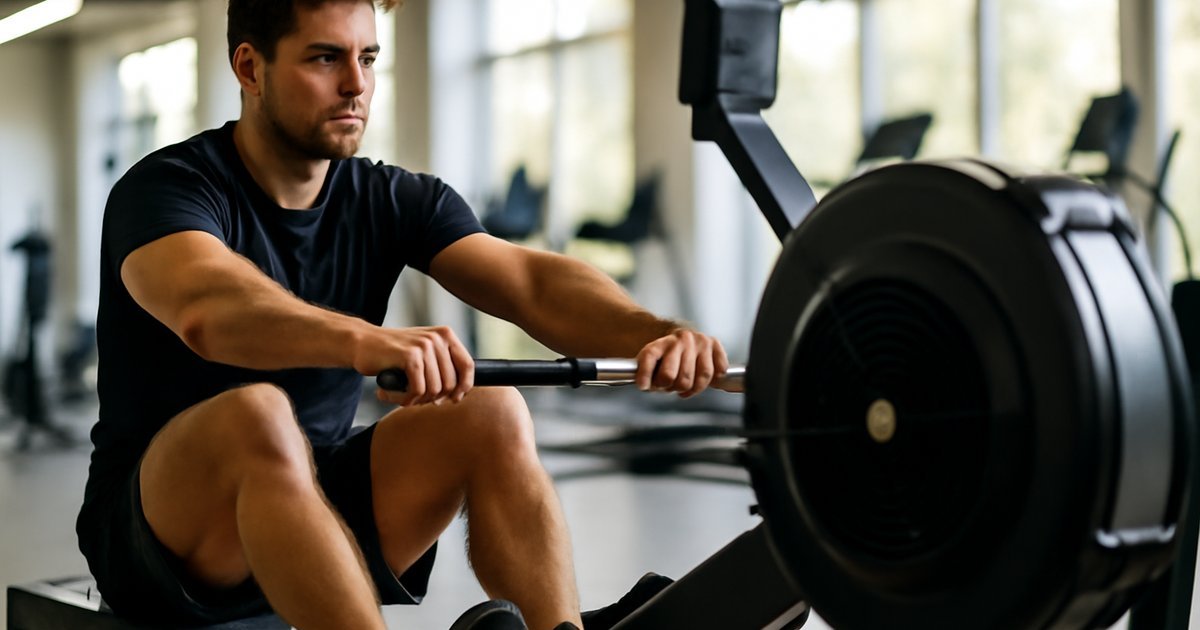
    It sits in the corner of most gyms, largely ignored — but the rowing machine might be the most complete piece of cardio equipment you’re not using.

    Think about the last time you saw a long line for the rowing machine at your gym. Chances are, you can’t. Most people walk right past it on their way to the treadmill or elliptical — and that’s a missed opportunity of serious proportions.

    The rowing machine, also known as an ergometer or "erg," delivers a full-body workout that simultaneously trains cardiovascular endurance, muscular strength, and coordination. Unlike most cardio machines that focus primarily on the lower body, rowing engages approximately 86% of your major muscle groups in every single stroke.

    Whether you’re looking to burn more calories in less time, build functional strength, protect your joints, or simply break out of a fitness plateau, rowing machine workouts offer a surprisingly accessible and deeply effective solution. And the good news? You don’t need to be an athlete to get started.

    This guide will walk you through the science behind rowing, how to nail proper technique, the best workout formats for every fitness level, and what to realistically expect from consistent training. Let’s get on the water — or at least, the erg.

    Why Rowing Machine Workouts Matter More Than You Think

    Here’s a statistic worth sitting with: according to the American College of Sports Medicine (ACSM), adults need at least 150 minutes of moderate-intensity aerobic activity per week — yet more than half of US adults fail to meet even basic physical activity guidelines. Part of the problem isn’t motivation. It’s boredom, joint pain, and inefficient use of limited workout time.

    Rowing addresses all three of those obstacles head-on.

    First, it’s a low-impact exercise, meaning it places significantly less stress on your knees, hips, and ankles compared to running or jumping. This makes it an excellent option for adults dealing with mild joint sensitivity or those returning from lower-body injuries — though always consult your physician before starting any new exercise program if you have existing conditions.

    Second, rowing is a genuine full-body workout. Research published in the Journal of Strength and Conditioning Research confirmed that a single rowing session activates muscles across the legs, core, back, shoulders, and arms — making it one of the few cardio formats that also delivers meaningful muscular endurance benefits.

    Third, rowing burns a substantial number of calories in a compact time window. Harvard Health Publishing estimates that a 155-pound person burns approximately 260 calories in just 30 minutes of vigorous rowing — comparable to running at a 6-minute-mile pace, without the joint impact.

    In a world where most people are time-crunched, that efficiency matters enormously.

    The Science Behind How Rowing Works

    Let’s clear up one of the most persistent myths about rowing: it is not primarily a back or arms exercise. Most beginners muscle through strokes using only their upper body, leading to fatigue, poor form, and occasionally lower back discomfort. In reality, roughly 60% of the rowing stroke’s power should come from your legs, 20% from your core, and only 20% from your arms and shoulders.

    The proper rowing stroke follows a precise sequence called the drive and the recovery.

    During the drive: you push with your legs first, then hinge your torso slightly back, then pull the handle to your lower ribs. During the recovery: you extend your arms first, lean forward, then bend your knees and slide back to the starting position. This sequencing protects your spine and maximizes power output from your largest muscle groups.

    From a physiological standpoint, rowing is a dual-system exercise. At lower intensities, it trains your aerobic energy system — building cardiovascular endurance and improving mitochondrial efficiency over time. At higher intensities (think short sprint intervals), it recruits your anaerobic system, which supports power output and metabolic conditioning.

    A 2020 study published in PLOS ONE found that 12 weeks of rowing training significantly improved VO2 max — a gold-standard measure of cardiovascular fitness — in previously sedentary adults. VO2 max improvements are strongly associated with reduced risk of heart disease, metabolic syndrome, and all-cause mortality, according to the American Heart Association.

    The takeaway: rowing isn’t just cardio. It’s a comprehensive conditioning tool backed by solid science.

    How to Get Started: Beginner to Advanced

    Rowing rewards patience with technique. Rushing into high-intensity sessions before mastering the stroke is the fastest way to plateau — or get hurt. Here’s how to build your rowing practice intelligently.

    Beginner Level (Weeks 1–3)

    1. Master the stroke sequence first. Before adding any intensity, spend 5–10 minutes per session practicing the drive-and-recovery pattern at a slow, controlled pace. Set the resistance damper to 3–5 (on a Concept2 machine) — higher doesn’t always mean harder; it changes the feel of the stroke, not the actual intensity.
    2. Start with 15–20 minutes at a conversational pace. You should be able to talk in short sentences. Aim for a stroke rate (measured in strokes per minute, or SPM) of 18–22 SPM — slow and powerful beats fast and sloppy.
    3. Row 3 days per week with rest days between sessions. Your muscles need recovery time, especially in the early weeks when your body is adapting to a new movement pattern.
    4. Focus on the "legs-back-arms, arms-back-legs" mantra to reinforce correct sequencing.

    Intermediate Level (Weeks 4–8)

    • Introduce interval training: alternate 2 minutes at moderate effort with 1 minute at high effort, for 5–6 rounds.
    • Extend steady-state sessions to 25–35 minutes.
    • Begin tracking your split time (time per 500 meters) as a performance benchmark.
    • Aim for 4 sessions per week, mixing steady-state and interval formats.

    Advanced Level (Week 9+)

    • Incorporate structured workouts like 4 x 1000-meter repeats with 2-minute rest between sets.
    • Explore "pyramid" intervals: 250m, 500m, 750m, 1000m, 750m, 500m, 250m with equal rest between pieces.
    • Monitor heart rate zones and aim to spend meaningful time in Zone 3–4 during interval work (roughly 70–85% of your max heart rate).
    • Consider pairing rowing with complementary strength training for a well-rounded program.

    If you enjoy training with your own body weight, rowing pairs exceptionally well with calisthenics for adults — combining upper-body pulling movements with full-body cardio conditioning.

    Common Mistakes That Sabotage Rowing Results

    These errors are easy to make — and most people commit at least two of them in the first month of rowing. Knowing them in advance saves you time and frustration.

    1. Pulling with your arms too early
    This is the #1 form mistake in rowing. When you initiate the drive by bending your elbows before fully extending your legs, you rob yourself of your most powerful muscle group (your legs) and overload your biceps and upper back. Fix: drill the sequence — push, lean, pull — until it becomes automatic.

    2. Setting the resistance damper too high
    Many beginners crank the resistance to 10, assuming more resistance equals a better workout. In reality, elite rowers often train on settings of 4–6. High damper settings slow your stroke, reduce cardiovascular stimulus, and increase fatigue in a way that doesn’t translate to better fitness gains. Fix: keep the damper between 3–6 and focus on power per stroke and cadence.

    3. Rowing at maximum effort every session
    More isn’t always better. Training at 100% every session leads to cumulative fatigue, diminished performance, and higher injury risk. The Mayo Clinic and exercise physiology consensus recommend incorporating easy aerobic sessions — sometimes called "recovery rows" — into your weekly plan. Fix: roughly 80% of your sessions should feel moderate, with only 20% feeling genuinely hard.

    4. Ignoring posture on the recovery phase
    Many rowers collapse forward or round their lower back as they slide toward the front of the machine. Over time, this stresses lumbar structures. Fix: initiate the recovery by extending your arms fully first, then hinge at the hips with a tall, neutral spine before bending your knees.

    5. Skipping the warm-up
    Jumping straight into vigorous rowing with cold muscles increases injury risk and delivers a poorer workout overall. Fix: spend 3–5 minutes rowing at very easy effort before increasing intensity. This primes your cardiovascular system and lubricates the hip and knee joints that rowing heavily engages.

    Nutrition to Support Your Rowing Training

    Rowing is a calorie-demanding activity, which means your nutrition strategy matters — especially if you’re training multiple days per week.

    Before your row: Aim for a light, carbohydrate-focused snack 30–60 minutes before a workout if training at moderate-to-high intensity. The Academy of Nutrition and Dietetics recommends easily digestible options like a banana, a rice cake with nut butter, or a small bowl of oatmeal. Avoid heavy, high-fat meals within 90 minutes of rowing.

    After your row: Muscle recovery depends on the post-workout protein-and-carbohydrate window. Research published in the Journal of the International Society of Sports Nutrition supports consuming 20–40 grams of high-quality protein within 2 hours of training to optimize muscle repair. A Greek yogurt parfait, eggs with whole-grain toast, or a protein shake with fruit are practical options.

    Hydration: Rowing generates significant sweat, particularly in warm environments. The USDA Dietary Guidelines and ACSM recommend drinking approximately 16–20 oz of water in the hour before exercise and continuing to hydrate during and after your session. Electrolyte intake (from whole foods or low-sugar sports drinks) becomes important during sessions lasting longer than 60 minutes.

    If you’re pairing rowing with a specific nutrition strategy — such as an anti-inflammatory eating approach — those dietary foundations generally complement endurance-based training well. Results, of course, depend on your individual baseline, training intensity, and overall caloric balance.

    How Long Until You See Results — and What to Track

    Expectations matter. Rowing is effective, but it’s not magic — and the timeline for noticeable changes depends on your starting fitness level, training consistency, and goals.

    Weeks 1–2: You’ll likely feel cardiovascular fatigue quickly and notice muscle soreness in your legs, lats, and core. Your form will improve rapidly in the first 10 sessions if you focus on technique. These weeks are about building the neural patterns that make rowing efficient.

    Weeks 3–6: Most people notice improved breathing efficiency, reduced post-workout soreness, and measurable gains in endurance. Your split time (time per 500 meters) will likely improve as your stroke becomes more coordinated and powerful.

    Weeks 6–12: Research, including the PLOS ONE study mentioned earlier, shows meaningful VO2 max improvements within this window for previously sedentary individuals. You may also notice improved posture, more defined muscles in your back and arms, and better energy throughout the day.

    What to track:

    • Split time (500-meter pace) — your primary performance indicator
    • Stroke rate (SPM) — lower and more powerful is generally better
    • Total meters rowed per session and per week
    • Resting heart rate — a declining resting HR over weeks signals improved cardiovascular fitness
    • Perceived effort — the same effort should feel easier over time if you’re adapting

    If after 8–10 weeks of consistent rowing you’re not noticing any performance improvement or the workouts aren’t feeling progressively more manageable, consider consulting a certified fitness professional. They can assess your technique and programming. For related training methods that complement rowing’s full-body demands, explore resistance band training to build supporting muscular strength on your rest days.

    Frequently Asked Questions About Rowing Machine Workouts

    Is rowing good for weight loss?
    Rowing can absolutely support a weight management strategy. It burns a substantial number of calories, builds lean muscle (which supports metabolic rate), and provides both cardiovascular and resistance training stimulus in a single session. However, sustainable fat loss depends on the interaction between your overall caloric intake and expenditure — rowing alone won’t override a poor diet. According to Harvard Health Publishing, a 185-pound person burns roughly 294 calories in 30 minutes of vigorous rowing.

    Is rowing safe if I have lower back pain?
    This depends significantly on the cause and severity of your back pain. Rowing with poor technique — specifically, rounding the lumbar spine or initiating the drive incorrectly — can aggravate existing back issues. However, rowing with proper form is considered relatively spine-friendly and is sometimes used in physical rehabilitation settings. Always get clearance from your physician or physical therapist before starting, and work with a qualified coach to ensure correct form.

    How many days a week should I row?
    For most adults, 3–5 sessions per week is effective and sustainable. The ACSM recommends at least 1–2 rest or active recovery days per week for aerobic training programs. Beginners should start with 3 sessions and progress gradually. More advanced athletes can row 5 days with varied intensity across sessions.

    Do I need a special rowing machine, or will any gym machine work?
    Concept2 ergometers are the industry gold standard and are found in most commercial gyms and CrossFit facilities. Water rowers offer a different feel and aesthetic appeal. Magnetic rowers tend to be quieter and budget-friendly but may offer less accurate performance data. For most people, any rowing machine at a gym will be sufficient to achieve great results — the brand matters far less than consistent effort and proper form.

    Can rowing replace strength training entirely?
    Rowing provides significant muscular endurance and some hypertrophy stimulus — particularly in the legs, back, and core — but it doesn’t replace dedicated resistance training for building maximal strength or muscle mass. The ACSM recommends that adults perform muscle-strengthening activities at least 2 days per week in addition to aerobic exercise. Rowing is best viewed as a powerful complement to strength work, not a complete replacement. Consider pairing it with circuit training for a well-rounded weekly program.

    Final Stroke: Start Simple, Stay Consistent

    The rowing machine is one of the most underrated fitness tools available to everyday adults. It trains your entire body, respects your joints, burns substantial calories, and scales from gentle beginner sessions to elite-level interval training — all in one piece of equipment.

    You don’t need to be fast. You don’t need to be an athlete. You need 15–20 focused minutes, a willingness to learn the stroke, and the patience to let consistency do its work.

    Start today with a simple 15-minute session at easy effort. Focus on the sequence: legs, back, arms — arms, back, legs. Let your body learn the movement before you push the intensity. That’s it. That’s the whole secret.

    The results will follow.


    This article is for informational and educational purposes only. The content is not intended to replace professional medical, nutritional, or fitness advice. Always consult a qualified healthcare provider, registered dietitian, or certified fitness professional before starting a new health program or making significant changes to your lifestyle.

    Content reviewed by our wellness editorial team, with references to peer-reviewed research and guidelines from leading health organizations.

  • Walking for Weight Loss: The Complete Science-Backed Guide

    Walking for Weight Loss: The Complete Science-Backed Guide

    Walking for Weight Loss: The Complete Science-Backed Guide

    You don’t need a gym membership, a personal trainer, or a complicated plan — sometimes the most effective fitness tool is the one you’ve been doing since you were a toddler.

    Here’s a number worth sitting with: nearly 60% of American adults say they want to exercise more but feel overwhelmed by where to start. Between high-intensity trends, expensive equipment, and social media fitness culture, it’s easy to think that unless you’re dripping sweat in a spin class, you’re not doing enough.

    But what if the most sustainable fat-loss strategy you could adopt was a 30-minute walk after dinner?

    Walking for weight loss isn’t a consolation prize for people who can’t run. It’s a clinically supported, low-impact movement strategy that fits into real life — without wrecking your joints, tanking your energy, or requiring a two-hour recovery window. In this guide, you’ll learn exactly how walking supports weight management, what the research actually says, how to structure your walks for better results, and the common mistakes that keep people stuck spinning their wheels.

    Whether you’re just getting off the couch or looking to add a smart recovery tool to an existing fitness routine, this guide gives you a clear, honest path forward.

    Why Walking for Weight Loss Matters More Than You Think

    Walking gets dismissed constantly. It’s "too easy." It’s what your grandparents do. It won’t "count" unless you’re huffing and puffing. But that thinking has cost millions of people years of consistent, effective movement.

    The reality is that walking is one of the most accessible and adherence-friendly forms of exercise available — and adherence is everything when it comes to weight management. You can’t out-intensity a habit you can’t sustain.

    According to the American College of Sports Medicine (ACSM), moderate-intensity aerobic activity — which includes brisk walking — is a foundational component of both weight loss and long-term weight maintenance. Their guidelines recommend 150 to 300 minutes of moderate-intensity exercise per week for general health, with higher volumes recommended for significant weight loss outcomes.

    A landmark study published in the Journal of the American Medical Association (JAMA) followed over 10,000 participants and found that those who walked more steps daily had meaningfully lower body mass indexes and waist circumferences, independent of other activity. Even without dietary changes, increased walking was associated with reduced visceral fat — the metabolically active fat stored around your organs that carries the greatest health risk.

    The key insight here: walking lowers the barrier to consistent movement. And consistent movement, compounded over weeks and months, produces real change.

    The Science Behind Walking and Fat Burning

    Let’s talk about how this actually works — because there’s a common misconception that walking "doesn’t burn enough calories" to matter. That thinking is both mathematically and physiologically incomplete.

    Walking at a brisk pace (roughly 3 to 3.5 miles per hour) burns approximately 250 to 400 calories per hour depending on your body weight, terrain, and pace. A 180-pound person walking 45 minutes a day, five days a week, burns roughly 1,500 additional calories over seven days — without a single burpee.

    More importantly, walking taps into fat oxidation more efficiently than people realize. At moderate intensities, your body preferentially burns fat as its primary fuel source. High-intensity exercise burns more total calories, but a larger percentage of that fuel comes from glycogen (stored carbohydrates). This doesn’t mean high-intensity exercise is worse — but it does mean that brisk walking is genuinely effective at mobilizing fat stores.

    A study published in the British Journal of Sports Medicine found that participants who engaged in daily walking programs for 12 weeks showed significant reductions in body fat percentage and waist circumference, even without major dietary intervention.

    One myth worth busting directly: the idea that you must exercise in your "fat-burning zone" for a specific duration before your body starts using fat. Fat oxidation begins almost immediately during low-to-moderate exercise — the so-called fat-burning zone isn’t a switch that flips at minute 20.

    Walking also has a meaningful effect on what researchers call NEAT — Non-Exercise Activity Thermogenesis. NEAT refers to all the calories you burn through movement that isn’t formal exercise. People who walk more throughout the day tend to move more in general, which creates a compounding calorie-burn effect that goes well beyond the walk itself.

    How to Get Started: A Practical Walking Plan

    One of the best things about walking is that the entry point is wherever you are right now. Here’s how to build a structured approach based on your current fitness level:

    Beginner (Weeks 1–2):

    • Goal: 20–30 minutes of continuous walking, 4 days per week
    • Pace: Comfortable — you should be able to hold a conversation
    • Focus: Building the habit, not burning maximum calories
    • Tip: Choose the same time each day to anchor the habit

    Intermediate (Weeks 3–6):

    • Goal: 35–45 minutes per session, 5 days per week
    • Pace: Brisk — slightly breathless but still conversational
    • Add: Inclines, hills, or intentional speed intervals (2 minutes faster, 3 minutes normal)
    • Target: 8,000–10,000 steps daily

    Advanced (Weeks 7+):

    • Goal: 45–60 minutes per session with varied terrain
    • Add: Weighted vest (5–10% of body weight), hiking trails, or walking lunges on flat stretches
    • Combine with: Resistance training 2–3 days per week for body recomposition benefits
    • Track: Pace, heart rate, and weekly step count for progressive overload

    If you’re already doing strength training, check out our Strength Training for Beginners: The Complete Starter Guide for guidance on pairing these two modalities effectively.

    Common Mistakes That Sabotage Walking Results

    Walking is simple — but that doesn’t mean it’s mistake-proof. These are the most common errors that keep people from seeing progress, and they’re genuinely easy to fall into.

    Mistake 1: Walking at the Same Pace Every Single Day
    Your body is remarkably good at adapting. If you walk the same route at the same pace indefinitely, your calorie burn actually decreases over time as your efficiency improves. Fix this by adding intentional variation — walk faster for 2-minute intervals, add hills, or explore new terrain. This is the walking equivalent of progressive overload.

    Mistake 2: Treating Walking as a License to Eat More
    Research from the University of Illinois found that people consistently overestimate the calories burned during exercise — sometimes by 50% or more — and compensate by eating more afterward. A 30-minute walk doesn’t justify a 500-calorie reward snack. Walk because it’s good for you; manage nutrition separately.

    Mistake 3: Ignoring Posture and Form
    Slouching, looking down at your phone, and shuffling your feet all reduce the effectiveness of your walk and increase joint strain over time. Keep your gaze forward, shoulders back and relaxed, core lightly engaged, and arms swinging naturally. This isn’t vanity — it activates more muscle groups and improves calorie burn.

    Mistake 4: Going All-In Too Fast
    One of the most common reasons people quit walking programs is overuse discomfort in the feet, shins, or knees from ramping up too quickly. Increase your daily step count by no more than 10% per week. Your connective tissue takes longer to adapt than your cardiovascular system does.

    Mistake 5: Only Counting Steps From Your Walk
    NEAT matters enormously. Standing up every hour, taking the stairs, parking further away — these micro-movements add up to hundreds of additional calories daily. Don’t treat walking as a box to check and then sit for 10 hours. The total movement picture matters.

    What to Eat to Support a Walking-Based Weight Loss Plan

    Walking alone — without any attention to nutrition — will produce modest results for most people. The combination of consistent walking and thoughtful eating is where real, sustainable change happens.

    According to the Academy of Nutrition and Dietetics, sustainable weight loss is best supported by a modest calorie deficit (typically 300–500 calories per day), adequate protein intake, and a diet rich in whole foods. Here’s what that looks like practically:

    Prioritize Protein: Aim for 0.7 to 1.0 grams of protein per pound of body weight daily. Protein preserves lean muscle mass during weight loss and keeps you fuller longer. Good sources include chicken breast, Greek yogurt, eggs, cottage cheese, legumes, and fish. A 150-pound person should aim for roughly 105–150 grams daily.

    Focus on Fiber: The USDA Dietary Guidelines recommend 25–38 grams of fiber per day. Fiber slows digestion, supports gut health, and reduces overall calorie intake naturally. Vegetables, fruits, oats, beans, and whole grains are your best allies here.

    Don’t Fear Carbohydrates: Walking is a moderate-intensity activity, and your body needs carbohydrates for sustained energy. Focus on complex carbohydrates — sweet potatoes, brown rice, quinoa, and whole-grain bread — rather than eliminating them entirely.

    Hydrate Deliberately: Even mild dehydration reduces your energy levels and your walking performance. According to the Mayo Clinic, most adults need at least 8–10 cups of water daily, with more needed during warmer weather or longer walks. A good rule: drink 16 ounces of water 30 minutes before your walk.

    Watch Liquid Calories: Coffee drinks, juices, and sports drinks can quietly add 200–400 calories per day. These are easy to overlook and easy to eliminate without feeling deprived. Stick to water, black coffee, unsweetened tea, or sparkling water during and after your walks.

    For those interested in combining walking with a cardio-based approach, our guide on HIIT vs Steady-State Cardio: Which One Is Right for You? provides a detailed comparison to help you build a well-rounded plan.

    How Long Until You See Results — and What to Track

    This is the question everyone wants answered honestly, so here it is: walking for weight loss is not a fast-results strategy. That’s also what makes it sustainable.

    Most people who walk consistently 5 days per week at a brisk pace, with no major dietary changes, can expect to see noticeable body composition changes in 6 to 10 weeks. With modest dietary adjustments, meaningful results are often visible within 4 to 6 weeks.

    Harvard Health Publishing notes that losing 0.5 to 1.5 pounds per week is a clinically reasonable and sustainable rate of weight loss — and a well-structured walking program can contribute meaningfully to that range when paired with appropriate nutrition.

    Here’s what to track to stay motivated and course-correct when needed:

    • Daily step count: Use a fitness tracker or smartphone app. Target 7,000–10,000 steps daily as a general benchmark, though individual goals vary.
    • Waist circumference: Measure weekly at the navel. This is often a more useful early indicator of fat loss than the scale.
    • Energy and mood: Many people notice improved sleep quality and reduced afternoon energy crashes within the first two weeks of consistent walking.
    • Resting heart rate: As your cardiovascular fitness improves, your resting heart rate typically decreases. Track this monthly.
    • Body weight: Weigh yourself at the same time of day, once per week — not daily. Weight fluctuates by 2–5 pounds daily due to water, food volume, and hormones.

    If after 8 weeks of consistent walking (4–5 days per week, 30–45 minutes per session) and moderate dietary attention you’re seeing zero change, that’s a good signal to consult a registered dietitian or a certified fitness professional. There may be underlying metabolic factors worth evaluating.

    Frequently Asked Questions

    Is walking enough exercise for weight loss, or do I also need to lift weights?
    Walking alone can support meaningful weight loss when combined with appropriate nutrition. That said, adding 2–3 days of strength training per week significantly improves body composition results by preserving muscle mass and increasing your resting metabolic rate. The two approaches complement each other well — walking is cardio, lifting is structural.

    How many steps a day do I actually need to lose weight?
    There’s no universal magic number, but research suggests that stepping up from a sedentary baseline to 7,000–10,000 steps per day is associated with meaningful health and weight management benefits. More important than hitting a specific number is increasing your current baseline consistently over time.

    Does walking on a treadmill work the same as walking outside?
    Both are effective. Outdoor walking tends to engage more stabilizing muscles due to uneven terrain, and research from the University of Exeter suggests natural environments may improve mood and motivation. Treadmill walking is excellent for consistency when weather or safety is a concern. Set a slight incline (1–2%) on the treadmill to more closely mimic outdoor walking mechanics.

    Can I split my walk into shorter sessions throughout the day?
    Yes — and this is well-supported by the research. The ACSM recognizes that accumulated bouts of moderate-intensity activity (as short as 10 minutes) count toward daily exercise goals. Three 15-minute walks provide comparable cardiovascular benefit to one 45-minute walk for most people.

    Is walking after meals especially effective for weight loss?
    Post-meal walking has specific benefits beyond calorie burning. Research published in Sports Medicine found that a 10–15 minute walk after meals improves blood sugar regulation significantly — which reduces energy crashes, lowers fat storage signals, and supports appetite management. If you can only walk once per day, after your largest meal is an excellent time to do it.

    Your Next Step Starts Today

    Walking for weight loss isn’t glamorous, and it won’t go viral on social media. But it works — consistently, sustainably, and without requiring a complete overhaul of your life.

    The science is clear: regular brisk walking supports fat loss, improves cardiovascular health, regulates blood sugar, reduces stress hormones, and builds the kind of daily movement habit that compounds into real, lasting change over months and years.

    Start where you are. If that means a 20-minute walk around the block tonight, that’s a legitimate, meaningful first step. Add five minutes next week. Pick up the pace the week after. The goal isn’t perfection — it’s progress you can sustain.

    Your sneakers are probably by the door. That’s all the equipment you need.


    This article is for informational and educational purposes only. The content is not intended to replace professional medical, nutritional, or fitness advice. Always consult a qualified healthcare provider, registered dietitian, or certified fitness professional before starting a new health program or making significant changes to your lifestyle.

    Content reviewed by our wellness editorial team, with references to peer-reviewed research and guidelines from leading health organizations.