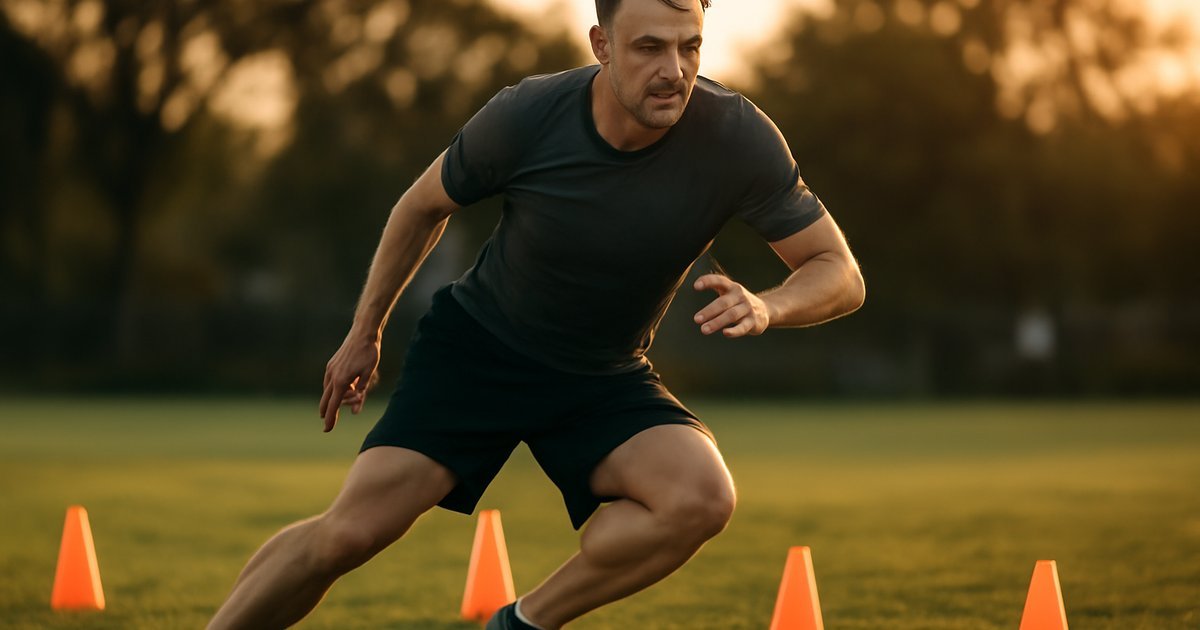
Sport-Specific Conditioning: Train Smarter for Your Sport
If your gym workouts feel disconnected from the sport you actually love playing, you’re probably training the wrong way.
Picture this: you’ve been hitting the gym three times a week for months. Your squat is stronger, your cardio is better, and you feel great on the treadmill. But the moment you step onto the tennis court, the soccer field, or the basketball court, you gas out by the second half — and your performance hasn’t improved much at all.
Sound familiar? You’re not alone. Millions of recreational and amateur athletes in the US train consistently but never bridge the gap between general fitness and sport-specific performance. The missing link is sport-specific conditioning — a targeted approach to training that mirrors the actual demands of your sport.
This guide breaks down exactly what sport-specific conditioning is, why it works, and how everyday adults can apply it — whether you play weekend soccer, compete in amateur tennis, run 5Ks, or shoot hoops on Saturday mornings. No elite coaching contract required.
Why Sport-Specific Conditioning Matters More Than You Think
General fitness is a fantastic foundation — but it’s not the same as athletic preparedness. Your body adapts to the specific demands you place on it, a principle known in exercise science as the SAID principle: Specific Adaptation to Imposed Demands.
In plain terms: if you only run on a treadmill, your body gets better at running on a treadmill. But soccer requires explosive lateral cuts, rapid direction changes, and repeated sprint-recovery cycles — patterns that a steady jog simply doesn’t train.
According to the American College of Sports Medicine (ACSM), sport-specific training that mirrors the energy systems and movement patterns of an activity produces significantly greater performance gains than generalized exercise programming alone. This isn’t just for professionals — recreational athletes benefit just as much, and often more, because they’re typically training with less precision.
Beyond performance, sport-specific conditioning also reduces injury risk. Research published in the British Journal of Sports Medicine found that athletes who incorporated movement-specific strength and neuromuscular training experienced up to 50% fewer non-contact injuries compared to those doing general fitness work only. That’s a compelling reason to get more intentional about how you prepare for your sport.
The Science Behind Sport-Specific Training — How It Actually Works
Every sport makes unique demands on your body. Those demands fall into three key categories: energy systems, movement patterns, and neuromuscular recruitment. Sport-specific conditioning targets all three at once.
Energy Systems: Your body uses different fuel pathways depending on the duration and intensity of effort. A 100-meter sprinter relies almost exclusively on the phosphocreatine (ATP-PC) system. A distance runner leans on aerobic metabolism. Most team sport athletes — soccer, basketball, lacrosse — use a blend of all three systems, requiring both high-end aerobic capacity and explosive anaerobic bursts.
Movement Patterns: A common myth is that getting stronger in the gym automatically translates to better athletic performance. It helps — but only if those strength gains are built in positions and angles that mimic your sport. A golfer needs rotational hip power and thoracic mobility. A tennis player needs lateral agility and shoulder stability. A cyclist needs single-leg strength and hip flexor endurance. General barbell work alone won’t replicate those demands.
Neuromuscular Recruitment: This is about how quickly and efficiently your nervous system activates muscle fibers in sport-relevant sequences. Research from Harvard Health Publishing highlights that neural adaptations — not just muscle size — account for a large portion of early performance improvements when training becomes more specific.
The myth to bust here: more volume always equals better results. In sport-specific conditioning, relevance matters more than quantity. Two focused sessions per week of targeted work often outperform five unfocused gym sessions for athletic carryover.
How to Get Started: Build Your Sport-Specific Training Plan
You don’t need a D1 strength coach to apply these principles. Here’s how to start building a smarter program based on your sport.
Step 1 — Audit Your Sport’s Demands
Before you train, analyze. Ask yourself: Is my sport primarily aerobic or anaerobic? Does it involve explosive power, sustained endurance, or intervals of both? What movement patterns dominate — running, jumping, throwing, cutting, rotating?
- Soccer, basketball, hockey: Mixed energy systems, lateral agility, sprint-recovery intervals
- Tennis, racquetball: Rotational power, explosive lateral movement, shoulder endurance
- Running (5K–marathon): Aerobic base, single-leg stability, hip and core strength
- Golf: Rotational mobility, hip hinge power, core stability
- Cycling: Aerobic capacity, quad dominance, hip flexor endurance
Step 2 — Match Your Conditioning to Your Energy System
- Beginner: Start with 2 days per week of sport-relevant cardio intervals. For example, soccer players can do 10 x 30-second sprints with 90 seconds of walking recovery. Tennis players can do lateral shuffle drills for 20 seconds on, 40 seconds off.
- Intermediate: Add one day of sport-pattern strength work. Golfers: landmine rotations and single-leg Romanian deadlifts. Runners: Bulgarian split squats and single-leg calf raises.
- Advanced: Periodize your training with sport season in mind — a higher-volume off-season phase, a strength-focused pre-season phase, and a maintenance in-season phase.
Step 3 — Prioritize Movement Quality Over Load
Sport-specific training rewards precision. A lateral shuffle done with proper deceleration mechanics is worth more than a heavier squat done sloppily. Focus on movement quality before adding intensity.
For a solid foundation in functional movement, combining this work with foam rolling for recovery and CrossFit-style functional training can help you build the durability your sport demands.
Common Mistakes That Sabotage Sport-Specific Results
Even motivated athletes make these errors — and they’re easy to fix once you know what to look for.
Mistake #1 — Training Only for Aesthetics, Not Function
It’s tempting to default to mirror-muscle training — biceps curls, chest press, crunches. These aren’t inherently bad, but they don’t replicate most sport demands. If all your training is isolation-focused, you’re leaving athletic gains on the table. Fix it by replacing at least half your accessory work with compound, multi-joint movements that mirror your sport’s patterns.
Mistake #2 — Ignoring the Recovery Side of Conditioning
Sport-specific conditioning isn’t just about working harder — it’s about recovering smarter between efforts. Many recreational athletes train their output but never train their recovery intervals. For sports like basketball or soccer, your ability to recover quickly between sprints is as important as your top-end speed. Incorporate structured rest periods in your conditioning work that match your sport’s actual work-to-rest ratios.
Mistake #3 — Skipping Deceleration and Change-of-Direction Training
Most injuries in court and field sports happen during deceleration — the stopping and cutting phase, not the acceleration. Yet most athletes only train forward-speed work. Add lateral bounds, deceleration drills, and reactive agility work (like responding to a visual cue before changing direction) to build injury-resilient movement mechanics.
Mistake #4 — Training Year-Round at the Same Intensity
Recreational athletes often skip periodization entirely, training the same way in January as they do in July. This leads to stagnation and burnout. Even a simple three-phase approach — off-season (build base), pre-season (build sport fitness), in-season (maintain and recover) — dramatically improves results over time.
What to Eat to Support Sport-Specific Conditioning
Nutrition strategy should match your sport’s demands, not just your general health goals.
Carbohydrates for Energy: The Academy of Nutrition and Dietetics recommends that athletes engaged in moderate-to-high intensity sport training consume 5–7 grams of carbohydrate per kilogram of body weight daily. Sports with repeated sprint efforts (soccer, basketball, tennis) are particularly carbohydrate-dependent. Don’t undercut your glycogen stores by going too low-carb during heavy training periods.
Protein for Repair: The ACSM recommends 1.2–2.0 grams of protein per kilogram of body weight for active individuals engaged in regular sport training. Aim for 25–40 grams of high-quality protein (chicken, eggs, Greek yogurt, legumes) within two hours post-training to support muscle repair.
Hydration: Even mild dehydration — as little as 2% of body weight — has been shown in research from the NIH to impair athletic performance, reaction time, and decision-making. For sport-specific training sessions lasting more than 60 minutes, aim for 16–24 ounces of fluid per hour, and consider electrolyte replacement for high-sweat activities.
Pre-training fuel: Eat a mixed meal of carbohydrates and protein 2–3 hours before training (e.g., oatmeal with eggs, or a turkey sandwich on whole grain). For sessions starting in under an hour, a smaller snack like a banana with almond butter is easier on digestion.
What to limit: Avoid high-fat meals and high-fiber foods in the 1–2 hours before intense sport sessions — they slow gastric emptying and can cause GI distress during performance.
How Long Until You See Results — and What to Track
Realistic expectations matter. Sport-specific conditioning is not a two-week fix — it’s a progressive system that compounds over time.
Weeks 1–3: Expect neural adaptations first. You’ll notice improved coordination, slightly faster reaction times, and better body awareness in your sport. These changes happen before visible strength or endurance gains.
Weeks 4–8: You should begin noticing meaningful improvements in on-field or on-court performance — less fatigue in the final stretch of a match, faster recovery between sprints, or more confident lateral movement. Research published in the Journal of Strength and Conditioning Research found that six weeks of sport-specific conditioning produced measurable agility and anaerobic capacity improvements in recreational athletes across multiple sports.
Weeks 8–16: Structural adaptations kick in — improved muscle fiber recruitment, cardiovascular efficiency specific to your sport’s energy demands, and genuine power output gains.
What to track:
- Resting heart rate (decreasing = improving aerobic base)
- Time-to-fatigue during sport-specific drill sets
- Perceived exertion during matches compared to early in the program
- Injury frequency and recovery speed
- Subjective performance ratings after your sport sessions
If you’re not seeing any improvement after 8–10 weeks, reassess your program structure and consider consulting a certified strength and conditioning specialist (CSCS).
Frequently Asked Questions
Can recreational athletes really benefit from sport-specific conditioning?
Absolutely — in fact, recreational athletes often see the most dramatic improvements because they have the most room to optimize. You don’t need to compete professionally to train with intention. Applying even basic sport-specific principles 2–3 times per week will meaningfully improve your performance and enjoyment of your sport.
How do I balance sport-specific training with my regular gym workouts?
The key is integration, not replacement. You don’t have to choose one or the other. A well-structured week might include 2 days of general strength training, 1–2 days of sport-specific conditioning (energy system work, movement drills), and 1–2 days of actual sport play. Adjust volume based on your recovery capacity — more is not always better.
Is sport-specific conditioning safe for adults over 40?
Yes, with appropriate modifications. The core principles apply at any age, though adults over 40 typically need slightly longer recovery windows and benefit from more emphasis on mobility and deceleration mechanics. The American College of Sports Medicine explicitly supports sport-specific training for older adults as a strategy for maintaining athleticism, coordination, and injury resilience. Start conservatively and progress gradually.
Do I need special equipment?
Not necessarily. Many sport-specific drills — lateral shuffles, reactive agility work, plyometric progressions, and interval conditioning — require minimal or no equipment. Resistance bands, a timer, cones, and your own bodyweight can cover most of what you need to get started. More equipment can add variety and load over time, but it’s not a prerequisite.
What if I play multiple sports or activities?
Focus on the most universal athletic qualities: aerobic base, multi-directional agility, single-leg strength, core stability, and rotational power. These transfer well across most sports. Then add sport-specific layers during the weeks leading up to your primary sport season. You can reference medicine ball training as a great cross-sport power builder that works for almost any athletic context.
Start Where You Are — Your Sport Deserves Better Preparation
You don’t have to overhaul your entire training life to start getting more out of it. The first step is simply asking one question before your next workout: Does this training session actually reflect what my sport demands of me?
If the answer is no, you now have the framework to change that. Pick one sport-specific drill, one energy system protocol, or one movement pattern to focus on this week. Build from there. Small, consistent adjustments in training specificity add up to real performance gains over a season.
Your weekend games, competitive leagues, and personal fitness milestones are worth training for with intention. Start smarter — and your sport will reward you for it.
This article is for informational and educational purposes only. The content is not intended to replace professional medical, nutritional, or fitness advice. Always consult a qualified healthcare provider, registered dietitian, or certified fitness professional before starting a new health program or making significant changes to your lifestyle.
Content reviewed by our wellness editorial team, with references to peer-reviewed research and guidelines from leading health organizations.
Leave a Reply