You keep doing everything right — exercising, sleeping enough, managing stress — but something still feels off. Persistent fatigue, joint stiffness, brain fog, or digestive trouble that just won’t quit. The culprit might be hiding in plain sight: chronic low-grade inflammation.
Here’s a number that might surprise you: according to research published in Nature Medicine, chronic inflammation is a contributing factor in roughly 3 out of 5 deaths worldwide, linked to conditions like heart disease, type 2 diabetes, and even depression. And for millions of Americans, the food on their plate is either fanning the flames — or helping to put them out.
The anti-inflammatory diet isn’t a trendy 30-day reset or a strict elimination program. It’s a sustainable, evidence-backed approach to eating that works with your body’s natural systems. In this guide, you’ll learn what inflammation actually is, which foods fuel it, which foods fight it, and how to build an anti-inflammatory lifestyle that actually fits into your busy schedule — no meal delivery subscription required.
Why Inflammation Matters More Than You Think
Not all inflammation is bad. When you sprain your ankle or fight off a cold, acute inflammation is your immune system doing its job — swelling, redness, and discomfort are signs that your body is healing. That process is critical and completely normal.
The problem is chronic low-grade inflammation — a slow, persistent immune response that lingers even when there’s no injury or infection to fight. Think of it as your immune system stuck in "alert" mode 24/7. Over time, that constant activation damages tissues and contributes to a wide range of health problems.
According to Harvard Health Publishing, chronic inflammation has been linked to cardiovascular disease, type 2 diabetes, Alzheimer’s disease, arthritis, and even certain cancers. The American Heart Association also recognizes elevated inflammatory markers — particularly C-reactive protein (CRP) — as independent risk factors for heart disease.
What’s driving this? Diet is one of the most powerful levers. Research published in the Journal of the American College of Cardiology found that people who consistently ate a pro-inflammatory diet had significantly higher risks of cardiovascular events compared to those following anti-inflammatory eating patterns. Your food choices, made three or more times a day, are either quietly stoking inflammation or helping to calm it.
The Science Behind How Food Affects Inflammation
Your gut is home to roughly 70% of your immune system. That means the food you digest directly communicates with the immune cells lining your intestinal tract. When you eat processed foods high in refined sugar, trans fats, and artificial additives, those substances can trigger an immune response — and over time, repeated exposure keeps that response simmering.
On the flip side, whole foods rich in antioxidants, polyphenols, omega-3 fatty acids, and fiber work differently. They signal your immune system to stand down, lower oxidative stress, and support the gut microbiome — the community of beneficial bacteria that helps regulate inflammation from the inside out.
A landmark study published in Cell (2021) compared two diets over 17 weeks: a high-fiber plant-based diet versus a high-fermented-food diet. Both reduced inflammatory markers, but the fermented food group showed more dramatic improvements in immune diversity. This is one reason why the anti-inflammatory diet isn’t a one-size-fits-all prescription — it’s a framework that can be personalized.
Common myth to bust: Many people believe that "eating healthy" means cutting carbs entirely. In reality, the anti-inflammatory approach focuses on the quality of carbohydrates, not the elimination of them. Whole grains like oats, quinoa, and brown rice are actually anti-inflammatory, thanks to their fiber content and phytochemical profile.
How to Get Started: Practical Steps for Every Level
The best thing about the anti-inflammatory diet is that you don’t have to overhaul your entire kitchen overnight. Progress beats perfection here, and small consistent changes accumulate into significant results.
Beginner Level — The Foundation:
- Add before you subtract. Instead of eliminating everything at once, start by adding one anti-inflammatory food per meal. A handful of blueberries at breakfast, a handful of walnuts at lunch, a drizzle of olive oil over dinner.
- Switch your cooking oil. Replace vegetable oil and margarine with extra-virgin olive oil. This one swap meaningfully shifts your omega-6 to omega-3 ratio over time.
- Eat the rainbow. Aim for at least three different colored vegetables or fruits each day. Each color represents different phytonutrients with anti-inflammatory properties.
- Cut one ultra-processed item per week. Pick the easiest win — maybe it’s the afternoon vending machine snack or the drive-through coffee drink — and replace it with a whole food alternative.
Intermediate Level — Building Consistency:
- Plan 3-4 dinners per week around fatty fish (salmon, sardines, mackerel) or legumes (lentils, chickpeas, black beans).
- Introduce fermented foods like plain Greek yogurt, kefir, kimchi, or sauerkraut 3-5 times per week.
- Reduce added sugar to under 25g per day for women and 36g for men, per American Heart Association guidelines.
- Practice simple meal prepping on Sundays — cook a batch of whole grains and roast a sheet pan of vegetables for easy weekday meals.
Advanced Level — Fine-Tuning:
- Track inflammatory food patterns using a simple food journal or app for 2 weeks to identify your personal triggers.
- Experiment with anti-inflammatory herbs and spices: turmeric with black pepper (the piperine in black pepper increases curcumin absorption by up to 2,000%, per research in Planta Medica), ginger, rosemary, and cinnamon.
- Pair dietary changes with regular physical activity — even walking 30 minutes a day has been shown to lower CRP levels independently of diet. For more on that, check out Walking for Weight Loss: The Complete Science-Backed Guide.
Common Mistakes That Sabotage Your Results
Even motivated people make these missteps — and they’re surprisingly easy to fall into.
Mistake #1: Treating it as a short-term diet.
The anti-inflammatory diet is most effective as a long-term lifestyle shift, not a 21-day challenge. Inflammation doesn’t develop overnight, and it doesn’t resolve overnight either. People often see initial improvements in energy or digestion within 2-4 weeks, then plateau — and quit. The real benefits to inflammatory markers, cardiovascular risk, and metabolic health tend to show up after 3-6 months of consistent eating. Stay the course.
Mistake #2: Going too heavy on "healthy" packaged foods.
Granola bars labeled "natural," fruit-flavored yogurts, plant-based processed snacks — many of these are still high in added sugar, refined flours, and industrial seed oils. The Academy of Nutrition and Dietetics consistently emphasizes reading ingredient labels, not just the front-of-package marketing. If the first three ingredients include sugar, corn syrup, or a hydrogenated oil, that product likely isn’t doing your inflammation any favors.
Mistake #3: Ignoring liquid inflammation triggers.
Soda, sweetened coffee drinks, fruit juices (yes, even 100% juice in excess), and alcohol are major hidden sources of added sugar and inflammatory compounds. Many people clean up their meals but still consume 50-80g of added sugar daily through drinks alone. Switching to water, herbal teas, or sparkling water with a splash of citrus can meaningfully reduce daily sugar load without feeling deprived.
Mistake #4: Skipping healthy fats out of fear.
Older dietary messaging demonized fat broadly. But dietary fat is not the enemy — the type of fat matters enormously. Omega-3 fatty acids (found in fatty fish, walnuts, flaxseed, and chia seeds) are actively anti-inflammatory, while trans fats and excessive omega-6 fatty acids from processed seed oils are pro-inflammatory. Don’t avoid avocado, olive oil, or nuts in an effort to "eat healthy."
What to Eat and What to Limit
The USDA Dietary Guidelines and findings from the Academy of Nutrition and Dietetics consistently point toward the same broad framework:
Eat More Of:
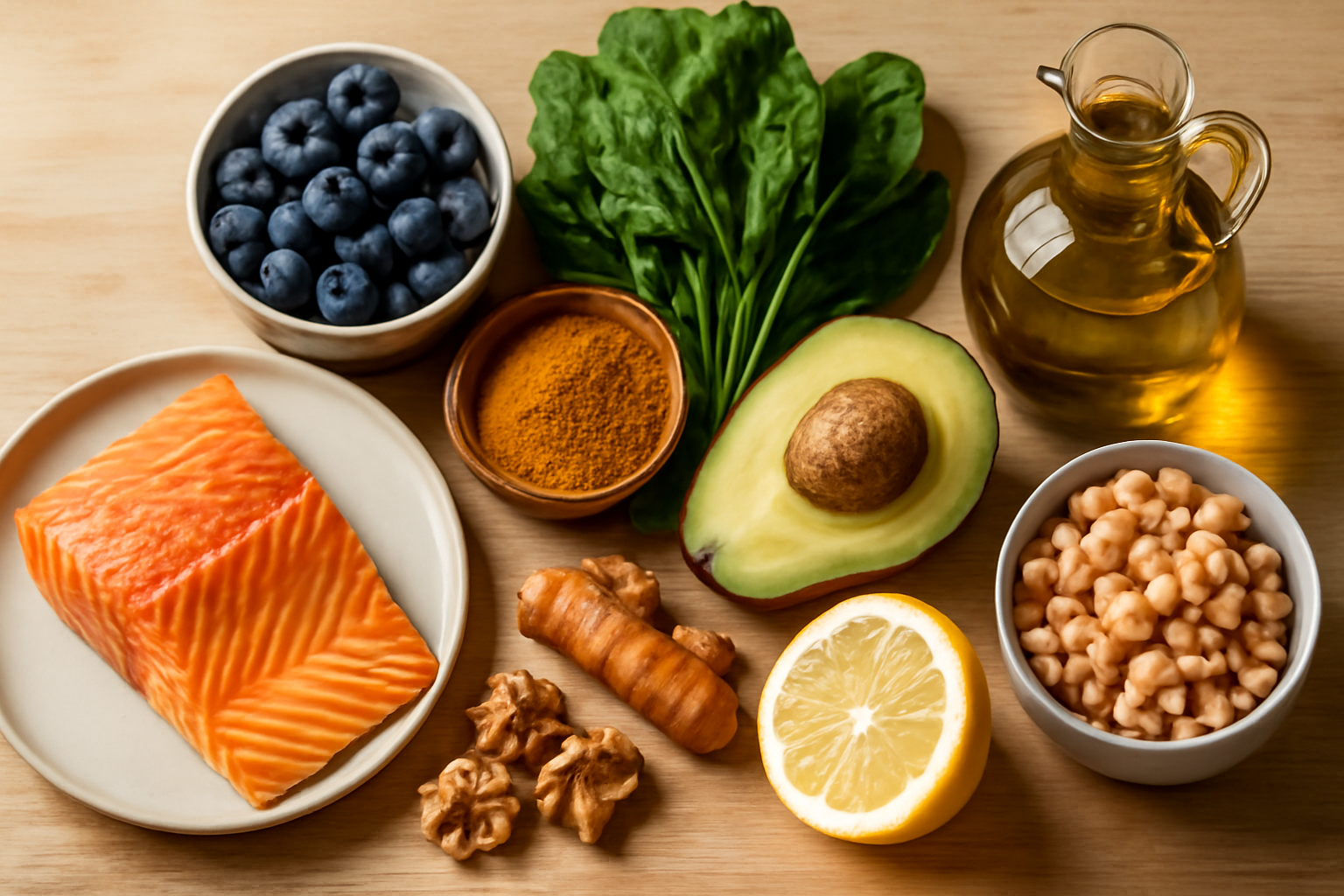
- Fatty fish — salmon, sardines, mackerel, herring (aim for 2-3 servings per week, roughly 3-4 oz per serving)
- Dark leafy greens — spinach, kale, Swiss chard, arugula (at least 1-2 cups daily)
- Berries — blueberries, strawberries, raspberries (½ to 1 cup per day)
- Extra-virgin olive oil — 1-2 tablespoons daily for cooking or dressing
- Nuts and seeds — walnuts, almonds, chia seeds, flaxseed (a small handful, roughly 1 oz, per day)
- Legumes — lentils, chickpeas, black beans, edamame (½ cup servings, 3-5 times per week)
- Whole grains — oats, quinoa, farro, brown rice (½ to 1 cup cooked per meal)
- Fermented foods — plain Greek yogurt, kefir, kimchi, sauerkraut, miso (small servings, 3-5 times per week)
- Anti-inflammatory spices — turmeric, ginger, cinnamon, garlic (use freely)
Limit or Reduce:
- Added sugars (sodas, pastries, sweetened yogurt, candy)
- Refined carbohydrates (white bread, white pasta, most crackers)
- Ultra-processed foods with more than 5 unfamiliar ingredients
- Fried foods and anything made with partially hydrogenated oils
- Excessive alcohol (more than 1 drink/day for women, 2 for men, per AHA guidelines)
- Processed meats (hot dogs, deli meats, sausages) — limit to occasional rather than regular consumption
This isn’t about never eating a slice of birthday cake or a burger. It’s about what you eat most of the time.
How Long Until You See Results — and What to Track
Results vary significantly depending on your baseline inflammation levels, current diet quality, stress levels, sleep habits, and activity level. That said, research gives us reasonable timelines to work with.
Week 1-2: Many people notice improvements in energy, digestion, and bloating relatively quickly as processed foods decrease and fiber intake increases. These aren’t necessarily inflammation markers improving yet — but they’re signals that your gut environment is shifting.
Weeks 3-6: Joint stiffness, skin clarity, and mental sharpness are commonly reported improvements in this window. A 2018 study in the British Journal of Nutrition found significant reductions in CRP and other inflammatory markers after just 6 weeks of Mediterranean-style eating in previously sedentary adults.
3-6 months: This is where meaningful changes in blood markers, blood pressure, blood sugar regulation, and weight become measurable. This is also the right time to reassess with your doctor if you’re managing a specific condition.
What to track:
- Energy levels and midday fatigue (rate 1-10 daily)
- Digestive comfort (bloating, regularity)
- Joint comfort and morning stiffness
- Sleep quality
- Mood and mental clarity
- Blood work: ask your doctor to measure CRP, fasting glucose, and lipid panels at 3-6 month intervals if managing a health condition
If you’re combining this with a movement practice, consider reading Strength Training for Beginners: The Complete Starter Guide — resistance training independently reduces inflammatory markers and complements dietary changes powerfully.
Frequently Asked Questions
Is the anti-inflammatory diet the same as the Mediterranean diet?
They overlap significantly. The Mediterranean diet is one of the most studied anti-inflammatory eating patterns in the world, consistently linked to lower inflammation, reduced heart disease risk, and better cognitive aging. The anti-inflammatory diet is a broader framework that includes Mediterranean principles but can also incorporate elements of other whole-food eating patterns depending on your preferences and cultural background.
Can the anti-inflammatory diet help with weight loss?
It often does — but not necessarily because it’s a "weight loss diet." By reducing ultra-processed food intake, increasing fiber and protein, and improving gut health, many people naturally eat less without counting calories. Reduced inflammation itself may also improve metabolic function. However, weight loss depends on many factors, and this approach prioritizes health over the scale.
Do I need to take supplements to fight inflammation?
Whole foods should always come first. That said, some people benefit from omega-3 fish oil supplements (especially if they don’t eat much fatty fish) or vitamin D (particularly relevant if you live in a northern climate or spend little time outdoors). Always consult your healthcare provider before adding supplements — more isn’t always better, and some can interact with medications.
How does stress affect inflammation?
Significantly. The American Psychological Association notes that chronic psychological stress elevates cortisol levels, which over time dysregulates immune function and raises inflammatory markers. Diet is one piece of the puzzle — pairing it with stress management practices like mindfulness, breathwork, or even gentle yoga amplifies results. Check out Yoga for Beginners: Build Flexibility, Strength & Calm for an accessible starting point.
Is coffee anti-inflammatory or pro-inflammatory?
Good news for coffee lovers: research published in BMJ Open found that moderate coffee consumption (2-4 cups per day) is associated with lower inflammatory markers in most people. Coffee is rich in polyphenols, which have antioxidant and anti-inflammatory properties. The issue arises when coffee is loaded with added sugar and cream — what you put in your coffee matters as much as the coffee itself.
Your Next Step Starts at Your Next Meal
You don’t need a complete pantry overhaul or a perfect eating plan to start reducing inflammation. What you need is one better choice at your next meal — a handful of walnuts instead of chips, olive oil instead of butter, a side of leafy greens, a piece of salmon instead of a hot dog.
Those small swaps, repeated consistently over weeks and months, are what shift your body’s inflammatory baseline. Not a 10-day juice fast. Not an expensive supplement stack. Just real, whole food — most of the time.
Start simple. Stay consistent. And give your body the 3-6 months it deserves to show you what’s possible when inflammation is no longer a constant undercurrent in your system.
This article is for informational and educational purposes only. The content is not intended to replace professional medical, nutritional, or fitness advice. Always consult a qualified healthcare provider, registered dietitian, or certified fitness professional before starting a new health program or making significant changes to your lifestyle.
Content reviewed by our wellness editorial team, with references to peer-reviewed research and guidelines from leading health organizations.
Leave a Reply