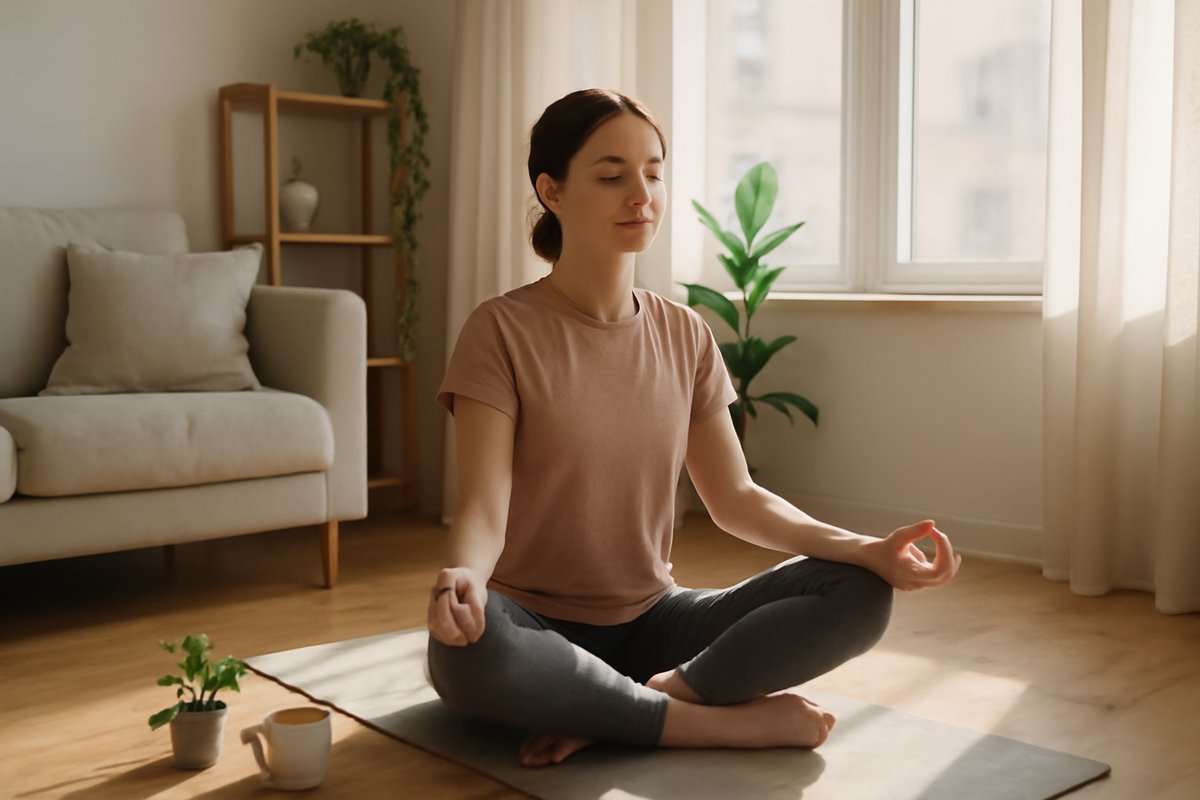
Mindfulness for Stress Relief: A Practical Beginner’s Guide
You don’t need an app, a retreat, or an hour of free time — just a few minutes and the willingness to actually show up for yourself.
Picture this: You’re sitting at your desk at 3 p.m., your to-do list is longer than when you started the day, your shoulders are somewhere near your ears, and your brain is running seventeen tabs at once. Sound familiar? You’re not alone — and you’re definitely not broken.
According to the American Psychological Association, more than 75% of American adults report experiencing moderate to high levels of stress on a regular basis. And while stress is a normal part of life, chronic, unmanaged stress quietly chips away at your sleep, your immune function, your digestion, your mood, and your long-term health.
Mindfulness has become one of the most studied and clinically validated tools for stress relief available today — and it doesn’t require you to meditate for an hour or become a monk. In this guide, you’ll learn exactly what mindfulness is (and isn’t), what the research actually says, how to build a real practice from scratch, and how to avoid the pitfalls that keep most people from sticking with it.
Let’s make this simple, practical, and actually sustainable.
Why Mindfulness for Stress Relief Matters More Than You Think
Stress isn’t just a feeling — it’s a full-body physiological event. When your brain perceives a threat (whether it’s a charging bear or a passive-aggressive email from your boss), your hypothalamic-pituitary-adrenal axis kicks into gear, flooding your body with cortisol and adrenaline. Your heart rate spikes. Your digestion slows. Your muscles tense up.
That response was designed for short bursts of danger — not for back-to-back Zoom calls, financial pressure, and raising kids simultaneously. When that system stays activated day after day, the downstream effects are serious: elevated blood pressure, disrupted sleep, weakened immunity, and increased risk of anxiety and depression.
This is where mindfulness steps in as more than just a trend. A landmark meta-analysis published in JAMA Internal Medicine reviewed 47 clinical trials and found that mindfulness meditation programs produced moderate improvements in anxiety, depression, and pain — with meaningful reductions in stress-related symptoms. These weren’t just people feeling slightly calmer. Neuroimaging studies have shown that consistent mindfulness practice actually changes the structure of the brain — particularly in the amygdala, the region responsible for processing fear and stress — reducing its reactivity over time.
In your daily life, that translates to this: you still encounter stressors, but your nervous system stops treating every inconvenience like a five-alarm emergency. That’s a meaningful shift — and one that compounds over time.
How Mindfulness Actually Works in the Body and Brain
Here’s a misconception worth clearing up right away: mindfulness is not about emptying your mind or eliminating stress. It’s about changing your relationship to your thoughts and stress — not pretending they don’t exist.
Mindfulness is defined by Jon Kabat-Zinn, the researcher who pioneered Mindfulness-Based Stress Reduction (MBSR), as "paying attention on purpose, in the present moment, non-judgmentally." That’s it. You’re not suppressing thoughts. You’re noticing them without getting hijacked by them.
Here’s what happens physiologically when you practice: mindfulness activates the parasympathetic nervous system — your "rest and digest" mode — which directly counteracts the stress response. Your heart rate slows. Cortisol levels drop. Blood pressure eases. The prefrontal cortex, responsible for rational thinking and emotional regulation, becomes more engaged — allowing you to respond to stressors rather than just react to them.
Research from Harvard Medical School found that participants who completed an 8-week MBSR program showed measurable decreases in cortisol and inflammatory markers, as well as increased gray matter density in brain regions associated with learning, memory, and self-awareness.
One common myth: "I can’t do mindfulness because I can’t stop thinking." Thinking during mindfulness practice isn’t failure — it’s the practice. Noticing that your mind has wandered, and gently bringing it back, is literally the mental exercise. Think of it like a bicep curl for your attention. Every return is a rep.
How to Get Started: A Beginner’s Roadmap
The beauty of mindfulness is that the barrier to entry is almost zero. You don’t need equipment, a gym membership, or a specific time slot. Here’s how to build your practice from the ground up:
Beginner Level (Week 1–2): The 3-Minute Breathing Space
- Set a timer for 3 minutes. Sit comfortably — chair, floor, doesn’t matter. Close your eyes or soften your gaze.
- First minute — Awareness: Ask yourself, "What am I experiencing right now?" Notice thoughts, feelings, and body sensations without trying to change them.
- Second minute — Focus: Narrow your attention to the physical sensation of breathing. Feel the air entering your nostrils, your chest or belly rising and falling.
- Third minute — Expand: Widen your awareness back out to your whole body, the room around you, and then gently return to your day.
Do this once daily — morning, lunch break, or before bed. Consistency matters far more than duration at this stage.
Intermediate Level (Week 3–6): Body Scan + Informal Practice
- Body Scan Meditation (10–20 minutes): Lie down and slowly move your attention from your feet to the top of your head, noticing sensations in each body region without judgment. This is particularly effective for releasing physical tension held from chronic stress.
- Informal mindfulness: Pick one daily activity — brushing your teeth, eating lunch, walking to your car — and do it with full attention. No phone. No podcast. Just the experience itself.
Advanced Level (Month 2+): MBSR-Style Practice
- Build toward 20–45 minutes of formal seated meditation daily.
- Incorporate mindful movement — slow yoga, tai chi, or mindful walking.
- Consider a structured 8-week MBSR program, available in person through hospitals and wellness centers, or via reputable online platforms.
For added support on building sustainable energy alongside your mindfulness practice, check out Boost Energy Naturally: Practical Habits for Lasting Vitality.
Common Mistakes That Sabotage Your Mindfulness Practice
Mindfulness has a relatively low failure rate — but there are a few very common ways people undermine themselves without realizing it.
Mistake #1: Waiting until you "have time" to practice.
This is the number one reason people quit within two weeks. Waiting for a calm, quiet, perfect window means it almost never happens. The fix: anchor your practice to an existing habit. Do three minutes of breathing right after you pour your morning coffee. Or right before you open your laptop. Habit stacking eliminates the decision fatigue.
Mistake #2: Judging your practice as "bad" because your mind wanders.
As mentioned earlier — mind wandering is not a sign you’re doing it wrong. It’s literally the process. Every person’s mind wanders during meditation, from first-timers to longtime practitioners. The skill is the noticing and returning. If you find yourself frustrated, that frustration itself becomes something to observe mindfully.
Mistake #3: Using mindfulness apps as a crutch instead of a tool.
Apps like Calm and Headspace are genuinely useful for getting started — but if you can only practice when you have your phone, headphones, and a specific audio track, you’re limiting the practice. True mindfulness is available anywhere. Graduate toward unguided practice over time.
Mistake #4: Expecting fast or dramatic results.
Mindfulness works through accumulation. Most research showing measurable brain changes involves consistent practice over 6–8 weeks. If you do five sessions and don’t feel transformed, that’s completely normal. The results build quietly — and one day you’ll notice that you responded to a frustrating situation differently than you would have six months ago.
What to Eat (and Avoid) to Support Your Stress Response
Mindfulness addresses the mental and neurological side of stress — but your diet plays a surprisingly powerful supporting role. Chronic stress depletes key nutrients your nervous system needs to regulate itself.
Prioritize these nutrients:
- Magnesium: Often called the "anti-stress mineral," magnesium supports GABA activity in the brain — the same calming neurotransmitter targeted by many anti-anxiety medications. The NIH reports that most American adults don’t meet the recommended daily intake (310–420 mg). Best sources: dark leafy greens, pumpkin seeds, black beans, and almonds.
- Omega-3 fatty acids: Research published in the Journal of Nutrition found that omega-3 supplementation reduced cortisol reactivity and anxiety symptoms in healthy young adults. Sources: wild-caught salmon, sardines, walnuts, flaxseeds.
- B vitamins (especially B6 and B12): Critical for neurotransmitter synthesis. Found in eggs, poultry, legumes, and fortified cereals.
- Fermented foods: Your gut-brain axis is real. Harvard Health Publishing notes that gut microbiome health directly influences mood regulation. Incorporate yogurt, kefir, sauerkraut, or kimchi regularly.
Limit or reduce:
- Excess caffeine: More than 400mg daily (roughly 4 cups of coffee) can elevate cortisol and worsen anxiety symptoms — especially in people already under stress.
- Ultra-processed foods and added sugars: These drive inflammatory pathways that interact with stress hormones. The USDA Dietary Guidelines recommend keeping added sugars under 10% of total daily calories.
- Alcohol: While it may feel relaxing initially, alcohol disrupts sleep architecture and increases anxiety the following day — a cycle that amplifies stress over time.
For more on eating patterns that support overall wellness, explore the Anti-Inflammatory Diet: Your Practical Guide to Eating for Wellness.
How Long Until You See Results — and What to Track
One of the most frustrating parts of beginning a mindfulness practice is that the benefits aren’t always immediately visible. Here’s a realistic, research-informed timeline:
Days 1–7: You may notice small moments of calm during or after practice. Sleep quality often begins improving within the first week for many people, particularly if stress was a primary sleep disruptor.
Weeks 2–4: Mild but noticeable reductions in reactivity — you might catch yourself pausing before responding in a stressful situation. This is a significant early sign the practice is working.
Weeks 4–8: The research benchmark. Multiple studies, including the MBSR trials reviewed by the NIH, show that the most significant measurable changes in cortisol, anxiety, and mood occur in the 6–8 week window of consistent practice.
What to track:
- Your daily practice streak (even just 3–5 minutes counts)
- Sleep quality and time to fall asleep
- Perceived stress level on a 1–10 scale, rated each morning
- Physical tension (jaw, neck, shoulders) — check in at midday
- Mood consistency — not just in good moments, but under pressure
If you’re also dealing with disrupted sleep as part of your stress picture, this resource may help: The Ultimate Guide to Sleep Hygiene: Reclaim Your Rest.
If after 8–10 weeks of consistent effort you’re not noticing any change, or if your stress feels overwhelming, please consult a licensed mental health professional. Mindfulness is a powerful tool — but it’s not a replacement for therapy, medication when warranted, or medical evaluation.
Frequently Asked Questions
Q: How long do I need to meditate each day to reduce stress?
Research suggests that even 10–15 minutes of consistent daily practice can produce measurable stress reduction over 4–8 weeks. Longer sessions (20–45 minutes) tend to produce deeper results, but consistency beats duration. Start where you are — three minutes daily is a real starting point.
Q: Can mindfulness help with work-related stress specifically?
Yes. A study published in the Journal of Occupational Health Psychology found that employees who completed mindfulness training reported significant reductions in job-related stress and burnout, along with improved focus and emotional regulation at work. It doesn’t eliminate workplace stressors, but it changes how you process them.
Q: Is mindfulness the same as meditation?
They’re related but not identical. Meditation is a formal seated practice that cultivates mindfulness. Mindfulness itself is a quality of attention that can be applied to any activity — eating, walking, having a conversation. Meditation is one of the most effective ways to develop mindfulness, but it’s not the only way.
Q: What if I fall asleep during meditation?
Very common — especially if you’re already sleep-deprived or practicing while lying down. If it’s a consistent issue, try meditating while seated rather than lying down, and practice earlier in the day. Falling asleep occasionally isn’t a problem, but if it happens every session, you may need to address underlying sleep needs first.
Q: Can mindfulness make anxiety worse?
For most people, mindfulness reduces anxiety. However, for individuals with trauma histories or certain anxiety disorders, sitting with thoughts without distraction can occasionally feel destabilizing. If this happens, work with a mental health professional trained in mindfulness-based therapies (like MBSR or MBCT) rather than practicing alone.
Start Small, Stay Consistent, Trust the Process
Stress isn’t going away — but your relationship to it can change in ways that genuinely transform your health, your mood, and your daily experience. Mindfulness isn’t a magic solution, and it won’t eliminate difficult days. What it does, over time and with consistent practice, is give you a reliable internal anchor — something to return to when life feels like it’s moving faster than you can keep up with.
You don’t need to be perfect at this. You just need to start. Take three minutes today — right now, even — to sit quietly and breathe with intention. That’s a real practice. And it grows from there.
Small steps, done consistently, are always more powerful than the occasional grand gesture.
Wellness Disclaimer: This article is for informational and educational purposes only. The content is not intended to replace professional medical, nutritional, or fitness advice. Always consult a qualified healthcare provider, registered dietitian, or certified fitness professional before starting a new health program or making significant changes to your lifestyle.
Author Note: Content reviewed by our wellness editorial team, with references to peer-reviewed research and guidelines from leading health organizations including the American Psychological Association, National Institutes of Health, Harvard Medical School, and JAMA Internal Medicine.