Yoga for Beginners: Build Flexibility, Strength & Calm
You don’t need to be flexible to start yoga — you just need to start.
Picture this: you’ve been sitting at your desk for six hours straight, your lower back is tight, your shoulders are creeping up toward your ears, and your brain feels like a browser with 47 tabs open. You’ve heard that yoga helps with all of this. But every time you search for "beginner yoga," you’re met with images of people twisted into pretzel shapes on a cliff at sunrise — and suddenly it feels like something that’s not for you.
Here’s the truth: yoga is one of the most accessible forms of fitness and wellness available to adults of any age, body type, or flexibility level. It doesn’t require expensive equipment, a gym membership, or years of practice to feel the benefits. In fact, research suggests that even two sessions per week can produce measurable improvements in flexibility, stress hormones, and muscular endurance within just a few weeks.
In this guide, you’ll learn exactly how yoga works, why it belongs in your fitness routine, how to get started safely, and what common mistakes trip up most beginners. Whether you’re brand new to movement or looking to complement your existing workouts, this is your no-nonsense, evidence-backed starting point.
Why Yoga Matters More Than You Think
Most people file yoga under "stretching class" and leave it at that. But that framing misses the bigger picture. Yoga is a full-body practice that integrates strength, mobility, breath control, and mental focus — all of which are foundational to long-term health and physical performance.
According to a review published in the International Journal of Yoga, consistent yoga practice has been associated with reductions in perceived stress, improvements in balance and muscular endurance, and better scores on measures of psychological well-being across a range of adult age groups. These aren’t minor benefits — they’re the kind of outcomes people spend hundreds of dollars on supplements chasing.
What makes yoga particularly relevant for busy adults aged 25 to 60 is its dual nature: it trains your body and your nervous system at the same time. While you’re holding a Warrior II pose and building leg strength, you’re also practicing slow, intentional breathing that directly activates your parasympathetic nervous system — your "rest and digest" mode. In a culture defined by chronic stress, that combination is genuinely hard to find in a single workout format.
On the physical side, yoga addresses several of the most common complaints in this age group: tight hip flexors from sitting, weak core muscles, poor posture, and limited shoulder mobility. And unlike high-impact activities, yoga is low on joint stress — making it something you can do consistently without the wear-and-tear that sometimes comes with running or heavy lifting.
How Yoga Actually Works: The Science Behind the Practice
Let’s bust the biggest myth first: yoga is not just passive stretching. Many yoga styles — including Vinyasa, Power Yoga, and Ashtanga — are genuinely demanding strength workouts. Holding a plank, a Chaturanga (a yoga push-up), or a Chair Pose for 30 to 60 seconds recruits significant muscular effort from your core, shoulders, glutes, and legs.
From a physiological standpoint, yoga improves flexibility primarily through two mechanisms: muscle elongation via sustained holds, and improved neuromuscular signaling — meaning your nervous system learns to "allow" a greater range of motion over time. This is why even one session can leave you feeling looser than when you walked in, even if your muscle fibers haven’t physically changed yet.
A landmark study published in The Journal of Strength and Conditioning Research found that 10 weeks of yoga training significantly improved flexibility and muscular endurance in college-aged adults compared to a control group. Importantly, core strength was also meaningfully enhanced — reinforcing that yoga is more than a flexibility tool.
On the neurological side, breath-focused yoga triggers measurable reductions in cortisol, the body’s primary stress hormone. Harvard Health Publishing notes that the slow, diaphragmatic breathing used in yoga engages the vagus nerve, which plays a central role in calming the stress response. This is why you genuinely feel calmer after a session — not just psychologically, but physiologically.
The downside worth acknowledging: yoga alone won’t provide the cardiovascular stimulus needed to improve VO2 max or the mechanical load required for significant bone density improvements. For those goals, you’d want to combine yoga with activities like brisk walking or resistance training. Yoga works best as part of a complete fitness approach, not as a standalone solution for all health goals.
How to Get Started: Your Beginner Yoga Roadmap
Starting yoga doesn’t have to be overwhelming. Here’s a clear, stage-by-stage approach based on your current experience level.
Step 1 — Choose the Right Style
Not all yoga is the same. As a beginner, these three styles are the most accessible:
- Hatha Yoga: Slow-paced, holds poses longer, ideal for true beginners. Great for learning alignment.
- Yin Yoga: Very gentle, floor-based, focuses on deep connective tissue and relaxation. Perfect if stress or tension is your main concern.
- Vinyasa (Beginner Level): Flowing movement linked to breath. More dynamic, but beginner classes are well-modified.
Avoid jumping into Hot Yoga, Power Yoga, or Ashtanga until you’ve built a foundation of at least 4 to 6 weeks in a gentler style.
Step 2 — Set Up Your Space
You need very little: a yoga mat (6mm thickness is comfortable for beginners), a small open floor space, and two yoga blocks if possible. Blocks cost under $15 and make many poses significantly more accessible. A strap or resistance band can also help with tight hamstrings.
Step 3 — Start with These 5 Foundational Poses
- Child’s Pose (Balasana): Your resting position. Stretches lower back and hips. Stay here 30 to 60 seconds whenever you need a break.
- Cat-Cow: Gentle spinal warm-up. Move in sync with your breath for 5 to 8 rounds.
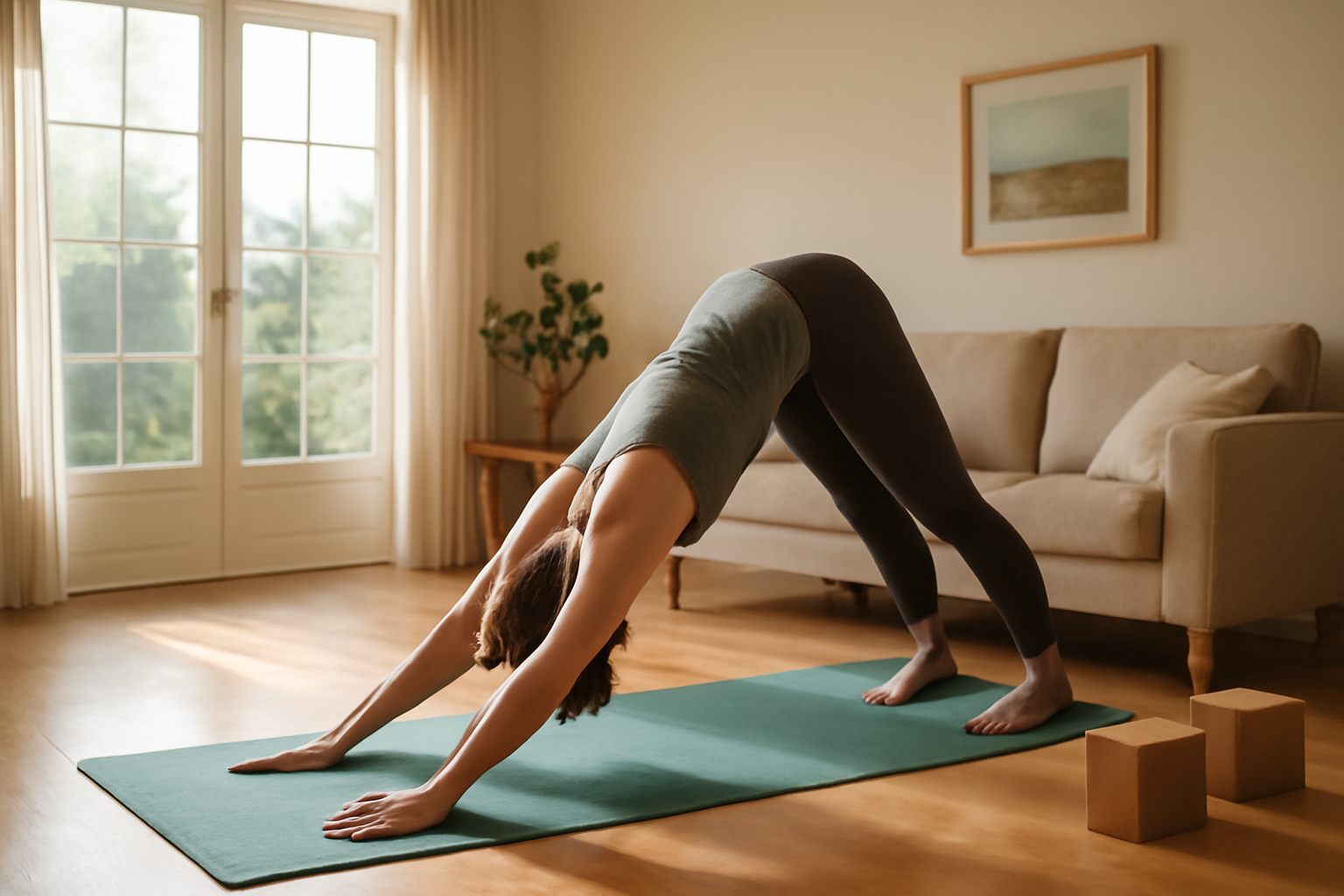
- Downward-Facing Dog: Full-body stretch and mild upper-body strengthener. Bend your knees generously — straight legs are not required.
- Warrior I: Builds leg strength, opens the chest, improves balance. Use a shorter stance if your hips feel restricted.
- Seated Forward Fold (Paschimottanasana): Hamstring and lower back release. Use a strap around your feet if you can’t reach them — that’s completely normal.
Step 4 — Build a Realistic Schedule
Beginner: 2 sessions per week, 20 to 30 minutes each. Prioritize consistency over duration.
Intermediate: 3 to 4 sessions per week, 30 to 45 minutes. Begin incorporating more standing sequences and balance work.
Advanced: 5 to 6 sessions per week with varied styles (strength-focused, yin, and flow). Consider adding a weekly class with a certified instructor for feedback.
Common Mistakes That Sabotage Yoga Progress
Even well-intentioned beginners fall into predictable traps. Here are the most common ones — and exactly how to avoid them.
Mistake 1 — Forcing Flexibility Before Building Strength
Many beginners try to push into deep stretches immediately, ignoring pain signals in the name of "progress." This is one of the fastest routes to a yoga-related injury, particularly in the hamstrings and lower back. The fix: honor your end range on any given day and approach it with curiosity rather than aggression. Flexibility develops gradually — typically over 6 to 12 weeks of consistent practice.
Mistake 2 — Holding Your Breath
When a pose feels challenging, most people instinctively hold their breath. This is counterproductive because breath is literally the mechanism that helps your nervous system relax into a stretch. If you notice you’ve stopped breathing, that’s a clear signal you’ve gone too deep. Back off slightly until you can maintain a slow, steady inhale and exhale.
Mistake 3 — Skipping Savasana
Savasana — the final resting pose at the end of class — looks like a nap. But it’s physiologically important. Research cited by the American Psychological Association supports the idea that brief, intentional relaxation following physical exertion helps consolidate the neurological benefits of the practice and supports stress hormone regulation. Skipping it to save five minutes undercuts the full effect of your session.
Mistake 4 — Comparing Yourself to Online Instructors
YouTube and social media yoga content is heavily curated. The instructor demonstrating a deep backbend has likely been practicing for 10 to 20 years. Measuring your Week 2 practice against their highlight reel is a quick path to discouragement. Focus on how your body feels session to session, not how it looks.
Mistake 5 — Practicing Only When You Feel Stiff
Some beginners treat yoga as a remedy for a bad day only. Consistency, even on days when you feel fine, is what builds the cumulative benefits. Short 15-minute sessions count — don’t skip them because they feel "too easy."
What to Eat and How to Time Your Practice
Yoga isn’t as metabolically demanding as running or heavy lifting, but nutrition still plays a role in how you feel on the mat and how your body recovers.
Before Practice: Avoid large meals within 1.5 to 2 hours before yoga. A heavy stomach during twists and inversions is genuinely uncomfortable. If you’re practicing in the morning, a small snack — like half a banana or a handful of almonds — is enough for most sessions under 45 minutes.
Post-Practice Recovery: After a more demanding session (Vinyasa or Power Yoga), follow the same recovery principles as any strength workout. The Academy of Nutrition and Dietetics recommends a combination of protein and carbohydrates within 30 to 60 minutes post-exercise. A Greek yogurt with fruit, a smoothie with protein powder, or eggs on whole-grain toast are all solid options.
Hydration: The USDA Dietary Guidelines recommend consistent fluid intake throughout the day, not just during exercise. For yoga specifically, aim to be well-hydrated going in rather than chugging water mid-session. In a standard yoga class, you typically lose less fluid than in cardio — but Hot Yoga is a significant exception. If you’re attending heated classes, increase your pre-class hydration meaningfully and consider electrolytes if you’re sweating heavily.
Anti-inflammatory foods are particularly complementary to a yoga lifestyle. Foods rich in omega-3 fatty acids (salmon, walnuts, flaxseed), colorful vegetables, and turmeric have been associated with reduced exercise-related inflammation, according to Harvard Health Publishing. These aren’t magic, but they support the recovery and mobility goals yoga targets.
How Long Until You See Results — and What to Track
Expectations are everything. Here’s an honest, research-grounded look at what to expect and when.
Week 1 to 2: You’ll likely feel soreness in muscles you forgot existed — particularly hip flexors, inner thighs, and shoulders. This is normal. You may also notice improved sleep and a subtle but real reduction in mental tension after sessions.
Week 3 to 4: Flexibility improvements become noticeable. Most people can measurably go deeper into a forward fold or hold a balance pose longer than when they started. Core engagement in poses like plank and Downward Dog starts feeling less effortful.
Week 6 to 10: Research aligns here — the Journal of Strength and Conditioning Research study mentioned earlier showed significant flexibility and strength improvements at the 10-week mark. Posture often improves as back and shoulder muscles strengthen. Stress resilience also typically improves by this point for consistent practitioners.
What to track:
- How far you can reach in a seated forward fold (use a tape measure for objectivity)
- How long you can hold Warrior I without your thigh burning excessively
- Sleep quality and morning stiffness — both are often the first things to improve
- Stress levels on a simple 1 to 10 self-reported scale before and after sessions
If after 8 weeks of consistent practice (2 to 3 times per week) you’re experiencing pain rather than productive discomfort, consult a physical therapist or certified yoga instructor. Certain poses may need modification based on individual anatomy or pre-existing conditions.
If you’re also interested in combining yoga with higher-intensity cardio work, our guide on HIIT vs. Steady-State Cardio can help you build a balanced weekly routine.
Frequently Asked Questions
Do I need to be flexible to start yoga?
Absolutely not — and this is probably the most pervasive myth in yoga culture. Flexibility is a result of yoga practice, not a prerequisite for it. Every pose has modifications, and any qualified instructor will offer options for all levels. You start where you are, not where you wish you were.
Can yoga help with back pain?
For non-specific lower back pain (the most common type), yoga has a reasonably strong evidence base. The American College of Sports Medicine notes that flexibility training and core strengthening — both central to yoga — are recommended components of lower back pain management. That said, if your back pain has a specific diagnosis (disc herniation, spinal stenosis, etc.), check with your physician before starting.
How many calories does yoga burn?
This varies widely by style and intensity. A gentle Hatha session might burn 150 to 200 calories per hour. A vigorous Power Yoga or Vinyasa flow class can reach 350 to 400 calories per hour. By comparison, this is lower than running or HIIT — but yoga’s value isn’t primarily caloric. Its strength, stress, mobility, and recovery benefits are the real return on investment.
Is yoga a good workout on its own, or should I combine it with other exercise?
Yoga is a legitimate workout, but it’s most powerful as part of a balanced routine. It complements cardio training by improving flexibility and reducing injury risk, and it complements strength training by targeting mobility and recovery. Think of it as the connective tissue of a well-rounded fitness plan — it makes everything else work better.
How do I find a good beginner yoga class or instructor?
Look for instructors registered with Yoga Alliance (RYT 200 or RYT 500 credentials indicate formal training). Community centers, the YMCA, and reputable apps like Down Dog or Glo offer beginner-specific programming. If attending in person, don’t hesitate to tell the instructor it’s your first class — a good teacher will offer guidance throughout.
Start Small, Stay Consistent
Yoga doesn’t ask you to be perfect. It asks you to show up — on the mat, in your body, as you are today. The science backs it up: even two short sessions per week can meaningfully improve flexibility, reduce stress, and build a form of strength that translates directly into how you move and feel in everyday life.
You don’t need a perfect schedule, an expensive studio membership, or an Instagram-worthy pose. You need a mat, a clear 20 minutes, and a willingness to start imperfectly.
Your next step is simple: try one of the five foundational poses from this guide today. Just one. Then do it again tomorrow. Momentum builds from exactly that kind of quiet, consistent effort.
This article is for informational and educational purposes only. The content is not intended to replace professional medical, nutritional, or fitness advice. Always consult a qualified healthcare provider, registered dietitian, or certified fitness professional before starting a new health program or making significant changes to your lifestyle.
Content reviewed by our wellness editorial team, with references to peer-reviewed research and guidelines from leading health organizations.