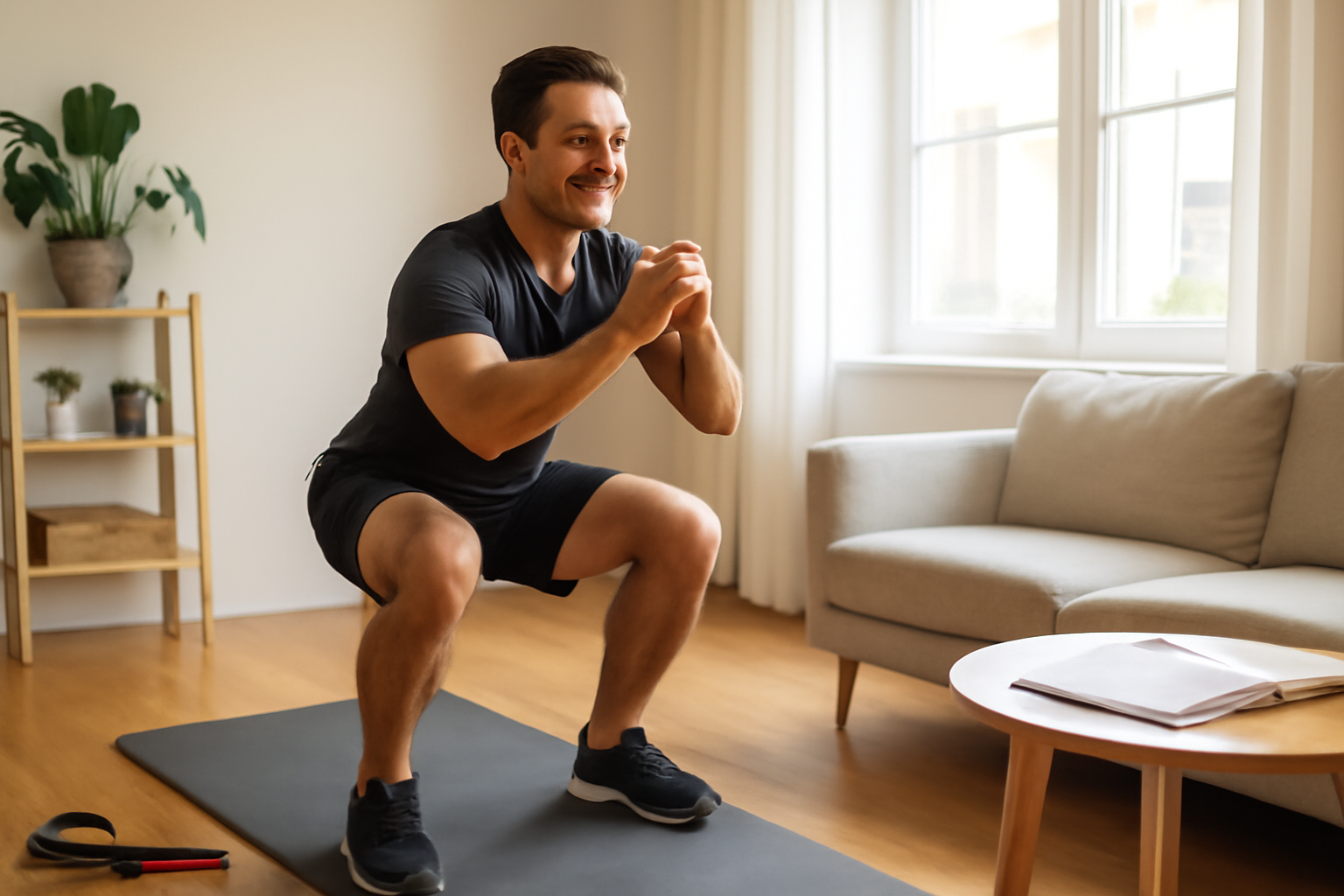
Home Workout Plans: Build Real Fitness Without a Gym
You don't need a membership, expensive equipment, or an hour to spare — you just need a plan that actually works.
Raise your hand if you've ever paid for a gym membership you barely used. According to data from the International Health, Racquet & Sportsclub Association, nearly 80% of gym members stop going within the first five months. Life gets in the way — long commutes, unpredictable schedules, the awkward feeling of not knowing what you're doing on the weight floor — and suddenly the monthly charge becomes a guilt tax you just stop thinking about.
Here's the thing: working out at home isn't a consolation prize. Done right, a structured home workout plan can build genuine cardiovascular fitness, real muscular strength, improved flexibility, and long-term health — no squat rack required.
In this guide, you'll get a complete, evidence-backed breakdown of how to build an effective home workout plan from scratch. Whether you're a total beginner trying to move more, or someone returning to fitness after a break, this is your roadmap to building consistent, sustainable fitness habits in the space you already have.
Why Home Workouts Matter More Than You Think
Home-based fitness has had a serious credibility upgrade in recent years — and not just because of convenience. Research is confirming what many fitness professionals have known for years: you don't need a gym to get meaningfully fit.
A study published in the Journal of Exercise Science & Fitness found that participants following structured bodyweight programs experienced comparable improvements in muscular endurance and cardiovascular markers as those using gym equipment over an eight-week period. The key word there is structured. Random push-ups before bed won't cut it — but a well-designed plan will.
The American College of Sports Medicine (ACSM) recommends that adults get at least 150 minutes of moderate-intensity aerobic activity per week, plus two days of muscle-strengthening activities targeting major muscle groups. All of that is completely achievable at home — in your living room, backyard, or even a hotel room during a work trip.
Beyond the physical benefits, home workouts remove a major psychological barrier: the gym itself. For many adults, the commute, the crowds, and the perceived judgment are enough to derail any routine before it gets going. Exercising at home eliminates the friction — and friction is the number one enemy of consistency.
The Science Behind Bodyweight and Home-Based Training
Let's bust a big myth right away: bodyweight training is not just for beginners or people who "can't afford weights." It's a legitimate, scalable training modality used by athletes, military personnel, and physical therapists alike.
The fundamental principle driving all resistance training — whether you're using barbells or your own body — is progressive overload. This means gradually increasing the demand placed on your muscles over time so they continue to adapt and grow stronger. With bodyweight training, you achieve this by increasing reps, decreasing rest periods, adding tempo (slower movements), or progressing to harder movement variations (think: going from a regular squat to a single-leg squat).
Research published in the Journal of Strength and Conditioning Research confirms that progressive bodyweight training produces significant improvements in both muscular strength and hypertrophy — particularly in untrained or moderately trained individuals. The ceiling is real, but for most people who aren't competitive powerlifters, it's well above where they'll ever need to go.
Cardiovascular conditioning at home is equally well-supported. High-intensity interval training (HIIT) performed with zero equipment — think jump squats, mountain climbers, and burpees — has been shown by research at McMaster University to improve VO2 max and metabolic health in as little as 12 minutes of actual work per session when structured correctly.
The downside? Without external load, building maximum strength for powerlifting or Olympic lifting goals isn't realistic from home alone. But for general fitness, body composition, endurance, and quality of life? Home-based training absolutely delivers.
How to Build Your Home Workout Plan: Practical Steps
A great home workout plan isn't just a list of exercises — it's a system. Here's how to build one that actually fits your life.
Step 1: Define Your Goal
Before you do a single squat, get clear on what you want. Fat loss, muscle building, improving endurance, reducing stress, moving more after a sedentary job — each requires a slightly different training emphasis. Your goal shapes your plan.
Step 2: Assess Your Starting Point
Be honest about your current fitness level. Can you do 10 push-ups with good form? Can you walk up two flights of stairs without getting winded? Your starting point determines your entry-level programming — not your final destination.
Step 3: Choose Your Training Split
For beginners, a full-body workout 3 days per week (Monday / Wednesday / Friday, for example) with rest days in between is ideal. This frequency allows adequate recovery while building the movement patterns you need. Intermediate trainees can move to a 4-day upper/lower split.
Step 4: Build Your Exercise Menu
- Push movements: Push-ups (standard, incline, decline, diamond), pike push-ups, dips using a chair
- Pull movements: Doorframe rows, resistance band rows, towel rows using a table
- Hinge movements: Romanian deadlift variations with a loaded bag, single-leg hip hinges
- Squat patterns: Bodyweight squats, split squats, Bulgarian split squats, wall sits
- Core: Planks, dead bugs, hollow holds, reverse crunches
- Cardio: Jump rope (even imaginary), high knees, jumping jacks, stair climbs
Step 5: Schedule Recovery Intentionally
Rest days are not wasted days. Muscles grow during recovery, not during the workout itself. Aim for 48 hours between training the same muscle group, and prioritize sleep — which Harvard Health Publishing consistently links to faster muscle repair and better training adaptation. For more on how sleep affects your fitness results, check out our guide on Sleep and Weight Gain: The Hidden Link You Can't Ignore.
Beginner Sample Week:
- Monday: Full-body strength (3 sets x 10-12 reps per exercise)
- Tuesday: 20-minute walk or light stretching
- Wednesday: Full-body strength
- Thursday: Rest or yoga
- Friday: Full-body strength
- Weekend: Active recovery — walking, hiking, or gentle movement
Intermediate Option: Add a 4th day, splitting upper body and lower body, and introduce HIIT circuits on one session. If you want to explore how HIIT compares to steady cardio, our breakdown of HIIT vs Steady-State Cardio covers the science in detail.
Common Mistakes That Sabotage Home Workout Results
Home workouts are wonderfully accessible — and that accessibility comes with its own set of traps. Here are the most common ones, and how to avoid them.
Mistake #1: Skipping the Warm-Up
It's tempting to roll out of bed and jump straight into a workout. But cold muscles and stiff joints are injury waiting to happen. A 5-minute dynamic warm-up — leg swings, arm circles, hip rotations, and light cardio — significantly reduces injury risk and improves performance. The ACSM recommends at least 5-10 minutes of warm-up before any resistance or cardio session.
Mistake #2: Doing the Same Workout Every Day
If you're doing the same 20 push-ups and 30 crunches every day and wondering why nothing is changing — this is why. Your body adapts quickly. Without progressive overload (more reps, harder variations, less rest), your results will plateau within weeks. Change something every 2-3 weeks.
Mistake #3: Treating It Like an "Optional" Activity
The gym has a scheduled class. Home doesn't. Without external accountability, home workouts are often the first thing to get pushed off the to-do list. Fix this by scheduling your workouts in your calendar like an appointment — with a set start time, a specific plan, and a non-negotiable 20-minute minimum commitment on low-motivation days.
Mistake #4: Neglecting Pulling Movements
Most people default to push-heavy workouts at home — lots of push-ups, dips, squats. But neglecting pulling movements (rows, pull variations) creates muscular imbalances, especially in the upper back and shoulders, which are already compromised by hours of desk sitting. Even with resistance bands or a doorway pull-up bar, add one pull movement for every push movement.
Mistake #5: Ignoring Nutrition as Part of the Plan
Your home workout results are heavily influenced by what happens in your kitchen. Protein intake, in particular, is critical for muscle repair. The Academy of Nutrition and Dietetics recommends 1.2 to 2.0 grams of protein per kilogram of body weight per day for active adults — and most Americans fall short. If your fitness goals include body composition changes, nutrition can't be an afterthought.
What to Eat to Support Your Home Fitness Plan
Exercise without adequate fueling is like driving a car on empty — you can only go so far. Here's what to focus on.
Prioritize Protein at Every Meal
Lean chicken, Greek yogurt, eggs, canned tuna, legumes, and cottage cheese are all excellent, affordable protein sources. Aim for 20-30 grams of protein per meal to maximize muscle protein synthesis, as supported by research published in the American Journal of Clinical Nutrition.
Don't Fear Carbohydrates
Carbohydrates fuel your workouts — particularly higher-intensity sessions. Whole grains, oats, sweet potatoes, and fruit provide sustained energy without the crash. According to the USDA Dietary Guidelines, carbohydrates should make up 45-65% of total daily calories for active adults.
Pre-Workout Eating
If you're working out in the morning, a small, easily digestible snack 30-60 minutes prior (a banana with nut butter, or a small bowl of oatmeal) can improve performance without causing GI discomfort during your session.
Post-Workout Recovery Window
Consuming protein and carbohydrates within 30-60 minutes after exercise supports muscle glycogen replenishment and protein synthesis. A protein smoothie, Greek yogurt with fruit, or eggs with toast are practical and effective options.
Hydration Matters More Than You Think
Even mild dehydration (as little as 2% body weight loss in fluids) can reduce exercise performance by up to 10%, according to research reviewed by the American College of Sports Medicine. Aim for at least 8 cups (64 oz) of water per day as a baseline, more on training days.
For those pairing home workouts with specific nutrition strategies, our article on the Anti-Inflammatory Diet covers how your food choices can support recovery and reduce exercise-related soreness.
How Long Until You See Real Results?
Patience is the most underrated fitness tool — but understanding realistic timelines helps you stay committed instead of bailing too early.
Weeks 1-2: You may feel sore, especially if you're returning to exercise after a break. This is normal. Your nervous system is adapting, your muscles are learning movement patterns. You likely won't see visible changes yet, but your energy and mood may already start to improve.
Weeks 3-6: Strength improvements become noticeable — exercises that felt hard start feeling more manageable. Research from the Journal of Applied Physiology suggests neuromuscular adaptations (your brain-muscle coordination) peak in the first four to six weeks, which is why initial strength gains come quickly even before muscle size changes.
Weeks 6-12: Visible body composition changes become more apparent, particularly when combined with consistent nutrition. This is where motivation tends to naturally increase as results reinforce effort.
What to Track:
- Number of reps completed per exercise (log your workouts)
- How you feel during and after sessions — energy levels, recovery time
- Progress photos every 4 weeks (more informative than the scale alone)
- Waist measurements, if body composition is the goal
- Sleep quality and daily energy as indirect indicators of overtraining or under-recovery
If you're not seeing any progress after 8-12 weeks of consistent effort, reassess your plan. Consider consulting a certified personal trainer for a plan review, or speak with a registered dietitian if nutrition is the missing piece.
Frequently Asked Questions
Can I really build muscle at home without weights?
Yes — to a meaningful degree. Bodyweight exercises, especially when progressively overloaded and performed with sufficient volume, stimulate muscle protein synthesis and produce hypertrophy. The results are most pronounced in beginners and intermediate trainees. Advanced lifters seeking maximum muscle mass will eventually need external load, but for general fitness and a strong, functional physique, home training is highly effective.
How many days a week should I work out at home?
The ACSM recommends at least 3-5 days of physical activity per week, depending on intensity. For beginners, 3 days of structured training with active recovery on other days is ideal. As fitness improves, 4-5 days becomes sustainable. What matters most is consistency over time, not perfection in any given week.
What's the minimum amount of time for an effective home workout?
Research suggests that as little as 20-30 minutes of focused, well-structured exercise is sufficient to produce measurable fitness improvements. A 20-minute circuit combining compound bodyweight movements with minimal rest can elevate your heart rate, challenge your muscles, and deliver real results. Quality always beats duration.
Do I need any equipment at all?
Absolutely not to start. Your bodyweight alone provides enough resistance for a comprehensive beginner plan. If you want to scale up over time, a pair of resistance bands ($15-30) and a set of adjustable dumbbells are the highest-value investments you can make for home training. A pull-up bar (around $25-40) unlocks a whole category of pulling movements that're otherwise limited at home.
What if I lose motivation at home?
This is real and incredibly common. Strategies that help: following a video-based program for structure, creating a dedicated workout space (even a cleared corner), setting a consistent time each day, and tracking your workouts to see progress visually. Some people also benefit from online accountability groups or fitness apps with community features. If low motivation is persistent and goes beyond fitness, it may be worth exploring what's behind it — burnout and chronic stress often manifest as exercise avoidance. Our guide on Burnout Recovery may offer some useful context.
Your Next Step Starts Today — Not Monday
The best home workout plan is the one you actually do. It doesn't have to be perfect, beautifully designed, or exactly 45 minutes long. It just has to be consistent, progressive, and honest about where you're starting from.
You've got everything you need: a body that moves, a bit of floor space, and now a science-backed roadmap. Start with three days this week. Pick five exercises. Do three sets each. Log what you did. Then show up and do it again.
Small, repeatable actions compound into real, lasting fitness — and it all begins with one session that you don't skip.
Wellness Disclaimer: This article is for informational and educational purposes only. The content is not intended to replace professional medical, nutritional, or fitness advice. Always consult a qualified healthcare provider, registered dietitian, or certified fitness professional before starting a new health program or making significant changes to your lifestyle.
Content reviewed by our wellness editorial team, with references to peer-reviewed research and guidelines from leading health organizations.