Tag: workout guide

  • Plyometric Training: Build Power, Speed & Fitness Fast

    Plyometric Training: Build Power, Speed & Fitness Fast

    Plyometric Training: Build Power, Speed & Fitness Fast

    You don’t need to be an athlete to train like one — plyometrics can reshape how your body moves, burns energy, and ages.

    Here’s a surprising fact: most adults over 30 start losing explosive muscle power at roughly twice the rate they lose muscle mass. That means even if you’re maintaining your weight and doing regular cardio, your ability to react quickly, jump, sprint, or catch yourself from a fall could be quietly declining — and most workout routines do almost nothing to address it.

    That’s where plyometric training comes in. Also known as “jump training” or “explosive training,” plyometrics are a category of exercises designed to develop power by training your muscles to generate maximum force in minimal time. They’re not just for college athletes or CrossFit enthusiasts. When programmed correctly, plyometric exercises are one of the most efficient tools available for adults who want to improve cardiovascular fitness, build lean muscle, and maintain long-term physical independence.

    In this guide, you’ll learn exactly what plyometric training is, what the research actually says about its benefits and risks, how to start safely at any fitness level, and the most common mistakes that lead to injury rather than results.

    Why Plyometric Training Matters More Than You Think

    Most people think of plyometrics as box jumps and burpees — intense, sweaty, and best left to twenty-year-olds. But the real story is more nuanced, and frankly, more important for every adult reading this.

    The key concept here is power, which is different from strength. Strength is how much force your muscles can produce. Power is how fast they can produce it. Research published in the Journal of Strength and Conditioning Research has consistently shown that power declines faster than strength with age, beginning as early as your mid-30s. This has real-world consequences: slower reaction time, reduced balance, and a higher risk of falls — which, according to the CDC, are the leading cause of injury-related death in adults over 65.

    The good news? Power responds exceptionally well to targeted training. A systematic review published in the British Journal of Sports Medicine found that plyometric training significantly improved lower-body power, sprint performance, and jump height across adult populations, including middle-aged individuals who had no prior explosive training experience.

    Beyond injury prevention, plyometrics also deliver meaningful cardiovascular and metabolic benefits. Because they demand high muscle recruitment in short bursts, they elevate heart rate rapidly and challenge your aerobic and anaerobic systems simultaneously. If you’re someone who wants to get more done in less time at the gym, plyometrics deserve a spot in your weekly plan.

    The Science Behind How Plyometrics Actually Work

    Here’s the mechanism that makes plyometrics uniquely effective: the stretch-shortening cycle (SSC).

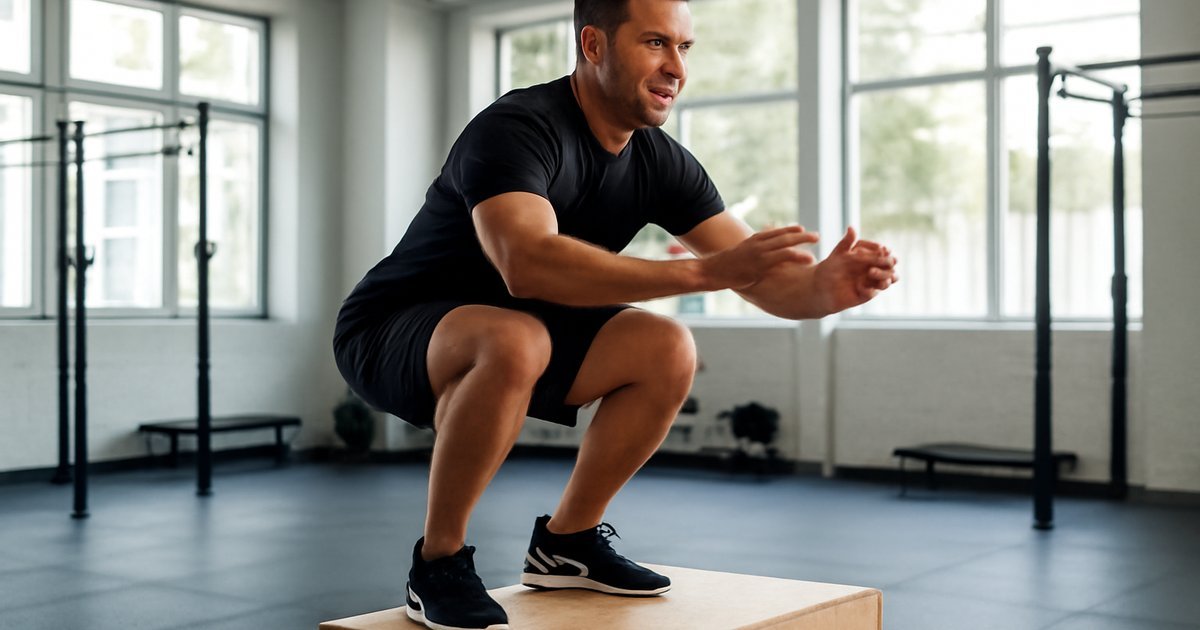
    When you perform a plyometric movement — say, a squat jump — your muscles first undergo a rapid eccentric (lengthening) contraction as you descend, followed immediately by an explosive concentric (shortening) contraction as you drive upward. This pre-stretching phase stores elastic energy in your tendons and muscles like a compressed spring, which is then released explosively. The faster and more efficiently your body can complete this cycle, the more powerful you become.

    Training this cycle consistently leads to neuromuscular adaptations: your nervous system learns to recruit more motor units faster, your tendons become stiffer and more elastic, and your muscles develop better inter-muscular coordination. According to the American College of Sports Medicine (ACSM), these adaptations typically begin to show within 6 to 8 weeks of consistent plyometric training in previously untrained adults.

    One common myth worth debunking: plyometrics are only safe for young, lean, or already-athletic people. While certain high-impact variations do require a solid strength foundation, there are plyometric progressions appropriate for virtually every adult — including those who are overweight, deconditioned, or returning from a sedentary period. Low-impact plyometrics, sometimes called “reactive” or “power endurance” training, can produce similar neuromuscular benefits with significantly reduced joint stress.

    If you’re currently building your aerobic base, you might also want to read about Zone 2 Cardio: The Overlooked Key to Lasting Fitness — plyometrics and low-intensity cardio work exceptionally well together as complementary tools in a balanced fitness program.

    How to Get Started: Plyometric Training by Level

    Before you throw yourself at a 24-inch box, understand this: the ACSM recommends that anyone beginning plyometric training should first establish a baseline of muscular strength — specifically, the ability to perform a bodyweight squat with good form through a full range of motion and land safely from a small hop. If you’re not there yet, spend 4 to 6 weeks building that base first.

    Beginner Level (Weeks 1–4)

    • Squat jumps (low amplitude): Start with a quarter-squat, drive up onto your toes, land softly. Focus entirely on landing mechanics — quiet feet, knees tracking over toes, hips back.
    • Step-off jumps: Step off a low step (6 inches), land in an athletic stance, and hold. This teaches landing control without requiring a jump upward.
    • Lateral bounds (short range): Push off one foot laterally, land on the opposite foot, absorb the impact. Keep the range of motion small initially.
    • Pogos (ankle hops): Small, rapid hops driven by the ankle with minimal knee bend. Great for developing Achilles tendon elasticity safely.

    Aim for 2 sessions per week, 2 to 3 sets of 6 to 8 reps per exercise. Rest fully between sets (60 to 90 seconds).

    Intermediate Level (Weeks 5–10)

    • Box jumps (12–18 inches): Jump onto a stable platform, land softly in a quarter-squat. Step down, never jump down at this stage.
    • Broad jumps: Jump forward as far as possible, land with soft knees and full hip flexion. Emphasize distance, not height.
    • Single-leg hops (controlled): Hop forward on one foot, stick the landing for 2 seconds. Develops unilateral power and ankle stability.
    • Depth drops (not depth jumps yet): Step off a box, land, absorb. Focus on minimizing ground contact noise.

    Increase to 3 sessions per week with adequate recovery. Volume: 3 to 4 sets of 8 to 10 reps. Include a proper 10-minute dynamic warmup every session.

    Advanced Level (Week 10+)

    • Depth jumps, bounding, hurdle hops, reactive drills
    • Can be integrated into circuit training or athletic conditioning
    • Results vary significantly based on training history, recovery quality, and individual biomechanics

    For those interested in combining plyometrics with bodyweight strength work, our guide on Calisthenics for Adults: Build Real Strength Anywhere offers an excellent complementary approach.

    Common Mistakes That Sabotage Results (and Cause Injuries)

    Plyometric training is effective precisely because it’s demanding. That same intensity is what makes poor execution risky. Here are the most common errors — and how to correct each one.

    1. Skipping the landing mechanics phase. This is the most dangerous mistake beginners make. Landing poorly — with stiff knees, collapsed arches, or knees caving inward — places enormous shear force on your ACL and patellar tendon. Before adding any jump height or speed, practice soft landings with a controlled descent into a squat. If your landings are loud, they’re not safe.

    2. Doing too much, too soon. Because plyometrics feel energizing, it’s tempting to do them every day or pile on volume. Research from the Journal of Athletic Training links rapid plyometric volume increases to overuse injuries in the Achilles tendon and patellar tendon. Follow the 10% rule: don’t increase weekly volume by more than 10% from one week to the next.

    3. Training on inadequate surfaces. Hardwood floors, concrete, and slippery tiles are not appropriate surfaces for explosive training. Use a rubberized gym floor, grass, or proper sports turf. The surface should provide slight give without being unstable.

    4. Neglecting strength as a foundation. If you can’t control a bodyweight squat, you’re not ready to land from a jump. The ACSM recommends being able to squat 1.5 times your bodyweight before attempting high-intensity plyometrics. For beginners, the practical entry point is simply being able to perform a proper squat and single-leg balance.

    5. Ignoring rest and recovery. Plyometrics create significant neuromuscular fatigue. If you’re performing explosive training while already fatigued, your form deteriorates and injury risk climbs. Always perform plyometrics early in a workout, never at the end of a long session.

    What to Eat Around Plyometric Workouts

    Explosive training has specific nutritional demands that differ from steady-state cardio or traditional strength work. Because plyometrics rely heavily on fast-twitch muscle fibers fueled by glycogen (stored carbohydrates), your carbohydrate intake matters more here than in low-intensity workouts.

    According to the Academy of Nutrition and Dietetics, active adults engaged in power-based training should aim for 3 to 5 grams of carbohydrate per kilogram of body weight daily, with a pre-workout meal or snack containing 25 to 40 grams of complex carbs consumed 60 to 90 minutes before training.

    Pre-workout options:

    • Oatmeal with banana and a tablespoon of nut butter
    • Whole grain toast with a hard-boiled egg and fruit
    • Greek yogurt with berries and a small handful of granola

    Post-workout recovery is equally critical. Research published in the Journal of the International Society of Sports Nutrition supports consuming 20 to 40 grams of high-quality protein within 2 hours after explosive training to maximize muscle repair and neuromuscular adaptation.

    Post-workout protein sources:

    • Grilled chicken or turkey breast (4 to 6 oz)
    • Cottage cheese with pineapple
    • A protein shake with milk or a milk alternative
    • Canned salmon or tuna with whole grain crackers

    Hydration also plays a direct role in explosive performance. Even mild dehydration (1 to 2% of body weight) can reduce power output measurably, according to the American College of Sports Medicine. Aim to drink at least 16 oz of water in the 2 hours before your session and replace fluids throughout.

    For a deeper look at how protein supports your training, check out our comprehensive resource: Optimal Protein Intake: Your Science-Backed Guide.

    How Long Until You See Results — and What to Track

    Results from plyometric training are measurable, but they don’t always look the way people expect. You may not see dramatic changes in the mirror in the first 4 to 6 weeks — but your body is changing in ways that matter deeply.

    Weeks 1–3: Primarily neurological adaptation. You’ll likely feel more coordinated and notice improved landing control. Soreness may be significant in the first week, especially in the calves, glutes, and quads.

    Weeks 4–6: Tendon stiffness improves, early power gains become measurable. Most people notice they feel more “springy” and can complete sets with less perceived effort.

    Weeks 8–12: Measurable improvements in jump height, lateral agility, and cardiovascular efficiency during explosive efforts. Some adults also report improved balance and faster reaction time in daily life.

    What to track:

    • Vertical jump height (mark a wall and track over time)
    • Broad jump distance (measure with a tape)
    • Single-leg balance duration
    • Resting heart rate (should decrease as fitness improves)
    • How quickly your heart rate recovers after a plyometric set (1-minute post-exercise HR)

    If you’re not seeing improvements after 10 to 12 weeks of consistent training, it’s worth reassessing your nutrition, sleep quality, and overall program structure — or consulting a certified strength and conditioning specialist (CSCS) for an individualized evaluation. Results vary significantly based on training age, recovery habits, and baseline fitness.

    Frequently Asked Questions

    Is plyometric training safe for adults over 40?
    Yes — with appropriate progressions. Research published in the Journal of Aging and Physical Activity supports plyometric training for older adults as an effective tool for maintaining power and reducing fall risk. The key is starting with low-amplitude, low-impact variations and building up gradually. Anyone with a history of joint injury, osteoporosis, or cardiovascular conditions should get medical clearance first.

    Can plyometrics help with weight loss?
    They can contribute meaningfully. Because plyometric sessions are high-intensity, they produce significant calorie burn and create an elevated post-exercise metabolic rate (the so-called “afterburn effect,” or EPOC). However, they’re most effective for weight management when paired with a nutritional approach that supports a calorie deficit over time — not as a standalone solution.

    How many days a week should I do plyometric training?
    For beginners, 2 sessions per week with at least 48 hours between sessions is the recommended starting point. The ACSM advises against performing high-intensity plyometrics on consecutive days due to the neuromuscular demand and recovery requirements involved. Intermediate to advanced practitioners may train 3 times weekly with careful attention to volume and intensity.

    Do I need equipment to start?
    Not at all. The beginner progressions outlined above require nothing more than a stable floor surface and good athletic shoes. A low step, a sturdy chair for support, or a park bench can be useful additions, but a full plyometric program for beginners can be done with zero equipment.

    What’s the difference between plyometrics and HIIT?
    HIIT (High-Intensity Interval Training) is a training structure — alternating high- and low-intensity intervals. Plyometrics are a specific type of exercise focused on developing explosive power through the stretch-shortening cycle. Plyometric exercises are often used within HIIT workouts, but not all HIIT is plyometric, and plyometric training can be done outside of HIIT format as well.

    Start Small, Move Explosively, Stay Consistent

    Plyometric training isn’t about turning yourself into a track and field athlete. It’s about reclaiming something most adults quietly lose with age — the ability to move powerfully, react quickly, and feel physically capable in ways that go far beyond what a treadmill or a set of bicep curls can deliver.

    You don’t need to start with box jumps. A few soft-landing squat jumps and lateral bounds in your living room, done twice a week with good form, can begin rewiring your neuromuscular system within weeks. As your confidence and capacity grow, so does the program.

    Pick one beginner exercise from this guide today. Practice your landing. Notice how your body feels. That’s the first step — and in plyometric training, the first step is everything.


    Wellness Disclaimer: This article is for informational and educational purposes only. The content is not intended to replace professional medical, nutritional, or fitness advice. Always consult a qualified healthcare provider, registered dietitian, or certified fitness professional before starting a new health program or making significant changes to your lifestyle.

    Content reviewed by our wellness editorial team, with references to peer-reviewed research and guidelines from leading health organizations.
  • Functional Fitness: Train for Real Life, Not Just the Gym

    Functional Fitness: Train for Real Life, Not Just the Gym

    You can bench press your own bodyweight — but does carrying two full grocery bags up three flights of stairs still leave you winded?

    Introduction

    Here’s a scenario most people recognize: you’ve been going to the gym consistently, maybe even seeing progress on the machines, but everyday physical tasks still feel harder than they should. Climbing stairs, lifting boxes, picking up kids, reaching overhead — these movements somehow expose a gap that your workout routine isn’t filling.

    That gap has a name: functional fitness. And according to the American College of Sports Medicine (ACSM), functional fitness training is one of the most consistently popular and evidence-supported approaches for adults who want to move better, feel stronger, and reduce injury risk in everyday life — not just look good in a mirror.

    In this guide, you’ll learn exactly what functional fitness is, why the science behind it is so compelling, how to start even if you’ve never heard the term before, and how to build a routine that genuinely improves the quality of your daily life. This isn’t about chasing aesthetics. It’s about building a body that works for you — in the real world.

    Why Functional Fitness Matters More Than You Think

    The average American adult spends the majority of their waking hours in isolated, static positions — sitting at desks, driving, scrolling phones. When they do exercise, many use machines that move them along a fixed track, training individual muscles in isolation. That’s not inherently bad, but it leaves a critical void.

    Functional fitness training focuses on compound, multi-joint movements that mimic the patterns your body uses in real life — pushing, pulling, hinging, squatting, rotating, and carrying. These patterns engage multiple muscle groups simultaneously, train your neuromuscular system to coordinate movement, and build what researchers call “transfer” — meaning the strength and control you build in the gym actually shows up in your daily life.

    A study published in the Journal of Aging and Physical Activity found that older adults who participated in functional training programs showed significantly greater improvements in daily living tasks — like climbing stairs and rising from chairs — compared to those who followed traditional resistance machine training. And this isn’t just relevant for seniors. Adults in their 30s and 40s who don’t train functionally are quietly accumulating movement deficits that compound over time.

    The Mayo Clinic also notes that functional fitness can help reduce the risk of injury both in athletic contexts and in everyday activities, since it trains the stabilizing muscles and connective tissue that isolation exercises tend to overlook. If you’ve ever thrown out your back picking something up off the floor, you’ve experienced firsthand what a lack of functional strength feels like.

    The Science Behind How Functional Fitness Actually Works

    Functional training isn’t a trend — it’s rooted in movement science, motor learning theory, and biomechanics. Here’s what’s actually happening when you train this way.

    Traditional exercise often trains the “prime movers” — the large muscles that do the obvious work. But human movement is a full-system event. Your core stabilizers, smaller hip rotators, shoulder stabilizers, and deep spinal muscles all have to fire in the right sequence for a movement to be safe and efficient. Functional training specifically targets this neuromuscular coordination.

    The myth it busts: Many people believe that if a muscle is strong, it’s also functional. Not true. You can have strong quadriceps and still have weak, poorly coordinated hip stabilizers — which is exactly why knee injuries are so common even among people who train regularly. Research from the British Journal of Sports Medicine has shown that poor hip and core neuromuscular control is one of the leading predictors of lower extremity injury, regardless of general strength levels.

    Functional training also works along multiple planes of motion. Most traditional gym exercises move in a single plane — think the up-down of a bicep curl or the forward-back of a chest press. Real life, however, requires rotational strength, lateral stability, and diagonal movement patterns constantly. Training these planes builds what biomechanists call “movement literacy” — your body’s ability to adapt fluidly to unexpected physical demands.

    Harvard Health Publishing also highlights that functional training, particularly when it involves balance challenges and proprioceptive demands (like single-leg exercises), actively engages the brain-body connection, which may support cognitive health as well as physical resilience. Think of it as cross-training for your nervous system.

    How to Get Started: From Beginner to Advanced

    One of the best things about functional fitness is that you don’t need a gym membership or special equipment to begin. Many of the most effective functional exercises use only your bodyweight — and they can be done anywhere.

    Start with these foundational movement patterns:

    • Squat pattern: Bodyweight squats, goblet squats, box squats. These mimic sitting, rising, and loading patterns.
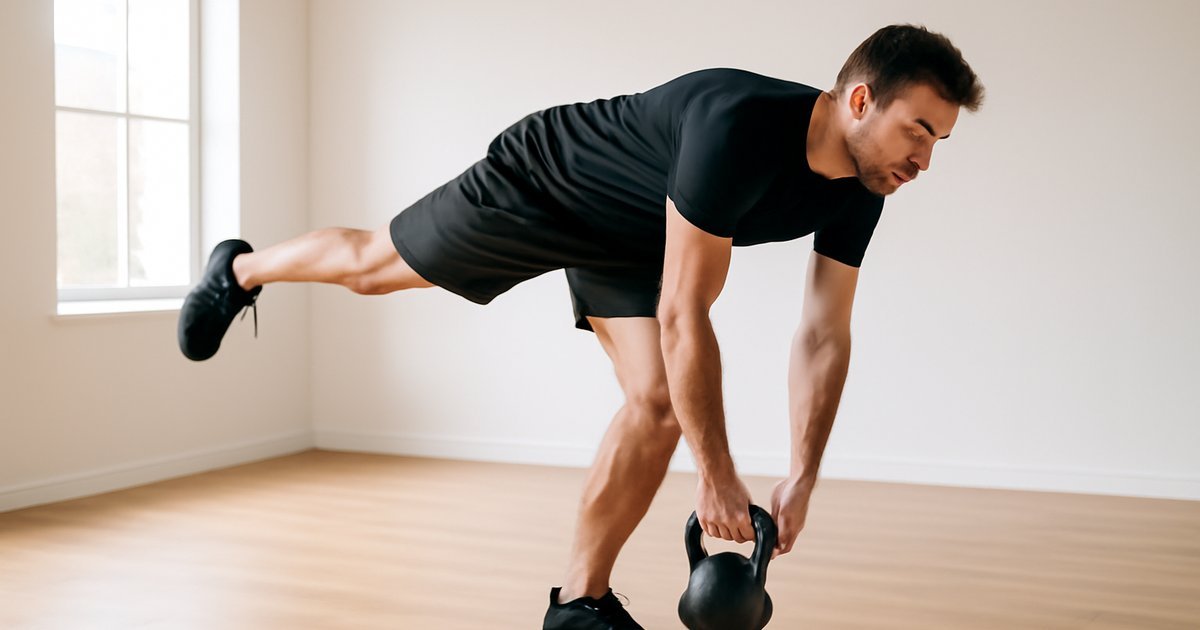
    • Hip hinge: Romanian deadlifts, single-leg deadlifts, kettlebell swings. Critical for back health and posterior chain strength.
    • Push: Push-ups, dumbbell presses, overhead pressing. Mirrors daily pushing and reaching movements.
    • Pull: Resistance band rows, dumbbell rows, pull-ups or inverted rows. Counterbalances all that sitting and forward posture.
    • Carry: Farmer’s carries, suitcase carries (one-sided), overhead carries. One of the most functional movements and most neglected.
    • Rotate and brace: Pallof press, woodchops, dead bugs. Trains core stability in the way your body actually uses it.

    Beginner entry point (2-3 days/week): Pick one exercise from each category, do 2-3 sets of 8-12 reps with controlled form. Focus on quality over load. Rest 60-90 seconds between sets. A full session can be done in 30-35 minutes.

    Intermediate (3-4 days/week): Add load progressively, introduce single-leg and single-arm variations, include balance challenges (performing exercises on one leg, using unstable surfaces like a folded yoga mat). Begin combining patterns — like a deadlift into an overhead press.

    Advanced (4-5 days/week): Periodize your training with strength phases (heavier loads, 4-6 reps) and endurance phases (lighter loads, higher reps). Add complex movements like Turkish get-ups, barbell clean and press, or loaded carries over longer distances. Consider working with an ACSM-certified personal trainer to optimize programming.

    If you’re building your home training setup, our Home Workout Plans guide offers complementary programming that fits well with a functional approach.

    Common Mistakes That Sabotage Functional Training Results

    Functional fitness is simple in concept but easy to undermine in practice. These are the most common pitfalls — and they’re all fixable.

    1. Skipping the basics to jump to “cool” exercises. Turkish get-ups and single-leg kettlebell deadlifts look impressive on social media, but if your basic squat pattern is broken — heels rising, knees caving, lower back rounding — you’ll just be doing a broken pattern under more load. Master the fundamentals first. Results vary based on your movement baseline, so a movement screen with a certified professional can save you months of frustration.

    2. Treating every session like a conditioning circuit. Functional training ≠ high-intensity circuit training. Many people turn every session into a breathless, sweat-drenched AMRAP because it feels productive. But true functional strength requires adequate rest between sets and intentional tension — not speed. The ACSM recommends rest intervals of 60-120 seconds for strength-focused sessions.

    3. Ignoring the posterior chain entirely. Most people naturally gravitate toward pushing movements and quad-dominant exercises. The result is a dramatic imbalance where the front of the body is overworked and the back of the body — glutes, hamstrings, mid-back, rear deltoids — is undertrained. This is one of the leading contributors to chronic lower back pain. Every push needs a corresponding pull; every squat needs a corresponding hinge.

    4. Neglecting recovery. Functional training, especially when it includes heavy carries and compound lifts, is taxing on the central nervous system and connective tissue. Attempting to train functionally 6-7 days a week without adequate rest leads to overuse injuries — the opposite of the goal. Build in at least 2 recovery days per week, and don’t underestimate the role of sleep. Reviewing our sleep hygiene guide can help you optimize the recovery side of the equation.

    5. Forgetting that nutrition supports the training. You can’t out-train chronic undereating. Functional movements are metabolically demanding, and your muscles need adequate protein to repair and adapt. According to the Academy of Nutrition and Dietetics, most active adults should aim for 1.2–1.7 grams of protein per kilogram of body weight per day. For more specifics, our protein intake guide breaks it all down clearly.

    What to Eat to Support Functional Fitness

    Functional training makes real physical demands on your body, and your nutrition strategy should support both performance and recovery.

    Prioritize protein at every meal: Lean proteins like chicken breast, eggs, Greek yogurt, cottage cheese, salmon, and legumes provide the amino acids needed for muscle repair. Aim for 20-40 grams of protein per meal, distributed evenly throughout the day — research published in the Journal of Nutrition consistently shows that spreading protein intake across meals is more effective for muscle protein synthesis than front- or back-loading.

    Don’t fear carbohydrates: Complex carbohydrates — oats, sweet potatoes, brown rice, quinoa, whole grain bread — fuel your working muscles before training and replenish glycogen afterward. The USDA Dietary Guidelines recommend that 45-65% of total calories come from carbohydrates for active individuals. The downside of very low-carb approaches for functional athletes is impaired high-intensity performance and slower recovery between sessions.

    Hydration is functional too: Even mild dehydration (as little as 2% loss of body water) measurably impairs physical performance and neuromuscular coordination, according to the ACSM. Aim for at least 8-10 cups of water daily, with an additional 16-24 ounces for each hour of training.

    Anti-inflammatory eating supports joint health: Fatty fish (salmon, sardines), olive oil, berries, leafy greens, turmeric, and ginger all have documented anti-inflammatory properties that support joint and connective tissue recovery — exactly the structures that functional training loads most.

    How Long Until You See Results — and What to Track

    One of the most honest things to say about functional fitness results is that the first changes you notice won’t be in the mirror. They’ll be in your life.

    Weeks 1-3: Neuromuscular adaptation. Your nervous system is learning to recruit muscle fibers more efficiently. You may not feel “stronger” yet, but your coordination and balance will begin improving. Beginners often report feeling more stable and less fatigued by everyday tasks within the first two weeks.

    Weeks 4-8: Strength and endurance improvements become measurable. You’ll likely notice you can do more reps with the same load, recover faster between sets, and handle daily physical tasks with noticeably less effort.

    Months 3-6: Visible body composition changes alongside significant performance improvements. Research from the NIH suggests that 8-12 weeks of consistent resistance training is the minimum threshold for meaningful muscular hypertrophy.

    What to track:

    • Movement quality (can you squat to parallel without your heels rising?)
    • Reps and loads over time (progressive overload is the core driver of adaptation)
    • Daily energy and fatigue levels
    • How specific daily tasks feel (stairs, carrying, bending, reaching)
    • Joint comfort — functional training should reduce, not increase, chronic discomfort

    When to seek professional guidance: If you experience persistent joint pain (not muscle soreness) during or after sessions, if progress stalls completely after 6-8 weeks of consistent effort, or if you have pre-existing injuries that limit your movement, consulting with an ACSM-certified personal trainer or a physical therapist is genuinely worthwhile.

    Frequently Asked Questions

    Is functional fitness good for weight loss?
    Functional training can support weight management by building lean muscle mass, which increases resting caloric expenditure over time, and by burning significant calories during sessions — particularly circuit-style functional workouts. However, nutrition remains the primary driver of fat loss. This approach works best when combined with a sustainable eating strategy.

    Can I do functional fitness if I have lower back pain?
    Many people with chronic lower back pain actually benefit from functional training, particularly when it addresses core stability and hip strength deficits that are often at the root of the problem. That said, you should work with a physical therapist or certified trainer first to identify safe starting points. Some movements may need to be modified or progressed gradually.

    How is functional fitness different from CrossFit?
    CrossFit incorporates many functional movement patterns but is typically performed at high intensity in a competitive group setting. Functional fitness as a training philosophy is broader — it emphasizes movement quality and real-world application and doesn’t require high intensity or competitive elements. Many functional training approaches are slower, more deliberate, and well-suited to people who aren’t interested in high-intensity formats.

    Do I need equipment to train functionally?
    Not at all. Bodyweight movements like squats, push-ups, lunges, single-leg hip hinges, and plank variations cover most functional patterns effectively. A resistance band and a set of dumbbells or kettlebells will expand your options significantly, but they’re not required, especially for beginners.

    How does functional fitness change as I get older?
    For adults in their 40s, 50s, and 60s, functional fitness becomes even more important. The NIH reports that adults lose 3-8% of muscle mass per decade after age 30 — a process called sarcopenia — and that decline accelerates after 60. Functional training is one of the most effective evidence-based strategies for preserving muscle, balance, and mobility as you age, directly reducing fall risk and supporting independence.

    The Bottom Line

    Functional fitness isn’t a complicated philosophy or an elite training secret. It’s simply training your body to do what it was designed to do — move well across a full range of human activities, not just perform well on a narrow set of gym exercises.

    You don’t need a perfect program, expensive equipment, or hours in the gym each week. You need consistency, progressive challenge, and movements that actually transfer to your life. Start with the foundational patterns, focus on quality over quantity, and give your body the time it needs to adapt.

    Pick one movement pattern from today’s guide and practice it this week. That’s your next step. Small, repeated actions build real-world strength that lasts — and that’s the kind of fitness that actually makes life better.


    Wellness Disclaimer: This article is for informational and educational purposes only. The content is not intended to replace professional medical, nutritional, or fitness advice. Always consult a qualified healthcare provider, registered dietitian, or certified fitness professional before starting a new health program or making significant changes to your lifestyle.

    Content reviewed by our wellness editorial team, with references to peer-reviewed research and guidelines from leading health organizations.