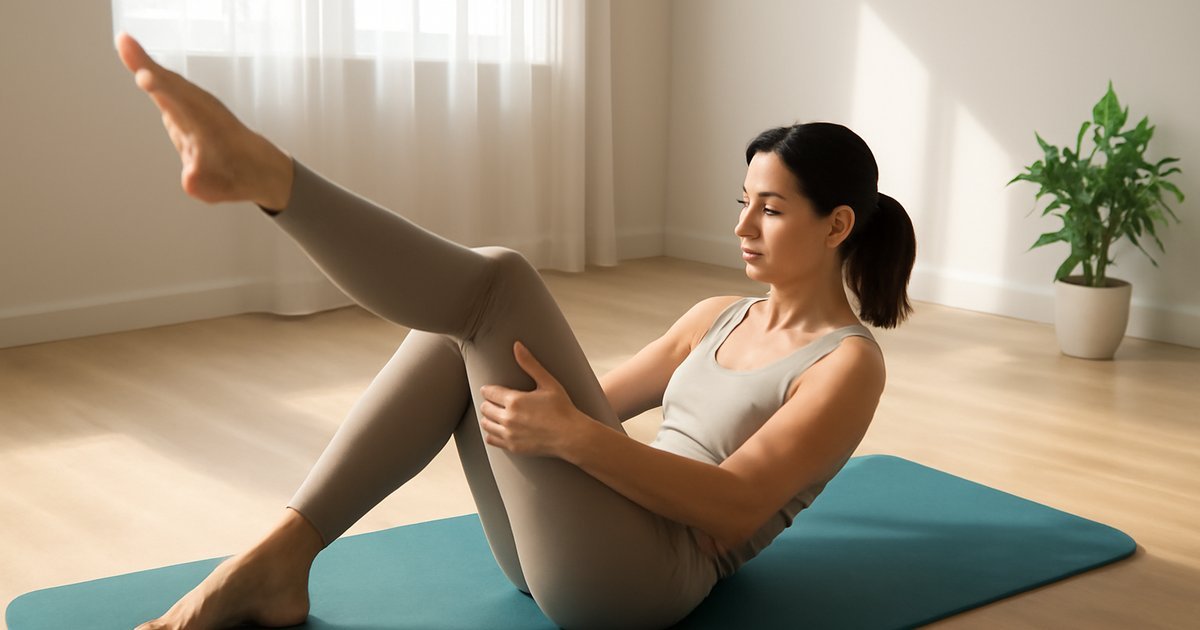
You don’t have to be a dancer or a yoga devotee to benefit from Pilates — and once you understand what it actually does to your body, you may wonder why you waited so long to try it.
Introduction
Here’s a scenario a lot of people recognize: you’re not out of shape exactly, but something feels off. Your lower back aches after long days at the desk. Your posture has quietly collapsed. You feel stiff in the mornings, and no matter how many crunches you do, your core just doesn’t feel stable or strong.
That’s where Pilates comes in — and it’s not what most people think. Pilates isn’t just stretching. It isn’t just for women or dancers. And it’s far from easy. According to the American College of Sports Medicine, Pilates is a legitimate form of resistance training that improves muscular endurance, core stability, and functional movement for adults across all fitness levels.
In this guide, you’ll learn exactly how Pilates works, what the research says about its benefits, how to start safely, and what mistakes to avoid. Whether you’ve never set foot on a mat or you’re looking to deepen an existing practice, this is the practical starting point you’ve been looking for.
Why Pilates Matters More Than You Think
Most adults lose somewhere between 3 and 8 percent of their muscle mass per decade after age 30, according to research published in the Journal of Aging and Physical Activity. That gradual loss affects posture, balance, joint stability, and even metabolic health. The solution isn’t always lifting heavier — it’s building smarter, more intentional movement patterns.
Pilates was originally developed by Joseph Pilates in the early 20th century as a rehabilitation system — what he called “Contrology” — for injured dancers and soldiers. Decades later, the method has been refined and validated by physical therapists, sports medicine professionals, and exercise scientists worldwide.
What makes it uniquely valuable for busy adults is that it targets the deep stabilizing muscles that conventional gym workouts tend to ignore: the transverse abdominis, the multifidus, the pelvic floor, and the muscles around the shoulder girdle. These are the muscles that hold your spine upright, protect your joints, and allow you to move efficiently in daily life.
A 2015 meta-analysis published in the Journal of Bodywork and Movement Therapies found that consistent Pilates practice significantly improved core strength, flexibility, and balance in healthy adults, with effects that showed up in as little as eight weeks of regular practice. That’s not a long time to see real, functional change in your body.
The bottom line: Pilates isn’t a "soft" workout. It’s a precision-based training method that builds the kind of strength that actually improves how you feel and move every single day.
The Science Behind How Pilates Works
At its core — literally — Pilates is built around a concept called the "powerhouse." This refers to the group of muscles spanning the lower torso: the abdominals, lower back, hips, and glutes. Every Pilates movement is initiated from this center, which trains your nervous system to recruit deep stabilizers before larger muscle groups take over.
This is fundamentally different from how most people exercise. In a standard gym session, you might use your larger, more dominant muscles — your quads, your upper traps, your hip flexors — while the smaller stabilizers remain underworked. Over time, this imbalance contributes to poor posture, joint pain, and movement inefficiency.
Pilates corrects this by slowing movements down and demanding precise muscle engagement. You can’t cheat your way through a properly cued Pilates exercise. The method incorporates six foundational principles: concentration, control, center, flow, precision, and breath. Each one is designed to make your nervous system work harder than the load itself might suggest.
Let’s bust a common myth: many people believe Pilates only develops "long, lean muscles" — a phrase repeated so often it’s practically folklore. Muscle shape is largely determined by genetics, not training style. What Pilates actually does is improve neuromuscular coordination, core endurance, joint mobility, and postural alignment. That’s not a marketing claim — it’s physiology.
Research published in PLOS ONE (2016) demonstrated that Pilates training leads to measurable improvements in proprioception — your body’s sense of its own position in space. Better proprioception means better balance, fewer falls, and more efficient movement patterns across all physical activities. For adults in their 40s and 50s especially, this benefit is significant and underappreciated.
Pilates also has meaningful implications for back health. The Mayo Clinic notes that low back pain affects up to 80% of adults at some point in their lives, and Pilates-based rehabilitation has become a standard recommendation from physical therapists for chronic lower back pain management. It’s not a cure, but it’s a well-supported adjunct to care.
How to Get Started with Pilates
Starting Pilates doesn’t require expensive equipment or a boutique studio membership. Here’s how to build in gradually, depending on where you’re starting from.
Beginner Level
- Start mat-based. Mat Pilates requires only a non-slip exercise mat and a small amount of floor space. Begin with two to three 20-minute sessions per week, focusing on foundational exercises like the Hundred, single-leg stretches, and pelvic tilts.
- Prioritize breath. In Pilates, you inhale to prepare and exhale to execute effort. Learning this pattern before worrying about movement complexity will accelerate your progress dramatically.
- Use a qualified instructor or video guide for form feedback. Even one in-person session with a certified Pilates instructor can correct habits that self-study tends to miss. Look for instructors certified through the Pilates Method Alliance (PMA) or STOTT Pilates.
- Work on the Big 5 beginner moves: the Hundred, the Roll-Up, single-leg circles, rolling like a ball, and the single-leg stretch. These build the foundational body awareness the entire system depends on.
Intermediate Level
- Introduce Reformer Pilates, which uses a spring-resistance sliding carriage to add load and variety. Many gyms and studios offer Reformer classes that significantly increase muscular challenge.
- Extend sessions to 40-50 minutes, three to four times per week.
- Incorporate prop-based exercises using resistance circles (magic circles), light hand weights, or foam rollers to progressively challenge stability.
Advanced Level
- Combine mat and Reformer work with apparatus exercises on the Cadillac, Wunda Chair, or ladder barrel for full-system Pilates training.
- Integrate Pilates principles into your other workouts — using the breath and core engagement cues during strength training or running can improve performance and reduce injury risk.
If you enjoy training with your own bodyweight and want to pair Pilates with a complementary approach, our guide on Bodyweight Training: Build Real Strength Anywhere offers excellent foundational work that pairs well with a Pilates practice.
Common Mistakes That Sabotage Your Pilates Results
Even motivated adults run into predictable pitfalls when starting Pilates. Here are the most common ones — and how to fix them before they become habits.
1. Holding your breath. This is the number one error beginners make. Breath is not optional in Pilates — it’s the mechanism that activates intra-abdominal pressure and protects the spine during movement. If you notice yourself holding your breath, slow down. Return to breath control before increasing complexity.
2. Rushing through repetitions. Pilates is a slow-training system by design. Performing exercises quickly reduces muscle time under tension and bypasses the neuromuscular control the method is built to develop. Fewer, slower, better reps always outperform more, faster, sloppy ones.
3. Leading with your neck during abdominal work. Many people unconsciously strain their neck forward during exercises like the Hundred or crunching movements. This recruits the sternocleidomastoid instead of the deep abdominals and can cause cervical strain. Fix: think about lengthening through the back of your skull, and keep your gaze toward your knees, not the ceiling.
4. Treating it as a warm-up-only practice. Some people only do Pilates before "real" workouts, never giving it a full session of its own. While Pilates integrates beautifully with other training, dismissing it as supplementary means you’ll never develop the deep strength and coordination it can build on its own terms.
5. Skipping consistency. Results from Pilates are cumulative. The neuromuscular changes that drive better posture and core stability take weeks of consistent practice to consolidate. Going twice a month won’t get you there. Two to three times per week, practiced consistently over eight to twelve weeks, is where the real transformation begins.
What to Eat to Support Your Pilates Practice
Pilates may not burn as many calories per session as a high-intensity interval workout, but it does demand muscular endurance, concentration, and recovery. Your nutrition should reflect that.
Protein: The Academy of Nutrition and Dietetics recommends 1.2 to 1.7 grams of protein per kilogram of body weight for active adults. Prioritize lean sources like chicken, fish, eggs, Greek yogurt, legumes, and tofu to support muscle repair and adaptation. A 150-pound active adult should aim for roughly 82 to 115 grams of protein per day.
Complex carbohydrates: Pilates sessions, especially longer or Reformer-based ones, require glycogen. Don’t undercut your training by going too low-carb. Whole grains, sweet potatoes, oats, and fruit are your best fueling choices before and after sessions.
Anti-inflammatory foods: Since Pilates is often used for joint health and injury prevention, foods that support inflammation management are a smart addition. According to Harvard Health Publishing, omega-3 rich foods (salmon, walnuts, flaxseed), leafy greens, and berries help manage the inflammatory response tied to exercise and aging.
Hydration: Even low-impact workouts drive fluid loss through breath and perspiration. The USDA Dietary Guidelines recommend at least 11.5 cups (women) to 15.5 cups (men) of total fluid daily. Drink 16 ounces of water about 90 minutes before your session and replenish afterward.
What to avoid: Ultra-processed foods, excess sugar, and alcohol in the hours around your sessions can impair muscle recovery and concentration — two things Pilates demands. You don’t need to be perfect, but timing matters.
How Long Until You See Results — and What to Track
This is the question everyone wants answered honestly, and the answer is: it depends on your starting point, your consistency, and what results you’re measuring.
Here’s what the research and clinical experience suggest:
- Weeks 1-3: Body awareness increases. You’ll start to feel muscles you didn’t know were there. Expect some soreness in the deep abdominals, inner thighs, and mid-back — areas often underdeveloped in conventional training.
- Weeks 4-6: Postural improvements often become noticeable. Colleagues or family may comment that you’re "standing taller." Mild back discomfort may begin to ease with consistent practice.
- Weeks 8-12: Core endurance, balance, and flexibility show measurable gains. Research supports this timeline — the 2015 Journal of Bodywork and Movement Therapies meta-analysis noted statistically significant changes within this window.
- Months 4-6+: Functional strength translates into other areas — better performance in other workouts, reduced injury frequency, improved posture under fatigue.
What to track:
- How long you can hold a plank with proper form (start and measure again at week 8)
- Range of motion in forward fold and lateral spine flexion
- Subjective back pain or stiffness levels on a 1-10 scale
- Balance test: single-leg stance with eyes closed (aim for 10-20 seconds)
If you’re not seeing any changes after 10-12 consistent weeks, consider booking a session with a certified Pilates instructor or physical therapist to evaluate your form and program design.
Pilates pairs exceptionally well with low-impact cardio. If you’re looking to complement your mat work with joint-friendly aerobic training, check out our guide on Swim Training for Fitness: Your Complete Guide for a natural pairing that keeps your joints healthy while building cardiovascular endurance.
Frequently Asked Questions About Pilates
Is Pilates enough on its own as a complete fitness program?
For many adults, especially those focused on injury prevention, rehabilitation, or improving daily movement quality, Pilates can serve as a primary fitness practice. However, the American College of Sports Medicine recommends that most adults also include aerobic exercise (150+ minutes per week at moderate intensity) for cardiovascular health. The best approach combines Pilates with some form of cardio, even walking.
Can Pilates help with weight loss?
Pilates can support weight management as part of a broader healthy lifestyle, but it’s not primarily a calorie-burning exercise. A 45-minute mat session burns roughly 175-250 calories depending on body weight and intensity — less than running or cycling. That said, improved body composition, muscle tone, and movement efficiency can support long-term weight management goals when combined with good nutrition and other movement.
Is Pilates safe for people with back pain?
For most adults with chronic low back pain, modified Pilates is considered safe and beneficial when guided by a qualified instructor. The Mayo Clinic notes that Pilates strengthens the muscles that support the lumbar spine, which often reduces chronic pain over time. However, always get clearance from your physician or physical therapist before starting, especially if you have a disc herniation, osteoporosis, or recent spinal surgery.
Mat Pilates vs. Reformer Pilates — which is better?
Neither is objectively superior — they serve different purposes. Mat Pilates is accessible, equipment-free, and excellent for building foundational body awareness. Reformer Pilates adds spring resistance, which increases the challenge significantly and allows for a wider range of exercises. Most practitioners benefit from both. Start with mat work to build your foundation, then explore Reformer training as you progress.
How often should I do Pilates?
Two to three sessions per week is the sweet spot for most adults looking to see consistent results without overtraining. Joseph Pilates famously said, "In 10 sessions you will feel the difference, in 20 you will see the difference, and in 30 you’ll have a whole new body." That quote reflects the cumulative, consistent nature of the practice — and it still holds up.
Conclusion
Pilates isn’t a trend. It’s a century-old, scientifically supported training method that happens to address some of the most common physical complaints of modern adult life: back pain, poor posture, weak core stability, and reduced mobility.
You don’t need a boutique studio or expensive equipment to start. You need a mat, a commitment to showing up two or three times a week, and enough patience to let the method work its way through your nervous system over several weeks.
Start simple. Master the breath. Feel the muscles you’ve been ignoring. Small, consistent reps of precise movement will outperform any workout you ever rush through. Your body — especially the parts that ache and feel tight — will thank you for it.
Start today with 20 minutes on your mat. That’s it. That’s the whole first step.
This article is for informational and educational purposes only. The content is not intended to replace professional medical, nutritional, or fitness advice. Always consult a qualified healthcare provider, registered dietitian, or certified fitness professional before starting a new health program or making significant changes to your lifestyle.
Content reviewed by our wellness editorial team, with references to peer-reviewed research and guidelines from leading health organizations.