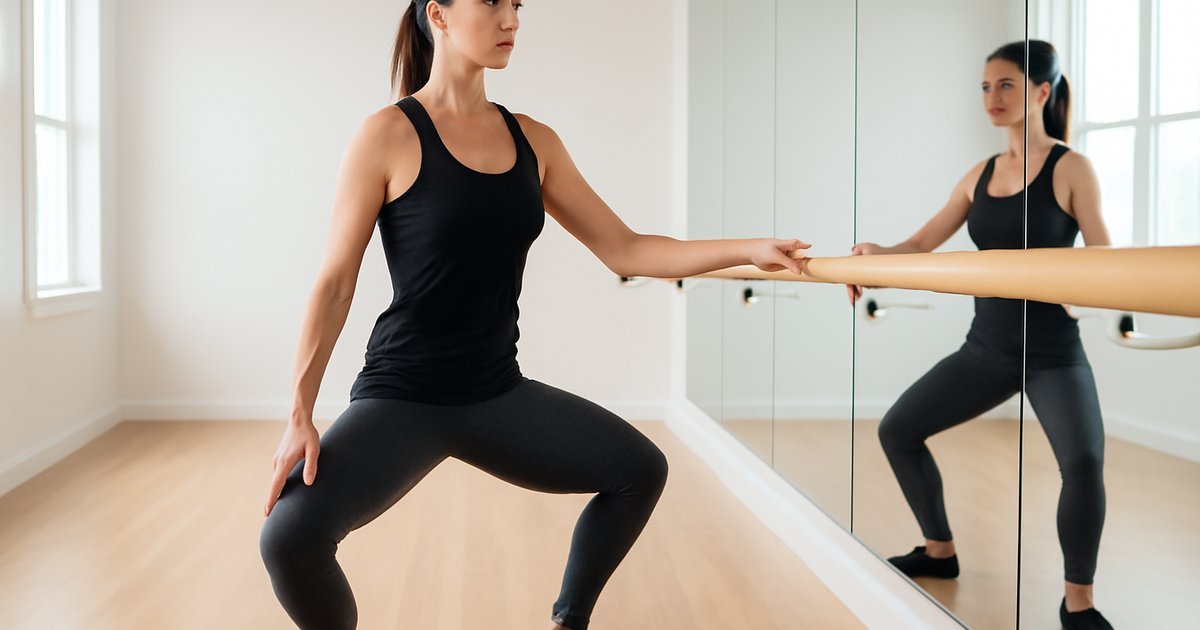
Barre Workout: Build Strength, Flexibility & Lean Muscle
It looks like ballet class — but the results are anything but delicate.
Picture this: you’re standing at a ballet barre, legs slightly turned out, doing what looks like the tiniest pulse imaginable. Thirty seconds in, your thighs are on fire. A minute later, you’re shaking. And somehow, by the end of the 55-minute class, you feel both completely spent and surprisingly calm.
That’s the barre workout effect — and it’s been quietly building one of the most loyal fitness followings in adult wellness. Unlike high-impact workouts that leave your joints aching, or heavy lifting sessions that demand long recovery windows, barre training sits in a uniquely effective middle ground. It builds real strength, improves flexibility, sharpens posture, and creates a deep connection between your mind and your muscles.
If you’ve been curious about barre but assumed it was only for former dancers or younger women, this guide is going to change your mind. We’ll break down what barre actually is, what the science says about its benefits, how to get started safely, and what to realistically expect — no leotard required.
Why Barre Workout Matters More Than You Think
Barre training isn’t just a trend. It’s a thoughtfully designed system that addresses several fitness gaps that most adults face — especially those in the 30-to-60 age range.
Here’s the reality: as we age, we don’t just lose muscle — we lose the smaller stabilizing muscles that support our joints, posture, and movement efficiency. Standard gym routines often neglect these deep muscle groups entirely. Barre, by contrast, directly targets them through isometric holds, small-range movements, and high-repetition sequences that require sustained muscular tension.
Research published in the Journal of Strength and Conditioning Research has shown that isometric exercise — holding a muscle under tension without changing its length — significantly improves both muscular endurance and joint stability. Barre classes are built around this principle. Every tucked pulse, held plié, and sustained arabesque position is essentially an isometric training stimulus.
Beyond muscle, barre is notably kind to your joints. The American College of Sports Medicine (ACSM) recommends low-impact exercise as a foundational element of adult fitness programs, particularly for those managing early-stage joint discomfort, bone density concerns, or returning from injury. Barre fits this profile precisely.
And perhaps most importantly for busy adults: a single barre session addresses strength, flexibility, balance, and mental focus all at once. That’s serious efficiency.
The Science Behind How Barre Actually Works
Let’s clear something up right away: barre is not "just stretching" and it’s not a watered-down yoga class. It’s a serious training modality with a distinct physiological mechanism.
The core science behind barre rests on three principles: muscular fatigue through high repetition, time under tension via isometric holds, and proprioceptive training — your body’s ability to sense its own position in space.
During a typical barre sequence, you might perform 30 to 60 small pulsing reps at a partial range of motion, immediately followed by a static hold. This combination keeps the target muscle contracted for an extended period, creating deep metabolic fatigue without heavy load. This is why you shake. That trembling isn’t weakness — it’s your muscle fibers being recruited to their limit.
A common myth is that barre only tones without building strength. That’s not accurate. A study in the Journal of Dance Medicine and Science found that regular barre participants showed measurable improvements in muscular endurance, postural alignment, and hip flexor strength over an 8-week period. These are real, functional gains.
Barre also involves significant core activation throughout every movement. Maintaining proper form at the barre — neutral pelvis, engaged abdominals, lifted chest — requires continuous deep core work that transfers directly to better posture and reduced lower back discomfort in daily life.
One more thing: the mind-muscle connection required in barre training is genuinely demanding. You’re not just moving — you’re cueing your body to isolate very specific muscles, which research suggests enhances neuromuscular efficiency over time.
How to Get Started with Barre Training
The good news: you don’t need ballet experience, extreme flexibility, or any special equipment to begin. Barre is genuinely beginner-friendly when approached correctly.
What you actually need:
- Grip socks (non-negotiable — they prevent slipping on smooth floors)
- A sturdy chair or countertop if you’re working at home
- Comfortable workout attire that allows full range of motion
- Optional: a light set of 1-3 lb hand weights for upper body sequences
Beginner entry point (weeks 1-3):
- Start with 2 sessions per week, 30-45 minutes each
- Focus on learning proper form over completing every rep — poor form defeats the purpose
- Common beginner sequences: parallel first position squats (plié), standing seat work (glute isolation), forearm plank holds, and upper body work with light weights
- Expect muscle soreness in places you haven’t felt before — inner thighs, outer hips, and the seat
- Use a mirror if possible to check your alignment
Intermediate progression (weeks 4-8):
- Increase to 3-4 sessions per week
- Introduce turned-out positions (first, second position) for added hip external rotator engagement
- Add ankle weights (1-2 lbs) to standing leg work
- Incorporate floor barre sequences for deeper abdominal and hip work
- Pair with one foam rolling session per week for muscle recovery
Advanced options (beyond 8 weeks):
- Barre fusion formats that layer in cardio bursts between sequences
- Adding resistance bands for progressive overload in lower body work
- Exploring online platform barre programs with structured progression (popular options include The Ness, Barre3, and Pure Barre On Demand)
Common Mistakes That Sabotage Your Barre Results
Barre looks deceptively simple — small movements, light or no weights, graceful music. That visual ease is exactly why people make the same handful of mistakes that limit their progress.
Mistake 1: Rushing through the movements
Barre’s effectiveness depends entirely on controlled, intentional movement with sustained muscle tension. Speeding through pulsing sequences to "get them done" dissipates the muscular load and dramatically reduces the training stimulus. Fix it: slow down by at least 30%, and focus on squeezing the target muscle through every rep.
Mistake 2: Gripping the barre too hard
The barre is a balance tool, not a weight-bearing support. Death-gripping it allows you to cheat the core and hip stabilizers that should be doing the work. Fix it: use just your fingertips for light balance support, keeping your shoulders relaxed and your core engaged.
Mistake 3: Skipping the stretching segments
Many beginners treat the stretching portions of class as optional cool-down time. In barre training, those deep static stretches between muscle groups are crucial — they restore muscle length after intense isometric holds and accelerate recovery. Research from the American Council on Exercise confirms that post-exercise static stretching meaningfully reduces delayed-onset muscle soreness. Don’t skip it.
Mistake 4: Ignoring neutral spine
A tucked pelvis is a barre cue — but only in specific exercises. Many beginners tuck their pelvis during every movement, which strains the lower back and limits glute activation. Fix it: understand when your instructor calls for a "tuck" versus maintaining a neutral spine, and ask for clarification when in doubt.
Mistake 5: Expecting instant lean-out results
Barre improves muscle tone, posture, and endurance — but it is not primarily a fat-loss tool when used alone. This depends on your baseline activity level, nutrition, and frequency. Fix it: pair barre with adequate protein intake and complement it with a cardio modality like incline walking for more comprehensive body composition results.
What to Eat to Support Your Barre Training
Barre creates significant muscular demand — especially in smaller stabilizing muscles that aren’t often trained. Supporting that work nutritionally makes a tangible difference in recovery and performance.
Protein is non-negotiable. The Academy of Nutrition and Dietetics recommends that active adults consume 1.2 to 1.7 grams of protein per kilogram of body weight daily to support muscle repair and development. For a 150-pound adult, that’s roughly 82-115 grams of protein per day. Good sources for barre practitioners: Greek yogurt, eggs, chicken breast, salmon, edamame, cottage cheese, and legumes.
Pre-class fueling: Eat a small, easily digestible snack 60-90 minutes before class. A banana with almond butter, a small portion of oatmeal with berries, or a hard-boiled egg with a few whole grain crackers works well. Avoid heavy meals — barre requires deep core engagement that heavy digestion actively interferes with.
Post-class recovery: Within 30-60 minutes after class, consume a meal or snack that combines protein and complex carbohydrates. This supports glycogen replenishment and muscle tissue repair. A smoothie with Greek yogurt, fruit, and a handful of spinach is a simple, effective option.
Hydration: Barre classes often feel less sweaty than cardio workouts, but you’re still losing fluids. The USDA Dietary Guidelines recommend women consume approximately 2.7 liters (91 oz) and men 3.7 liters (125 oz) of total water daily. Aim for 16-20 oz of water before class and consistent hydration throughout your day.
Anti-inflammatory foods: Given the isometric muscular demand of barre, incorporating anti-inflammatory foods can support recovery. Think fatty fish (omega-3s), leafy greens, berries, turmeric, and extra-virgin olive oil — all aligned with recommendations from Harvard Health Publishing.
How Long Until You See Results from Barre?
Real talk: barre results are real, but they follow a specific timeline that requires patience and consistency.
Weeks 1-2: You’ll feel results before you see them. Expect significant muscle soreness (especially inner thighs, glutes, and outer hips), improved body awareness, and possibly better posture-consciousness throughout your day.
Weeks 3-4: Muscle endurance begins to adapt. Sequences that made you shake and tap out early will become more manageable. Balance improves noticeably. Core stability gains become apparent in how you carry yourself.
Weeks 6-8: This is when visible postural changes typically emerge — straighter spine, more lifted chest, leaner appearance through the torso and seat. Functional strength improvements translate to everyday tasks.
3+ months: Consistent practitioners commonly report significant improvements in hip mobility, reduced lower back tension, improved overall body composition (results vary significantly based on nutrition and total activity level), and enhanced balance.
What to track:
- How long you can hold specific isometric positions before form breaks (a direct endurance marker)
- Posture changes using side-profile photos monthly
- Flexibility benchmarks (can you touch your toes? How far?)
- Subjective energy levels and lower back comfort ratings
If you’ve been consistent for 10+ weeks without any progress, it’s worth consulting a certified fitness professional to review your form, frequency, and nutritional habits.
Frequently Asked Questions About Barre Workouts
Is barre good for weight loss?
Barre can contribute to weight management as part of a comprehensive approach that includes adequate nutrition and cardiovascular activity. On its own, a typical 55-minute barre class burns approximately 250-400 calories depending on intensity, body composition, and effort level. It’s most effective for improving body composition — particularly muscle tone and posture — rather than rapid weight loss.
Can men do barre workouts?
Absolutely. Barre’s benefits — joint stability, core strength, muscular endurance, flexibility, and postural correction — are equally valuable for men. Many male athletes, particularly runners and cyclists, incorporate barre to address hip flexibility and stabilizer muscle deficits. The cultural association with women is a branding artifact, not a physiological reality.
How does barre compare to Pilates?
Both share an emphasis on core engagement, controlled movement, and muscular endurance. The key differences: barre is performed standing at a ballet barre with more lower body emphasis and higher rep sequences, while Pilates is primarily mat or reformer-based with a stronger focus on spinal alignment and deep stabilizer work. Many adults benefit from combining both. If you want to explore Pilates further, our complete Pilates guide for adults covers the fundamentals in detail.
Is barre safe if I have knee or hip issues?
Barre is generally considered low-impact and joint-friendly, but this depends on your specific condition. Many movements can be modified for knee sensitivity — for example, avoiding deep plié positions and limiting turned-out stances. Always consult your physician or physical therapist before starting if you have a diagnosed joint condition. Let your instructor know about any limitations so they can offer appropriate modifications.
How often should I do barre to see results?
Most certified barre instructors and fitness professionals recommend 3-4 sessions per week for optimal results. Fewer than 2 sessions weekly limits adaptation; more than 5 sessions without rest risks overtraining the stabilizing muscles. Results vary significantly based on baseline fitness, nutrition, age, and consistency.
Your Next Step Starts at the Barre
Barre training occupies a rare space in the fitness world: it’s accessible enough for true beginners, effective enough for serious athletes, and sustainable enough to actually stick with long-term. That combination is harder to find than it sounds.
The research supports it. The real-world results speak clearly. And the low injury risk makes it one of the most sensible training additions for adults navigating the realities of aging joints, busy schedules, and the genuine need for both strength and flexibility.
You don’t need to be graceful. You don’t need experience. You just need grip socks, a chair or countertop, and the willingness to shake a little. Start with two sessions this week — that’s your one action for today. Your body will thank you in ways you didn’t expect.
Wellness Disclaimer: This article is for informational and educational purposes only. The content is not intended to replace professional medical, nutritional, or fitness advice. Always consult a qualified healthcare provider, registered dietitian, or certified fitness professional before starting a new health program or making significant changes to your lifestyle.
Content reviewed by our wellness editorial team, with references to peer-reviewed research and guidelines from leading health organizations.