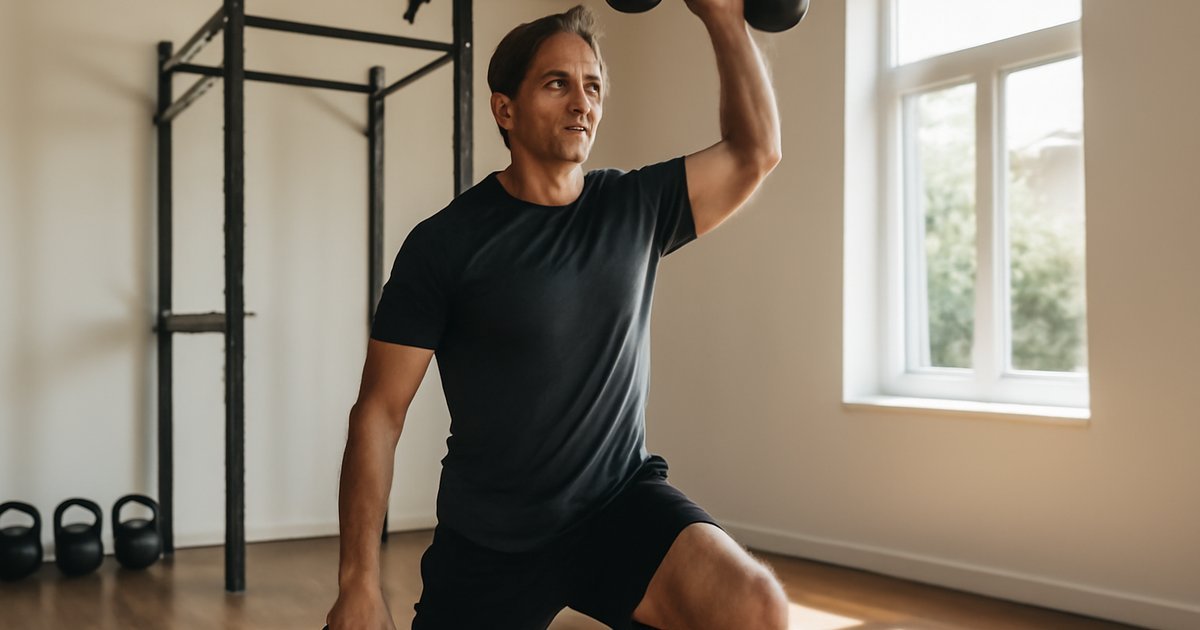
CrossFit-Style Training: A Complete Guide for Adults
You don’t need to join a CrossFit box to train like one — but understanding how this approach works could completely change the way you think about fitness.
Picture this: it’s 6 a.m., and instead of trudging through another mindless treadmill session, you’re moving through a fast-paced combination of squats, pull-ups, and kettlebell swings — heart pounding, muscles firing, done in under 30 minutes. That’s the allure of CrossFit-style training, and for millions of adults across the country, it’s become a game-changer.
According to a report from the American College of Sports Medicine, high-intensity functional training consistently ranks among the top fitness trends for adults, and for good reason — it delivers results in less time, builds strength and cardiovascular endurance simultaneously, and rarely feels monotonous.
But CrossFit-style workouts get a mixed reputation. Some people swear by them. Others write them off as extreme, injury-prone, or just not for them. The truth, as always, is more nuanced. This guide breaks down exactly how CrossFit-style training works, who it’s actually for, how to start safely, and what common mistakes to avoid — whether you’ve never done a burpee in your life or you’re ready to level up your current program.
Why CrossFit-Style Training Matters More Than You Think
Most adults over 30 are dealing with a slow, quiet decline in muscle mass, cardiovascular efficiency, and metabolic rate — even if they exercise regularly. Traditional steady-state cardio helps the heart, but does little for muscle retention. Traditional strength training builds muscle, but often neglects the cardiovascular system.
CrossFit-style training addresses both simultaneously. It combines Olympic-style lifts, gymnastics movements, and metabolic conditioning into time-efficient, varied workouts that challenge your entire body and your aerobic system at once.
Research published in the Journal of Strength and Conditioning Research found that participants who completed 10 weeks of high-intensity functional training significantly improved both VO2 max (a marker of cardiovascular fitness) and maximum strength — outcomes rarely seen together with a single training modality.
For busy adults aged 25-60, this dual-adaptation potential is enormously practical. You’re not choosing between cardio day and lifting day — you’re getting both in a 20 to 45-minute session, several times a week.
Beyond the efficiency angle, CrossFit-style training emphasizes movements that translate to real life — squatting, hinging, pressing, pulling, carrying. These aren’t just gym exercises. They’re the mechanics of everyday living, and training them keeps you capable, resilient, and independent as you age.
How CrossFit-Style Training Actually Works
Let’s clear something up first: you don’t have to be a CrossFit member, do official CrossFit programming, or compete in any capacity to train in this style. The methodology is the key, not the brand.
CrossFit-style training is built around three core principles: constantly varied movements, functional patterns, and relative intensity. Workouts — often called WODs (Workouts of the Day) in CrossFit culture — combine elements from weightlifting, gymnastics, and metabolic conditioning into structured sessions that can be scaled to any fitness level.
A common myth is that CrossFit is only for elite athletes or young, injury-free individuals. This is simply not true. Research from the International Journal of Exercise Science documented CrossFit participation across diverse age groups, finding that adults 40 and older not only completed programs safely with proper coaching but also reported high adherence rates — often outperforming younger participants in consistency.
The real mechanism at play is metabolic conditioning, or "metcon." These workouts are structured to keep your heart rate elevated while moving through strength-based patterns, creating what researchers call excess post-exercise oxygen consumption (EPOC) — meaning your body continues burning energy at an elevated rate for hours after the workout ends.
Common workout formats include:
- AMRAP (As Many Rounds As Possible in a set time)
- EMOM (Every Minute On the Minute — complete reps, rest the remainder)
- For Time (complete a set number of reps as fast as possible)
- Chipper (a long list of movements, completed once through)
Each format challenges your fitness differently, which is exactly why results tend to come faster than with repetitive, single-modality training.
How to Get Started: Practical Steps by Level
Starting CrossFit-style training doesn’t mean jumping into an intense hour-long class on day one. The smart approach is progressive — and it applies whether you’re coming off the couch or already training several days a week.
Step 1: Learn the foundational movements first. Before adding intensity or load, get comfortable with the air squat, deadlift hinge, push-up, row (with a band or cable), and hollow body hold. These are the building blocks of almost every CrossFit-style workout. Spend one to two weeks here if you’re new to training.
Step 2: Start with EMOMs to control intensity. EMOM workouts are beginner-friendly because the rest is built in. Try: every minute for 10 minutes, do 10 air squats and 5 push-ups. Rest what remains. This gives you intensity without the chaos of open-ended workouts.
Step 3: Introduce equipment gradually. A set of dumbbells, a pull-up bar, and a jump rope will cover most CrossFit-style movements at home. Resistance bands and a kettlebell expand your options significantly. For related equipment guidance, see our Dumbbell Training: The Complete Guide for Adults and Kettlebell Training: The Full-Body Workout You’re Missing.
Beginner sample week (3 days):
- Day 1: 10-min EMOM — 8 goblet squats + 6 push-ups
- Day 2: Rest or light walk
- Day 3: AMRAP 12 min — 10 dumbbell deadlifts, 10 sit-ups, 200m jog/row
- Day 4: Rest
- Day 5: For time — 3 rounds of 15 air squats, 10 dumbbell rows, 5 burpees
Intermediate option: Add barbell movements (back squat, deadlift, overhead press) under proper coaching. Increase weekly volume to 4-5 sessions. Introduce timed benchmark workouts to track progress.
Advanced option: Program Olympic lifting (clean, snatch), add gymnastics skills (pull-ups, toes-to-bar), and periodize intensity — using a hard week followed by a deload week for recovery.
Common Mistakes That Sabotage Results
CrossFit-style training is effective — but it’s also easy to approach incorrectly, especially when the culture emphasizes going hard and going fast. Here are the mistakes that derail the most well-intentioned adults:
1. Sacrificing form for speed. CrossFit-style workouts are often timed, which creates an unconscious urge to rush. But speed without form leads to injury, not fitness. The fix: choose a weight and pace at which you can maintain technique for all reps, not just the first few. Slow down by 20% and you’ll often finish stronger and safer.
2. Ignoring recovery. High-intensity functional training creates significant muscular demand. Doing intense sessions 5-6 days a week without adequate sleep or nutrition will not accelerate results — it will stall or reverse them. The American College of Sports Medicine recommends at least 48 hours of recovery between sessions targeting the same muscle groups. Build in intentional rest days or active recovery sessions like light walking or mobility work.
3. Not scaling appropriately. Every CrossFit-style workout can and should be modified to match your current capacity. Using too much weight, skipping progressions, or performing movements you haven’t built a foundation for is the fastest route to burnout or injury. There is zero shame in scaling — even elite athletes do it when learning new skills.
4. Treating every workout like a competition. This is especially common when training with others or following social media fitness accounts. Your workout is not your competition. Chasing other people’s times or loads ignores your unique recovery capacity, mobility, and training history. Train against yesterday’s version of yourself, not someone else’s best day.
5. Neglecting strength progressions. CrossFit-style training can feel deceptively cardio-heavy. Without intentional progressive overload in your strength work, you’ll plateau. Apply the same logic outlined in structured strength programs — gradually increasing load, reps, or complexity over time.
What to Eat to Support CrossFit-Style Training
High-intensity functional training places meaningful demands on your energy systems and muscle tissue. Your nutrition needs to match that output.
Protein is non-negotiable. The Academy of Nutrition and Dietetics recommends 1.2 to 2.0 grams of protein per kilogram of body weight for active adults engaged in resistance and high-intensity training. For a 160-lb adult, that’s approximately 87 to 145 grams per day. Prioritize complete protein sources: eggs, Greek yogurt, lean poultry, fish, cottage cheese, legumes, and tofu.
Carbohydrates fuel your intensity. This is not the time for very low-carb approaches. Glycogen — stored carbohydrate — is the primary fuel for high-intensity work. According to the USDA Dietary Guidelines, active adults should obtain 45-65% of their calories from carbohydrates. Emphasize complex sources: oats, sweet potatoes, brown rice, quinoa, fruit, and whole grain bread.
Pre-workout timing matters. A meal containing both carbohydrates and protein 1.5 to 2 hours before training supports performance and reduces muscle breakdown. If you train early and can’t eat a full meal, even 20-30 grams of carbs (a banana or small bowl of oats) can meaningfully improve output.
Post-workout recovery window: Research from the Journal of the International Society of Sports Nutrition supports consuming 20-40 grams of protein and carbohydrates within 30-60 minutes post-workout to support muscle repair and glycogen replenishment. A simple option: Greek yogurt with fruit, a protein shake with a banana, or eggs on toast.
Hydration: High-intensity training increases sweat loss significantly. Aim for at least half your body weight in ounces of water daily (e.g., 80 oz for a 160-lb person), more on training days. Electrolyte replacement is worth considering during sessions longer than 45 minutes.
How Long Until You See Results — and What to Track
One of the most motivating things about CrossFit-style training is how quickly some improvements become measurable. That said, results vary significantly based on your starting fitness level, consistency, nutrition, and sleep quality.
Weeks 1-2: Neurological adaptations — your brain and nervous system become more efficient at coordinating the new movement patterns. You may feel stronger without much visible change. This is normal and important.
Weeks 3-6: Cardiovascular improvements begin to show. Your recovery between sets gets faster, your heart rate returns to baseline more quickly, and workouts that felt impossible start feeling manageable. Research published in the Journal of Sports Medicine and Physical Fitness supports meaningful VO2 max improvements within 4-8 weeks of consistent high-intensity training.
Weeks 6-12: Visible muscular changes, improved body composition, and measurable strength gains. This is where the compound effect of consistent training starts delivering noticeable results.
What to track:
- Workout performance — times, rounds, reps, and loads over time
- Resting heart rate (a decreasing trend signals improved cardiovascular fitness)
- How you feel at a perceived exertion level — are the same workouts feeling easier?
- Recovery quality — are you sleeping better, feeling less sore after sessions?
- Energy levels throughout the day
If you’re not seeing improvements after 8-12 weeks of consistent effort, reassess your recovery habits, nutrition, and programming before adding more intensity. And if you experience persistent joint pain, seek guidance from a sports medicine physician or physical therapist before continuing.
Frequently Asked Questions
Is CrossFit-style training safe for adults over 40?
Yes — with appropriate scaling and technique coaching. Adults over 40 benefit from the functional movement patterns, strength development, and cardiovascular conditioning this style offers. The key is progressing gradually, prioritizing mobility and form, and allowing adequate recovery between sessions. Results may take slightly longer to appear, but they are absolutely achievable.
Do I need a gym to train this way?
Not at all. Many CrossFit-style workouts can be performed with minimal equipment at home — dumbbells, a jump rope, resistance bands, and bodyweight movements cover the majority of functional training. Our Bodyweight Training guide shows how effective equipment-free training can be.
How many days per week should I train in this style?
Most beginners do well with 3 sessions per week, allowing full recovery between sessions. Intermediate trainees can progress to 4-5 days with proper periodization — alternating heavier strength days with lighter conditioning days. Training every day at high intensity is not recommended and typically leads to diminishing returns.
Can I combine CrossFit-style training with other workouts?
Absolutely. Many adults combine 2-3 CrossFit-style sessions with walking, yoga, swimming, or cycling for variety and active recovery. The key is managing total training volume so you’re not chronically overtaxing your recovery system. For ideas on complementary movement, check out our Swim Training for Fitness guide.
Will CrossFit-style training make me bulky?
This is one of the most persistent misconceptions in fitness. Building significant muscle mass requires very specific, sustained caloric surpluses and years of progressive overload. CrossFit-style training tends to produce a leaner, more defined physique — not bulk — because of the combination of strength work and high-intensity conditioning.
Your Next Step Starts Today
CrossFit-style training is one of the most efficient, adaptable, and genuinely motivating approaches to fitness available to adults. It doesn’t require elite athleticism, a gym membership, or an extreme commitment — just a willingness to move with intention and progress at your own pace.
Start with three sessions this week. Pick one EMOM, one AMRAP, and one for-time workout from the beginner examples in this guide. Focus on form over speed, rest enough to recover fully, and fuel your body with the protein and carbohydrates it needs to adapt.
Small, consistent steps — not perfect programming — are what build lasting fitness. Give this style of training 6 weeks of honest effort, and there’s a good chance it becomes the workout approach you actually look forward to.
This article is for informational and educational purposes only. The content is not intended to replace professional medical, nutritional, or fitness advice. Always consult a qualified healthcare provider, registered dietitian, or certified fitness professional before starting a new health program or making significant changes to your lifestyle.
Content reviewed by our wellness editorial team, with references to peer-reviewed research and guidelines from leading health organizations.