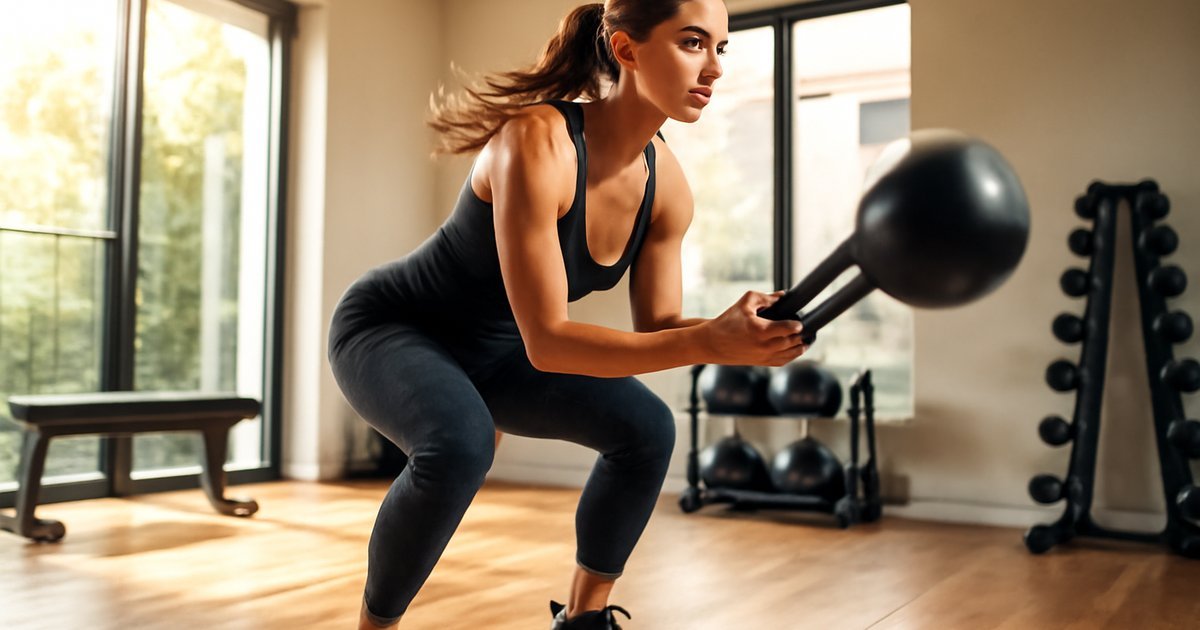
Kettlebell Training: The Full-Body Workout You’re Missing
One tool. Hundreds of movements. And a workout style that builds strength, cardio, and mobility all at once — if you know how to use it.
Introduction
Picture this: you have 30 minutes, a single piece of equipment, and you want a workout that actually does something — not just burns time. No treadmill. No stack of machines. No complicated gym setup. Just you, the floor, and a kettlebell.
Kettlebell training has been around for centuries — originally used by Russian strongmen in the 1700s — but it’s had a massive resurgence in modern fitness culture, and for good reason. Unlike traditional dumbbells or barbells, the offset center of gravity in a kettlebell forces your body to stabilize, rotate, and engage muscles you’d normally ignore during conventional weightlifting.
If you’ve ever felt like your workouts were stuck in a rut — or you’ve been told kettlebells are "too complicated" or "only for advanced athletes" — this guide is going to change your perspective. You’ll learn the real science behind why kettlebell training works, how to start safely, what mistakes to avoid, and how long it takes before you start seeing meaningful results.
Whether you’re a complete beginner or someone looking to add variety and intensity to an existing routine, kettlebell training has a version that works for you.
Why Kettlebell Training Matters More Than You Think
Most adults spend the majority of their day sitting — at a desk, in a car, on a couch. That sedentary pattern doesn’t just affect cardiovascular health; it leads to weakened posterior chains (the muscles along the back of your body), poor hip mobility, and a nagging vulnerability to low back pain.
Kettlebell training directly addresses all of these. The signature movement — the kettlebell swing — is a hip-hinge pattern that reactivates glutes, hamstrings, and spinal erectors that tend to go dormant from prolonged sitting.
According to a study published in the Journal of Strength and Conditioning Research, participants who completed an eight-week kettlebell training program showed significant improvements in both aerobic capacity and muscular strength — results that typically require separate training modalities to achieve. That dual-efficiency is rare in fitness.
The American College of Sports Medicine (ACSM) also recognizes kettlebell training as a legitimate form of resistance training that, when performed correctly, can meet weekly physical activity recommendations for both muscle-strengthening and moderate-intensity aerobic exercise in a single session.
For busy adults who struggle to compartmentalize "cardio days" and "lifting days," this kind of metabolic overlap is genuinely valuable — not just as a time-saver, but as a smarter way to train.
The Science Behind Kettlebell Training: How It Actually Works
Here’s the part most people skip — and why their kettlebell results fall flat: understanding the biomechanics.
Kettlebells differ from dumbbells primarily in their center of mass. The ball-shaped body with a flat handle means the weight hangs below your grip instead of being balanced symmetrically on either side. This creates rotational force during movement, requiring your stabilizer muscles — particularly the rotator cuff, deep core, and hip stabilizers — to work continuously throughout every rep.
This is why kettlebell exercises tend to recruit more total muscle mass than comparable dumbbell exercises. A 2010 study published in the Journal of Human Kinetics found that kettlebell swings activated the erector spinae (lower back muscles) significantly more than conventional deadlifts at matched loads — a finding that surprised even the researchers.
Common myth to bust: "Kettlebells are just dumbbells shaped differently." Not true. You cannot simply substitute one for the other and expect the same training stimulus. A kettlebell goblet squat, for example, naturally shifts your center of gravity forward and allows for greater squat depth than a dumbbell goblet squat — making it inherently more effective for hip mobility and lower-body development.
Additionally, many kettlebell movements — swings, cleans, snatches — are ballistic in nature. This means they train power output: the ability to generate force quickly. According to Harvard Health Publishing, power training is particularly important for adults over 40, as fast-twitch muscle fibers (responsible for explosive strength) decline significantly faster than slow-twitch fibers with age.
Training power isn’t just about athletics — it’s about fall prevention, functional independence, and maintaining the physical capacity to live actively into your later decades.
How to Get Started With Kettlebell Training
Starting kettlebell training well means starting smart. Here’s a structured path from absolute beginner to confident practitioner.
Choose the Right Starting Weight
This is where many beginners go wrong immediately — picking a weight that’s either too light to build skill or too heavy to maintain form. As a general starting guideline:
- Women: 8–12 kg (18–26 lbs) for most exercises
- Men: 12–16 kg (26–35 lbs) for most exercises
These ranges apply to foundational movements. Pressing movements may require lighter weights; deadlift patterns can often handle more. Adjust based on your current fitness level and honest assessment of your form.
Master These Foundation Movements First (Beginner)
- Deadlift — Learn to hinge at the hip safely before any swing variations
- Goblet Squat — Builds lower-body strength and teaches bracing technique
- Two-Handed Swing — The cornerstone of kettlebell training; non-negotiable as a starting point
- Halo — Develops shoulder mobility and grip familiarity with the bell
- Romanian Deadlift (single leg) — Trains balance and unilateral hip stability
Spend at least two to four weeks on these before moving forward. Form matters more than load or speed at this stage.
Build Your First Workout Structure (Beginner–Intermediate)
A simple but effective format:
- 3 days per week, non-consecutive days
- 3–4 exercises per session
- 3 rounds of 8–12 reps each (or timed sets of 20–30 seconds)
- 60–90 seconds rest between rounds
Progress to More Complex Movements (Intermediate)
Once the fundamentals are solid, add:
- One-arm swing — Greater demand on anti-rotation core stability
- Clean and Press — Full-body compound movement combining hip drive and overhead pressing
- Turkish Get-Up — A slow, controlled movement that develops mobility, stability, and proprioception
- Single-arm rows — Posterior chain and lat development
If you’re interested in pairing this with bodyweight training for added variety, our guide on Calisthenics for Adults: Build Real Strength Anywhere offers an excellent complement to kettlebell work.
Common Mistakes That Sabotage Kettlebell Results
These mistakes are almost universal among beginners — and even some intermediate trainees. Recognizing them now can save you weeks of wasted effort (and potential injury).
Mistake #1: Using Your Arms to Swing, Not Your Hips
The kettlebell swing is a hip-hinge, not a front raise. When you rely on shoulder and arm strength to lift the bell, you lose the explosive hip power that makes the swing effective — and you dramatically increase the risk of shoulder impingement. Fix: Think of the bell as a pendulum. Your hips snap forward; the arms just guide the bell.
Mistake #2: Not Bracing the Core Properly
A soft core during ballistic movements like swings or cleans puts direct strain on the lumbar spine. Many people hold their breath incorrectly or simply don’t engage their midsection at all. Fix: Breathe in before the movement, brace the core as if bracing for a punch, and exhale sharply at the top of the swing. For a deeper understanding of core engagement mechanics, visit our guide on Core Training: Build a Stronger, More Stable Body.
Mistake #3: Going Too Heavy, Too Fast
Ego lifting is just as problematic with kettlebells as it is with barbells — arguably more so, since poor form in dynamic movements amplifies injury risk. Fix: Stick with a weight where you can complete all reps with clean, controlled mechanics. Technical breakdown is a clear signal to reduce load.
Mistake #4: Skipping Mobility Work
Kettlebell training places significant demands on hip mobility, thoracic spine rotation, and shoulder stability. Jumping into training without addressing existing restrictions leads to compensatory movement patterns that reduce effectiveness and build in dysfunction. Fix: Spend 5–10 minutes before each session on targeted mobility work — particularly hip openers, thoracic rotations, and shoulder circles. Our Mobility Training guide is a great starting resource.
Mistake #5: Inconsistent Practice
Kettlebell skills — especially the swing, clean, and snatch — are motor patterns. They require repetition over time to become automatic. Training once every two weeks won’t build that neuromuscular efficiency. Fix: Commit to at least 2–3 sessions per week, even if they’re short. Consistent practice beats sporadic intensity every time.
What to Eat to Support Kettlebell Training
Nutrition doesn’t need to be complicated, but a few key principles can significantly impact your recovery and progress.
Protein is non-negotiable. Kettlebell training — especially when using heavier loads or high-rep swings — creates enough mechanical tension to stimulate muscle protein synthesis. The Academy of Nutrition and Dietetics recommends 1.2–1.7 grams of protein per kilogram of body weight per day for active adults engaged in regular resistance training. Prioritize lean sources: chicken, turkey, eggs, Greek yogurt, legumes, and fish.
Don’t underestimate carbohydrates. Ballistic kettlebell movements are metabolically demanding. Glycogen (stored from carbohydrates) is your primary fuel source during moderate-to-high intensity training. The USDA Dietary Guidelines suggest that 45–65% of daily calories should come from carbohydrates for active adults. Whole grains, sweet potatoes, oats, and fruit are excellent choices.
Hydration matters more than you think. Even mild dehydration — as little as 1–2% of body weight in fluid loss — can impair strength output and coordination, according to research from the National Institutes of Health. Aim for at least half your body weight in ounces of water per day, and more on training days.
Timing tip: A light meal or snack containing both protein and carbohydrates within 1–2 hours before training can support performance. Post-workout, aim to consume protein within 30–60 minutes of finishing to support muscle recovery.
How Long Until You See Results — and What to Track
Realistic timelines are important here. Kettlebell training is effective, but it is not magic — and results will vary based on your starting fitness level, training frequency, nutrition, and recovery habits.
Weeks 1–3: You’ll primarily be developing motor patterns and coordination. Don’t expect visible physical changes yet. What you should notice: improved awareness of your hip hinge, better grip strength, and some initial muscle soreness (particularly in the glutes and upper back).
Weeks 4–8: Noticeable improvements in movement quality. Many people report increased energy, better posture, and a tighter mid-section. Strength gains in the major muscle groups become measurable.
Weeks 8–16: Visible changes in body composition are more likely for those training 3+ times per week and supporting their training with appropriate nutrition. Research supports that eight to twelve weeks of consistent kettlebell training produces significant improvements in both lean mass and aerobic endurance markers.
What to track:
- Reps completed at a given weight (strength indicator)
- Heart rate recovery after timed sets (cardiovascular adaptation)
- How your clothes fit (body composition proxy)
- Quality of movement — video yourself occasionally to spot form improvements
- Energy levels and sleep quality — often the first things people notice improving
When to reassess or get guidance: If you’ve been training consistently for 12 weeks with no noticeable progress, consider consulting a certified kettlebell instructor (look for RKC or StrongFirst certifications) or a registered dietitian to evaluate your nutrition strategy.
Frequently Asked Questions About Kettlebell Training
Can I use kettlebells if I have low back pain?
This depends on the cause and severity. For many people with non-specific low back pain caused by muscular weakness or sedentary habits, properly coached kettlebell training — particularly hip hinge and swing patterns — can actually be rehabilitative. However, if you have a disc herniation, spinal stenosis, or acute injury, consult a physical therapist before starting any kettlebell program. Always get clearance from a healthcare provider first.
How many kettlebells do I need?
One well-chosen kettlebell is enough to build a complete training program, especially for beginners. Most people benefit from eventually having two or three bells at different weights — one for pressing movements, one for swings and lower-body work. But start with one. The skill matters more than the equipment.
Can kettlebell training replace the gym entirely?
For many adults, yes — particularly those focused on general fitness, fat loss, and functional strength rather than competitive bodybuilding or powerlifting. A comprehensive kettlebell program can deliver strength, cardiovascular conditioning, and mobility work in a single tool. Results will vary based on your goals and current fitness baseline.
Is kettlebell training safe for people over 50?
Yes — with appropriate progression and coaching. In fact, the hip-dominant, full-body nature of kettlebell training makes it particularly valuable for older adults looking to maintain power output, bone density, and functional independence. Start light, prioritize form, and work with a qualified instructor if possible.
How does kettlebell training compare to HIIT?
Kettlebell training can function as HIIT when performed in timed circuits with minimal rest — or as more traditional strength training when done with heavier loads and longer rest periods. It’s genuinely flexible. The intensity is largely determined by your programming choices rather than the tool itself.
Conclusion
Kettlebell training isn’t a trend. It’s a time-tested, science-backed approach to building strength, power, endurance, and mobility — all from a single piece of equipment you can use anywhere.
The key is starting with the right weight, mastering the fundamentals before pushing complexity, and showing up consistently. You don’t need perfect technique on day one. You need enough awareness to train safely and enough consistency to build the skills that make this tool genuinely transformative.
If you’ve been looking for a workout approach that fits a busy life without sacrificing results — this is worth your time. Pick up one kettlebell, learn the swing, and give it eight weeks of honest effort. Small, consistent steps will always outperform sporadic intensity.
Your action step for today: Choose a starting weight, find a certified kettlebell instructor or reliable instructional resource, and schedule your first three sessions this week. That’s it. The rest follows from there.
This article is for informational and educational purposes only. The content is not intended to replace professional medical, nutritional, or fitness advice. Always consult a qualified healthcare provider, registered dietitian, or certified fitness professional before starting a new health program or making significant changes to your lifestyle.
Content reviewed by our wellness editorial team, with references to peer-reviewed research and guidelines from leading health organizations.