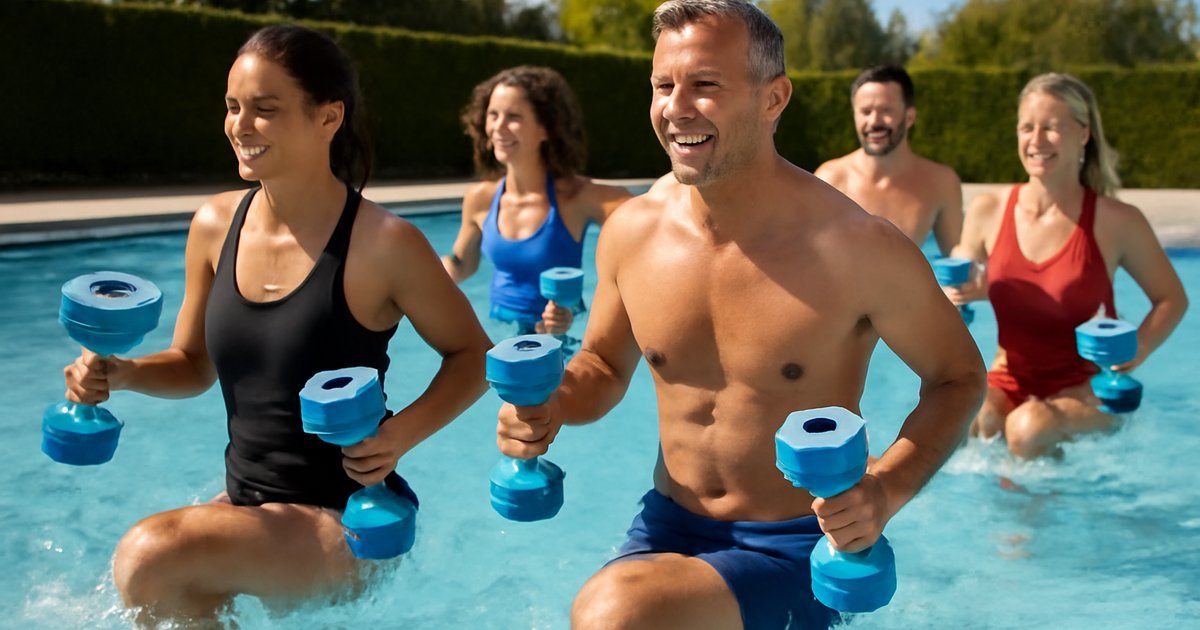
You do not have to pound the pavement or grind through joint-aching workouts to get seriously fit — sometimes the smartest move is stepping into the water.
If you have ever written off pool workouts as something reserved for older adults in swim caps doing gentle arm circles, it is time to rethink everything you thought you knew about aqua fitness training. The reality is that water-based exercise delivers a surprisingly powerful cardiovascular and muscular challenge — all while dramatically reducing the stress placed on your joints, spine, and connective tissue.
According to the American College of Sports Medicine (ACSM), aquatic exercise is one of the most versatile forms of physical activity, offering benefits that span endurance, strength, flexibility, and even mental well-being. Whether you are 28 years old and recovering from a knee injury, 45 and looking for a sustainable long-term fitness habit, or 58 and trying to stay active without wrecking your body in the process, aqua fitness training could be one of the best decisions you make for your health.
In this guide, you will learn exactly how aqua fitness works, why it is more scientifically sound than most people realize, how to get started (regardless of swimming ability), and what realistic results look like. Let us get into it.
Why Aqua Fitness Training Matters More Than You Think
Here is a number that might surprise you: water provides approximately 12 times more resistance than air. That means every single movement you make in the pool — walking, kicking, pulling, pushing — requires significantly more muscular effort than the same movement performed on land. Yet because of buoyancy, your body feels lighter, and the compressive forces on your joints are dramatically reduced.
Research published in the Journal of Aging and Physical Activity found that adults who participated in aquatic exercise programs showed measurable improvements in cardiovascular endurance, muscular strength, and functional mobility — with significantly lower rates of exercise-related discomfort compared to land-based programs. This is a critical distinction for anyone dealing with chronic joint pain, early-stage arthritis, or post-injury recovery.
But the benefits do not stop at low impact. Harvard Health Publishing notes that a 155-pound person can burn between 400 and 500 calories per hour during vigorous water aerobics — comparable to moderate cycling or brisk land walking. Add in the thermoregulatory demands of moving through water, and your body is working harder than it looks from the pool deck.
Beyond physical output, aqua fitness also supports mental well-being. The sensory experience of water — its pressure, temperature, and movement — has been shown in multiple studies to reduce perceived stress and improve mood. For adults juggling demanding careers and family responsibilities, that dual benefit is genuinely hard to find in a single workout format.
The Science Behind How Aqua Fitness Actually Works
Understanding the physics of water helps explain why aqua fitness is so effective — and why it works differently than anything you do on land.
Water offers three primary physical forces that transform ordinary movements into legitimate training stimulus: buoyancy, resistance, and hydrostatic pressure.
Buoyancy reduces your effective body weight by up to 90 percent when submerged to neck level. This offloading of gravitational stress allows people with joint conditions, excess weight, or limited mobility to move freely and safely without fear of impact injury.
Resistance is multidirectional in water, meaning every push and pull engages opposing muscle groups simultaneously. Unlike many land-based exercises where resistance is primarily gravitational, water forces you to stabilize constantly, engaging core muscles, stabilizers, and small supportive muscles that are often neglected in traditional gym training.
Hydrostatic pressure — the pressure exerted by water on your body — supports circulation, reduces swelling in the limbs, and helps improve venous return. The ACSM highlights that this pressure can actually benefit cardiovascular function during exercise, making aqua training uniquely supportive for adults with mild hypertension or circulation concerns (with physician clearance).
A common myth is that water workouts are too easy to produce real fitness gains. This is simply not accurate. A study published in the International Journal of Aquatic Research and Education found that high-intensity aqua interval training elevated heart rate, oxygen consumption, and perceived exertion at levels comparable to land-based interval training — while reducing joint loading by a significant margin. The effort is real. The joint stress is not.
How to Get Started with Aqua Fitness Training
One of the best things about aqua fitness is that you do not need to be a strong swimmer to participate. Most aqua fitness workouts take place in the shallow end of a pool — typically chest-deep water — where your feet remain on the pool floor throughout the session.
Here is how to start, regardless of your current fitness level:
Step 1 — Find the right setting. Look for aqua fitness classes at your local YMCA, community recreation center, or fitness club with a pool. Many facilities offer structured aqua aerobics, aqua HIIT, and aqua strength classes led by certified instructors. If classes are not available, you can train independently in a lap pool.
Step 2 — Get the right equipment. You do not need much. A well-fitted swimsuit, water shoes (for grip and foot protection), and a pair of aqua dumbbells or foam resistance noodles can elevate your workout significantly. Aqua dumbbells typically cost between $15 and $40 and are widely available online.
Step 3 — Start with a structured beginner session.
- Warm up with 5 minutes of easy pool walking back and forth in chest-deep water
- Perform water jogging in place: 3 sets of 60 seconds with 30-second rest
- Add leg kicks forward and backward: 3 sets of 15 reps per leg
- Try standing water jacks (jumping jacks in water): 3 sets of 20 reps
- Cool down with 5 minutes of slow walking and gentle arm sweeps through the water
Intermediate level: Introduce aqua dumbbells for bicep curls, tricep pushdowns, and chest presses in the water. Add tuck jumps, water sprints, and lateral shuffles across the pool. Target 35-45 minutes, 3-4 days per week.
Advanced level: Incorporate aqua HIIT intervals — 30 seconds of all-out effort followed by 15 seconds of active recovery, repeated for 20-25 minutes. Add deep-water running with a flotation belt, which eliminates all ground contact and maximally loads the cardiovascular and muscular systems without any impact.
Common Mistakes That Sabotage Aqua Fitness Results
Aqua fitness looks deceptively relaxed from the outside — and that perception leads to some predictable missteps that limit how much progress you actually make.
Mistake 1 — Moving too slowly to generate real resistance. Water resistance scales with speed. If you move your arms or legs slowly through the water, you will not generate meaningful training stimulus. The faster and more forcefully you move against the water, the more resistance you create. Push yourself to move with intention and power — not leisurely.
Mistake 2 — Neglecting progressive overload. Just like any other form of training, aqua fitness requires progressive challenge over time. If you are doing the same routine at the same pace week after week, your body will adapt and results will plateau. Increase your session duration, add resistance equipment, or increase the intensity of your intervals regularly. For more on this principle, check out our guide on Progressive Overload Training.
Mistake 3 — Skipping strength-focused movements. Many people default exclusively to cardiovascular-style aqua workouts and miss the strength benefits entirely. Incorporating aqua dumbbells, resistance noodles, and targeted muscle group movements builds real muscular endurance and contributes to the body composition changes most adults are looking for.
Mistake 4 — Underestimating hydration needs. Because you are surrounded by water, it is easy to forget that you are still sweating — and losing fluids. The cool water masks sweat, but your body is still working hard. The Academy of Nutrition and Dietetics recommends drinking water before, during, and after aquatic exercise sessions just as you would for any other workout. Bring a water bottle poolside.
Mistake 5 — Not tracking effort properly. Heart rate monitoring behaves differently in water. Due to the hydrostatic pressure and the cooling effect of water, your heart rate in the pool typically runs 10-17 beats per minute lower than on land at the same perceived effort level. Adjust your heart rate training zones accordingly, or rely on Rate of Perceived Exertion (RPE) as a more accurate gauge during water sessions.
What to Eat to Support Your Aqua Fitness Training
Nutrition for aqua fitness follows the same evidence-based principles that apply to any moderate-to-vigorous exercise program — but a few specifics are worth calling out.
Pre-workout fueling (60-90 minutes before): Prioritize easily digestible carbohydrates paired with a small amount of protein. A banana with a tablespoon of almond butter, a small bowl of oatmeal with berries, or whole-grain toast with a light spread of nut butter all work well. Avoid heavy, high-fat meals before pool sessions, as the water pressure environment can amplify digestive discomfort during exercise.
Post-workout recovery (within 30-45 minutes after): Replenish glycogen and support muscle repair with a combination of carbohydrates and protein. Aim for roughly a 3:1 ratio of carbohydrates to protein. Greek yogurt with fruit, a smoothie with protein powder and banana, or eggs on whole-grain toast are all solid options. The Academy of Nutrition and Dietetics recommends targeting 20-30 grams of high-quality protein post-workout for optimal muscle protein synthesis.
Daily protein intake: For adults engaged in regular aqua fitness training, the ACSM recommends approximately 1.2 to 1.7 grams of protein per kilogram of body weight daily to support muscle maintenance and recovery.
Electrolytes matter: Because you may not notice how much you sweat during water workouts, electrolyte replenishment is easy to overlook. Sodium, potassium, and magnesium are lost through sweat even in the pool. Incorporate potassium-rich foods like sweet potatoes, bananas, and leafy greens, and consider a low-sugar electrolyte drink after longer or more intense sessions.
How Long Until You See Results — and What to Track
Results from aqua fitness training are real, but they follow the same timeline as any structured exercise program. Expecting dramatic changes in two weeks will set you up for disappointment. Here is what research and clinical practice actually suggest:
Weeks 1-2: You will likely notice improved energy levels, better sleep quality, and reduced feelings of physical tension. Your muscles may feel some initial soreness, particularly in the legs and core, which is normal.
Weeks 3-6: Cardiovascular endurance improvements become measurable. You will notice you can sustain higher-intensity efforts for longer periods without feeling as winded. A 2019 study published in the Journal of Human Kinetics found significant improvements in VO2 max and muscular endurance markers in adults after just four weeks of structured aquatic interval training three times per week.
Weeks 8-12: Body composition changes become more visible, particularly for adults who also manage their nutrition. Strength and functional mobility improvements are typically well-established by this point, and many participants report reduced joint discomfort and improved posture.
What to track:
- Resting heart rate (lower over time = improved cardiovascular fitness)
- Session duration and perceived effort (aim to maintain intensity as fitness improves)
- Mobility markers — how easily you move through your daily range of motion
- Sleep quality and energy levels — often the first and most noticeable benefits
- Body measurements rather than scale weight alone, as water training builds muscle while reducing fat
If you are not seeing progress after 10-12 weeks of consistent training three or more times per week, reassess your nutrition, sleep, and intensity levels — and consider consulting a certified aquatic fitness instructor or registered dietitian.
Frequently Asked Questions About Aqua Fitness Training
Do I need to know how to swim to do aqua fitness?
No, and this is one of the most common misconceptions. The vast majority of aqua fitness workouts are performed in shallow water where your feet stay on the pool floor the entire time. You do not need any swimming ability to participate safely and effectively in standard aqua aerobics or aqua strength classes.
Can aqua fitness help with weight loss?
Yes, when combined with a balanced caloric intake, aqua fitness can support meaningful fat loss over time. The caloric expenditure per session is comparable to moderate-intensity land exercise, and the full-body muscle engagement supports a healthier resting metabolic rate. Results will vary based on your current weight, diet, and workout intensity.
Is aqua fitness good for people with arthritis or joint pain?
It is frequently recommended for exactly this population. The Arthritis Foundation has endorsed aquatic exercise as one of the safest and most effective activity options for adults with arthritis, noting that buoyancy reduces joint compression while water resistance maintains muscular strength. Always check with your physician before starting if you have a specific medical condition.
How does aqua fitness compare to regular gym workouts?
For cardiovascular health, aqua fitness performs comparably to many land-based cardio formats. For building maximum muscular size and strength, traditional resistance training with heavier loads tends to have an edge. However, aqua fitness offers superior joint safety, unique core engagement, and access for populations who cannot tolerate high-impact or high-load training. Many adults use it alongside gym-based training for excellent results. You may also want to explore how Foam Rolling for Recovery and Performance can complement your aqua training routine.
How many days per week should I do aqua fitness?
The ACSM recommends at least 150 minutes of moderate-intensity aerobic activity per week for general health maintenance. For aqua fitness, this translates to 3 to 5 sessions of 30 to 50 minutes each. Beginners can start with 2 to 3 sessions per week and build from there as fitness improves.
Start Where You Are — The Pool Is Ready When You Are
Aqua fitness training is not a backup plan for when you cannot do a real workout. It is a legitimate, science-supported training modality that delivers cardiovascular endurance, muscular strength, joint health, and mental wellness benefits that are difficult to match in a single land-based format.
You do not need a perfect swimming background, an expensive facility, or an elite fitness level to start. You need a pool, a willingness to challenge yourself, and the consistency to show up. Small, progressive sessions done regularly will outperform any burst of intensity followed by weeks of avoidance.
Start with two sessions this week. Focus on form and effort over speed. Give it twelve weeks of honest consistency before judging results. And if you want to build complementary strength outside the pool, our guide on Resistance Band Training pairs exceptionally well with an aqua fitness routine.
The water is waiting. Jump in.
This article is for informational and educational purposes only. The content is not intended to replace professional medical, nutritional, or fitness advice. Always consult a qualified healthcare provider, registered dietitian, or certified fitness professional before starting a new health program or making significant changes to your lifestyle.
Content reviewed by our wellness editorial team, with references to peer-reviewed research and guidelines from leading health organizations.