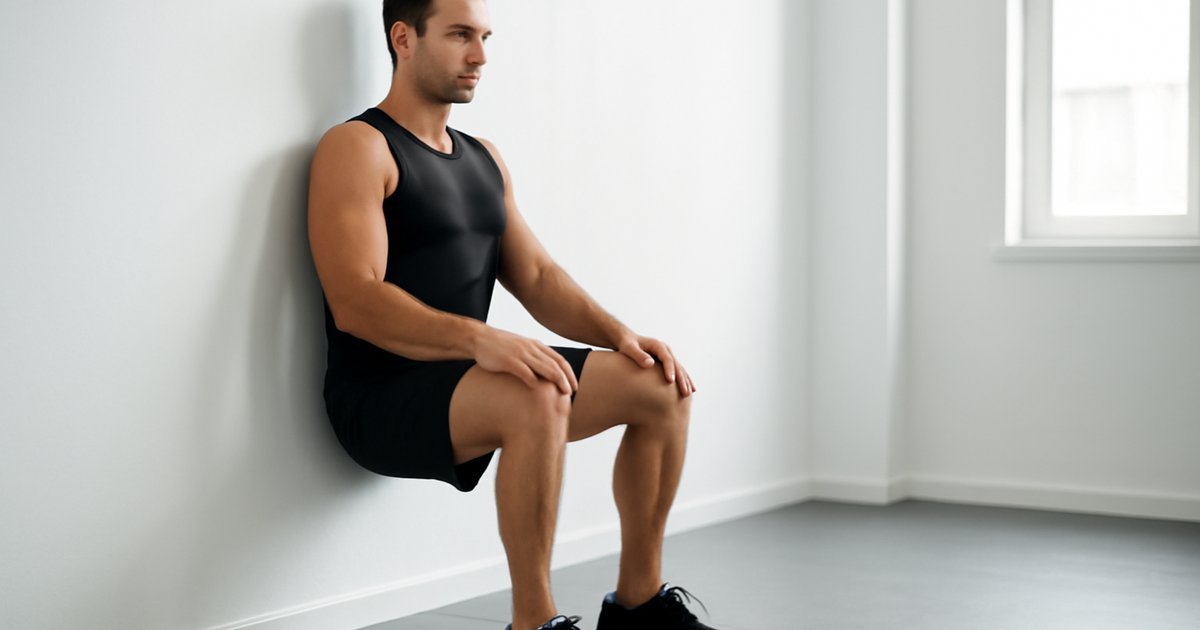
You’re holding a wall sit, shaking at the 45-second mark, wondering how something so still can be so brutally effective — welcome to isometric training.
Why Isometric Training Matters More Than You Think
Most people associate a good workout with movement — squats, presses, lunges, rows. The more dynamic, the better, right? Not necessarily. Isometric training, which involves contracting your muscles without changing their length or moving your joints, has been quietly backed by decades of research as one of the most effective — and underutilized — tools for building strength, improving joint stability, and even managing pain.
If you’ve ever held a plank, pressed your palms together during a chest squeeze, or braced hard at the bottom of a squat, you’ve already done isometric work. You just didn’t realize how powerful it was.
According to the American College of Sports Medicine (ACSM), isometric exercise can produce significant strength gains — particularly at the specific joint angle being trained — and plays a meaningful role in rehabilitation, injury prevention, and neuromuscular efficiency. It’s not a replacement for dynamic training, but for adults navigating joint discomfort, time constraints, or training plateaus, it’s an approach worth understanding deeply.
This guide breaks down exactly how isometric training works, who it’s best for, how to structure a routine, and the common mistakes that keep people from getting real results.
The Science Behind Isometric Training — How It Actually Works
When you perform a traditional bicep curl, your muscle shortens (concentric phase) and then lengthens (eccentric phase). In an isometric contraction, neither happens. Your muscle generates force — sometimes maximal force — without any visible joint movement. Think of pushing against a wall that doesn’t move. Your muscles are working hard; the wall doesn’t care.
This type of contraction activates a high density of motor units and trains your nervous system to recruit muscle fibers more efficiently. Research published in the Journal of Strength and Conditioning Research found that isometric training at high intensities (above 70% of maximum voluntary contraction) can produce strength gains comparable to traditional resistance training, particularly in the mid-range and end-range of a movement.
One myth to bust immediately: many people assume isometric training only builds strength at the exact angle being held. While there is an "angle specificity" effect — meaning strength gains are most pronounced within about 15 degrees of the trained position — this doesn’t make isometrics any less useful. In fact, strategically targeting weak ranges of motion with isometric holds can directly address strength gaps that dynamic training often misses.
Beyond raw strength, isometric training has a well-documented role in tendon health. Harvard Health Publishing notes that sustained isometric loading is one of the first-line interventions recommended by physical therapists for tendinopathy — particularly in the patellar tendon (knee) and Achilles. The sustained tension appears to stimulate collagen synthesis and reduce pain signaling in the tendon.
And then there’s blood pressure. A 2023 review published in the British Journal of Sports Medicine identified isometric exercise as the most effective exercise modality for reducing resting blood pressure — outperforming aerobic cardio and dynamic resistance training in head-to-head comparisons. That’s a headline worth remembering.
How to Get Started With Isometric Training
The beauty of isometric training is its accessibility. You don’t need a gym, special equipment, or even a lot of space. Here’s how to build it into your routine depending on your experience level.
Beginner: Learn the Basics (Weeks 1–3)
- Wall sit: Slide your back down a wall until thighs are parallel to the floor. Hold 20–30 seconds. Rest. Repeat 3 times. This targets quads, glutes, and core without joint stress.
- Dead hang: Grip a pull-up bar and hang with arms slightly bent (not fully locked). Hold 15–20 seconds. Builds grip strength and shoulder stability.
- Plank hold: Forearms on the floor, body in a straight line. Hold 20–40 seconds. Engages core, glutes, and shoulder girdle simultaneously.
- Isometric chest press: Press your palms firmly together at chest height and hold for 10–15 seconds. Activates pec minor and stabilizers without equipment.
At the beginner stage, focus on quality of tension — you should feel a deep, sustained muscular effort. Rest at least 60–90 seconds between holds. Train 2–3 days per week.
Intermediate: Add Intensity and Specificity (Weeks 4–8)
- Paused squats: Lower into a squat and hold at the bottom (or just above parallel) for 5–10 seconds before completing the rep. Strengthens weak ranges of motion.
- Isometric pull-up hold: At the top of a pull-up (chin above bar), hold for 5–10 seconds. Builds lat and bicep endurance.
- Suitcase hold: Hold a dumbbell at your side (one arm) and stand perfectly upright for 30–45 seconds. Trains anti-lateral flexion — essential for spine health.
- 90-90 hip hold: In a seated or standing position, bring one knee up to 90 degrees and hold. Activates hip flexors and deep stabilizers often neglected by machine-based training.
Advanced: Functional Isometric Overloads
Advanced lifters can use functional isometrics — pressing or pulling against immovable resistance (a barbell set inside a power rack with pins above it) at specific joint angles. This is a targeted technique used to break through strength plateaus in movements like the bench press, deadlift, or overhead press. Work with a certified strength coach before attempting this.
If you already train with progressive overload principles or incorporate functional fitness into your routine, isometric holds can complement your existing program without requiring a full restructure.
Common Mistakes That Sabotage Your Results
Isometric training looks simple. That’s partly why people underdo it, overdo it, or do it wrong. Here are the most common errors and how to fix them.
Mistake 1: Holding your breath. It’s natural to brace and hold your breath during a hard isometric effort — but prolonged breath-holding raises intraabdominal pressure and can spike blood pressure dangerously, especially in those with cardiovascular conditions. Fix it: exhale slowly during the hold, or practice a 4-count breath cycle. Never strain to the point of dizziness.
Mistake 2: Relying on passive posture instead of active tension. A plank where you’re just hanging in your joints is not an isometric exercise — it’s resting. True isometric training requires intentional, forceful muscle activation. Fix it: squeeze every muscle deliberately. Think "crush the floor with your hands," "push the wall away," or "zip your ribs down" during holds.
Mistake 3: Training only at one angle. Because strength gains are most pronounced near the trained position, always holding a mid-range plank or a standard wall sit limits your development. Fix it: rotate your isometric holds across multiple joint positions. Hold your squat at quarter depth, half depth, and near full depth at different sessions.
Mistake 4: Ignoring recovery. Because isometric holds don’t involve ballistic movements, people assume they’re always low-risk and can be done daily at high intensity. In reality, maximal-effort isometrics — especially those targeting tendons — require adequate recovery. Fix it: treat hard isometric sessions like any strength session. Allow 48 hours before targeting the same muscles again at high intensity.
Mistake 5: Skipping the warm-up. Cold tendons and muscles don’t respond well to maximum isometric force. Fix it: spend 5–8 minutes doing light dynamic movement (leg swings, arm circles, bodyweight flow) before attempting any held contraction above 60% effort.
What to Eat to Support Isometric and Strength Training
Isometric training still creates muscular stress and demands recovery — so your nutrition matters. The Academy of Nutrition and Dietetics recommends that adults engaged in regular resistance training consume between 1.2 and 1.7 grams of protein per kilogram of body weight per day to support muscle repair and adaptation.
For a 160-pound adult, that’s roughly 87–123 grams of protein daily. Practical sources include:
- Chicken breast (about 31g per 3.5 oz serving)
- Greek yogurt (15–20g per cup, plain, non-fat)
- Eggs (6g per egg — pair two with a side of cottage cheese for a complete recovery meal)
- Canned salmon or tuna (25–27g per 3 oz serving, with anti-inflammatory omega-3s as a bonus)
- Lentils and legumes (15–18g per cup cooked — excellent for plant-based eaters)
For tendon health specifically — which isometric training directly supports — collagen-supporting nutrients matter too. Research from the NIH highlights the role of vitamin C in collagen synthesis. Pairing a collagen-rich food or supplement with vitamin C from citrus, bell peppers, or kiwi before training may enhance tendon adaptation.
The USDA Dietary Guidelines also recommend adequate carbohydrate intake to fuel muscle glycogen — don’t slash carbs if you’re training seriously. A pre-workout snack of whole grain toast with nut butter or fruit with Greek yogurt provides the fuel and protein needed to sustain a quality isometric session.
How Long Until You See Results — And What to Track
Results from isometric training vary based on your starting point, consistency, and how you integrate it into a broader fitness plan. Here’s what the research and real-world experience suggest:
Weeks 1–2: Neural adaptations begin. You’ll likely notice improved ability to generate tension — holds that felt impossible at 30 seconds start to become manageable. This is your nervous system learning to recruit motor units more effectively, not muscle growth yet.
Weeks 3–6: Strength gains at trained joint angles become measurable. You may notice that dynamic exercises (squats, presses) feel more controlled and stable — especially at previously weak points in the range of motion.
Weeks 6–12: If combined with dynamic resistance training and proper nutrition, you’ll begin to see visible strength and muscular endurance improvements. Tendon-related discomfort (if that’s why you started) often begins to resolve meaningfully in this window, according to physical therapy research.
What to track:
- Hold duration at consistent effort level (e.g., plank hold time week over week)
- Perceived exertion during holds (should feel harder as you add intensity, not just time)
- Pain or discomfort at specific joints during dynamic exercise (key for rehabilitation users)
- Performance in related dynamic lifts (squat depth, overhead press stability)
If you’re using isometrics for tendon rehab and see no improvement after 8–10 weeks, consult a physical therapist. If you’re training for general strength and plateau completely, consider integrating resistance band training or additional dynamic volume to complement your isometric work.
Frequently Asked Questions
Can isometric training help with joint pain?
For certain types of joint and tendon pain — particularly patellar tendinopathy and lateral elbow tendinopathy — isometric loading has strong clinical support as an early intervention. It provides mechanical stimulus without aggravating inflamed tissue. That said, results vary significantly by condition and severity. Always get a diagnosis before self-treating pain with exercise.
Is isometric training enough on its own, or does it need to be combined with other training?
For most healthy adults, isometric training is most effective as a complement to dynamic strength or cardio work — not as the only form of exercise. It’s excellent for targeting specific weaknesses, supporting tendon health, or training during recovery periods. Used alone long-term, it may leave gaps in full-range-of-motion strength and cardiovascular fitness.
How long should I hold each isometric contraction?
This depends on your goal. For strength and tendon adaptation, holds of 30–45 seconds at 70–80% maximum effort are commonly recommended. For maximal strength development using functional isometrics, shorter holds (5–10 seconds) at near-maximal effort are more appropriate. Most beginners should start in the 20–30 second range and build from there.
Is isometric training safe for people with high blood pressure?
The research on isometrics and blood pressure reduction is promising, but specific protocols matter. Wall sits and planks performed with controlled breathing and at moderate intensity appear safe and beneficial. However, if you have uncontrolled hypertension, avoid Valsalva-style breath-holding during maximal efforts and consult your physician before starting any structured training program.
Can I do isometric training every day?
Low-intensity isometrics (like gentle wall sits or supported holds) can be done daily for mobility and activation purposes. High-intensity isometric sessions targeting specific muscle groups should follow the same 48-hour recovery rule as conventional strength training. Overloading tendons daily without recovery can increase injury risk rather than prevent it.
Start Strong, Stay Consistent
Isometric training won’t make headlines the way a viral HIIT challenge will. It’s quieter. Slower. Surprisingly demanding. And for exactly those reasons, it works.
Whether you’re working around a nagging knee, pushing through a strength plateau, or simply looking for a smarter way to train without always adding more weight or reps, isometric holds deliver real physiological adaptation — backed by solid science and validated in clinical settings.
Start today with a single wall sit and a plank hold. Pay attention to how hard you can make stillness feel. Then build from there, one held contraction at a time.
Small, consistent effort in the right direction always beats sporadic perfection.
This article is for informational and educational purposes only. The content is not intended to replace professional medical, nutritional, or fitness advice. Always consult a qualified healthcare provider, registered dietitian, or certified fitness professional before starting a new health program or making significant changes to your lifestyle.
Content reviewed by our wellness editorial team, with references to peer-reviewed research and guidelines from leading health organizations.