You’ve been doing sit-ups for years and wondering why your lower back still aches — here’s what’s actually going on.
Here’s a stat that might surprise you: according to the National Institutes of Health, nearly 80% of American adults will experience significant low back pain at some point in their lives. And a huge piece of that puzzle? A weak or poorly trained core.
Most people think core training means doing endless crunches or chasing a six-pack. But that’s only scratching the surface — and missing the point entirely. Your core isn’t just your abs. It’s a complex system of muscles wrapping around your entire midsection, from your deep stabilizers to your glutes and hips, all working together to keep you upright, pain-free, and functional.
In this guide, you’ll learn how your core actually works, why it matters for everything from posture to athletic performance, the most effective evidence-based exercises to train it, and the common mistakes that keep most people stuck. Whether you’re a complete beginner or someone who’s been working out for years, there’s something here that will change how you train.
Why Core Training Matters More Than You Think
Most people associate core strength with aesthetics — a flat stomach or visible abs. But that framing sells the core dramatically short. Your core is the literal center of every movement you make, whether you’re lifting groceries, sitting at a desk, or running a 5K.
According to the American College of Sports Medicine (ACSM), core stability is a foundational component of functional fitness. Without it, force production throughout the rest of the body becomes inefficient and injury risk rises — particularly in the lumbar spine, hips, and knees.
A landmark study published in the Journal of Orthopaedic & Sports Physical Therapy found that targeted core stabilization training significantly reduced chronic low back pain in adults more effectively than general exercise alone. That’s not just a quality-of-life issue — chronic back pain is one of the leading causes of missed work days and reduced physical activity in the US.
Beyond injury prevention, a strong core improves your posture (critical if you work at a desk for hours), enhances athletic performance, and even supports better breathing mechanics. Think of your core as the foundation of a house — everything else is built on top of it.
How Your Core Actually Works
Here’s where most people get it wrong: they think “core” means the rectus abdominis — the muscles responsible for the coveted six-pack appearance. In reality, your core is a three-dimensional system of muscles surrounding the spine, pelvis, and hips.
The key players include:
- Transverse abdominis — the deepest layer, acts like a natural weightlifting belt
- Multifidus — runs along the spine and provides vertebral stability
- Diaphragm — yes, your breathing muscle is part of your core
- Pelvic floor muscles — support the base of your trunk
- Internal and external obliques — control rotation and lateral movement
- Erector spinae — helps keep you upright and extends the spine
These muscles don’t just flex and extend — they stabilize. Research published in Spine journal identified the transverse abdominis as the first muscle to activate before any limb movement, acting as the body’s automatic stabilizer. When this system is weak or poorly coordinated, other muscles overcompensate, leading to pain and dysfunction.
The myth to bust: Doing more crunches will not give you a stronger core. Crunches primarily target the rectus abdominis in a flexion pattern — but real-world core demands are mostly about resisting movement, not creating it. That’s why anti-extension, anti-rotation, and anti-lateral-flexion exercises are far more functional and effective for most people.
How to Get Started: Core Training for Every Level
The beauty of core training is that it requires zero equipment and very little space. Here’s a progression-based approach that works whether you’re just starting out or looking to level up.
Beginner Level (Weeks 1–4)
At this stage, the goal is to establish mind-muscle connection and build foundational stability. Aim for 3 sessions per week, 10–15 minutes each.
- Dead Bug — 3 sets of 6 reps per side. Lie on your back, arms extended toward the ceiling, knees at 90 degrees. Slowly lower opposite arm and leg toward the floor while keeping your lower back pressed flat. This trains anti-extension stability.
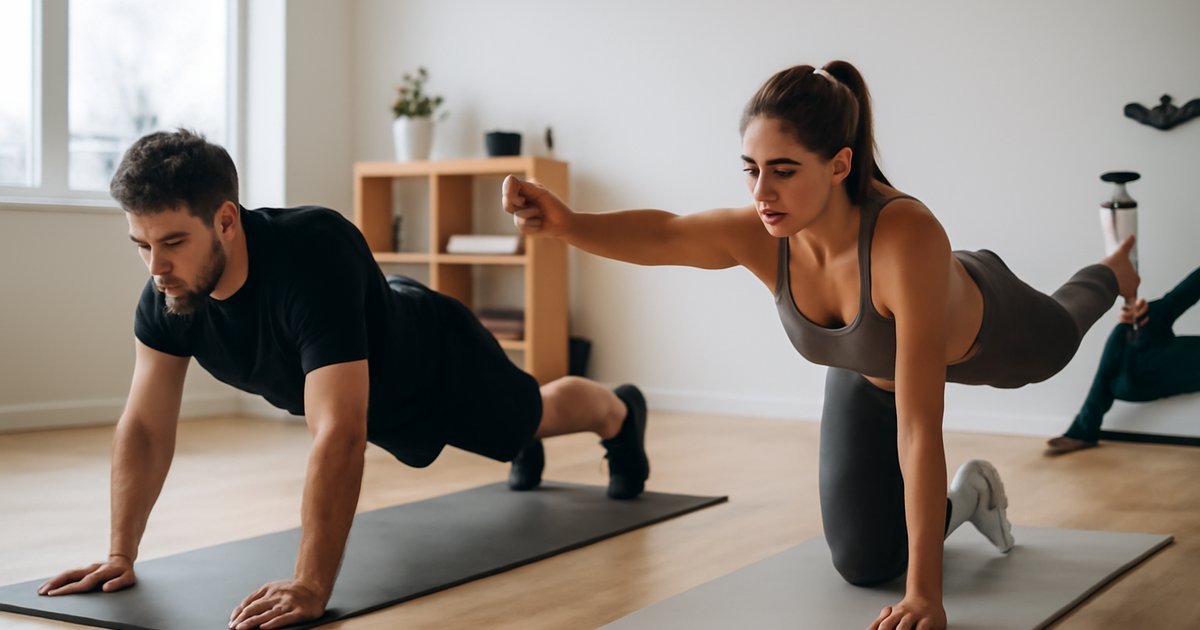
- Bird Dog — 3 sets of 8 reps per side. On hands and knees, extend the opposite arm and leg simultaneously while maintaining a neutral spine. Pause for 2 seconds at the top.
- Hollow Body Hold — 3 sets of 15–20 seconds. Lie on your back, arms overhead, legs straight and raised slightly. Press your lower back into the floor. This builds deep core tension without spinal flexion.
- Glute Bridge — 3 sets of 12 reps. Targets the posterior chain that supports your core from behind.
Intermediate Level (Weeks 5–10)
Now we add load, instability, and longer time under tension.
- Plank with Shoulder Taps — 3 sets of 10 taps per side. Tap each shoulder alternately while minimizing hip rotation.
- Pallof Press (using a resistance band or cable) — 3 sets of 10 reps per side. Stand perpendicular to the anchor, press the band straight out from your chest and hold for 2 seconds. This is a premier anti-rotation exercise. Resistance bands are ideal for this movement and easy to use at home.
- Side Plank with Hip Dip — 3 sets of 10 reps per side. Trains the lateral core and obliques.
- RKC Plank — 3 sets of 20 seconds. Unlike a standard plank, squeeze every muscle in your body — glutes, quads, lats, and abs — creating maximal tension. Research shows this dramatically increases core muscle activation compared to a passive hold.
Advanced Level (Weeks 11+)
- Ab Wheel Rollout — 3 sets of 6–10 reps. One of the highest-activation anti-extension exercises available.
- Hanging Leg Raise — 3 sets of 8–12 reps. Requires a pull-up bar; targets lower abs and hip flexors.
- Single-Leg Romanian Deadlift — 3 sets of 8 reps per side. Integrates core stability into full-body, functional movement patterns — exactly the kind of training your core was designed for. This complements functional fitness principles beautifully.
Common Mistakes That Sabotage Core Training Results
Even well-meaning, consistent exercisers make these errors — and they can stall progress or cause injury.
1. Overloading the spine with poor-form sit-ups
Traditional sit-ups place significant compressive force on the lumbar discs, especially when performed with the feet anchored and the spine forcefully flexed. Research from Dr. Stuart McGill at the University of Waterloo — widely regarded as the leading authority on spine biomechanics — consistently shows that repeated spinal flexion under load increases disc herniation risk over time. Fix: replace sit-ups with neutral-spine anti-movement exercises like dead bugs, bird dogs, and planks.
2. Training the core in isolation only
Doing 20 minutes of floor ab exercises is fine — but your core gets its most functional training during compound movements like deadlifts, squats, and carries. If you only do isolation work, you’re training the core in a very narrow context. Fix: treat core training as both dedicated practice AND a skill you integrate into full-body training sessions.
3. Neglecting the posterior chain
Most people train the front of their core (abs) while ignoring the back — glutes, erectors, and multifidus. This creates an imbalance that can pull the pelvis into an anterior tilt, increasing low back strain. Fix: include glute bridges, hip hinges, and back extensions in your core routine. Think 360-degree training, not just front-facing.
4. Holding their breath
Breath control is integral to core function. The diaphragm and pelvic floor work together to manage intra-abdominal pressure. Holding your breath through every rep breaks this coordination. Fix: practice bracing (taking a deep belly breath in and then bracing the abs as if ready to take a punch) before hard efforts, then exhale on the exertion.
5. Skipping progressive overload
The core adapts just like any other muscle. If you’re doing the same plank for the same duration every week for months, you’ve hit a plateau. Fix: apply the same progressive overload principles you’d use for any other muscle group — add time, reps, instability, or resistance over time.
What to Eat to Support Core Training and Recovery
Core training alone won’t make your midsection visible if your nutrition isn’t aligned. But more importantly, what you eat directly affects your core’s ability to recover, perform, and stay injury-resistant.
Protein is non-negotiable. The Academy of Nutrition and Dietetics recommends 1.2–2.0 grams of protein per kilogram of body weight for active adults. Protein supports muscle repair and helps maintain the lean mass that makes your core function efficiently. Focus on chicken, fish, Greek yogurt, eggs, legumes, and lean beef.
Anti-inflammatory foods support recovery. Chronic systemic inflammation impairs muscle repair and contributes to back pain. The American Heart Association and Dietary Guidelines for Americans both support diets rich in fatty fish (salmon, mackerel), leafy greens, berries, olive oil, and nuts as anti-inflammatory staples.
Magnesium and potassium matter. Muscle cramps and tightness in the core region are often tied to electrolyte imbalances. The USDA recommends foods like bananas, sweet potatoes, spinach, and pumpkin seeds as practical dietary sources.
Hydration affects muscle function. Even mild dehydration (1–2% of body weight) reduces muscle endurance and increases injury risk, according to research from the American College of Sports Medicine. Aim for consistent water intake throughout the day — not just during workouts.
Be mindful of excess processed food and alcohol. Both promote visceral fat accumulation around the midsection, which physically compresses the core musculature and increases metabolic risk. This isn’t about perfection — it’s about making the majority of your meals whole, minimally processed foods.
How Long Until You See Results? What to Track
Results depend on your starting point, consistency, and what you’re measuring. Here’s what science-backed timelines actually look like:
Weeks 1–2: You’ll likely notice improved body awareness and better posture during daily activities. This is neuromuscular adaptation — your nervous system is learning to recruit your core muscles more efficiently.
Weeks 3–6: Functional improvements become noticeable — less back fatigue during long sits, better balance, easier time holding static positions. Research consistently shows measurable strength and stability gains within this window with consistent training (3x per week).
Weeks 8–12: If your nutrition supports a healthy body composition, visual changes in the midsection may appear. Results here vary significantly based on individual body fat percentage, genetics, and diet quality.
What to track:
- Plank hold time (a reliable functional benchmark)
- How many reps of a given exercise you can complete with perfect form
- Back pain frequency and intensity (on a 1–10 scale)
- Posture quality after long work sessions
- How stable you feel during compound lifts like squats and deadlifts
If you’ve been training consistently for 12 weeks and still experience persistent back pain, limited range of motion, or significant discomfort during exercise, it’s time to consult a physical therapist or certified personal trainer for individualized assessment.
Frequently Asked Questions
How often should I train my core?
For most adults, 3–4 dedicated core sessions per week is the sweet spot. Because many core exercises are low-impact and don’t create significant muscle damage, you can train them more frequently than larger muscle groups — but rest days are still important for adaptation. If you also do compound training (like squats or deadlifts), your core is already working on those days too.
Can I get a flat stomach just from core exercises?
Not directly. Spot reduction — the idea that you can burn fat in a specific area through targeted exercise — has been consistently debunked by research in the Journal of Strength and Conditioning Research. Core training strengthens and tones the musculature underneath, but fat loss over the midsection comes from overall caloric balance and body composition changes. Both matter.
Is core training safe during pregnancy?
Many core exercises can be modified and are encouraged during pregnancy, but certain movements (like traditional crunches and full planks in later trimesters) may need to be avoided or adjusted due to diastasis recti risk. The American College of Obstetricians and Gynecologists recommends consulting your OB or a pelvic floor physical therapist for personalized guidance.
Are planks better than sit-ups for core strength?
For most people, yes — particularly from a spinal health perspective. Planks train isometric core stability with minimal spinal loading, which aligns with how the core functions in real life. Dr. Stuart McGill’s research specifically highlights anti-extension and anti-rotation exercises as superior for building functional, injury-resistant core strength compared to flexion-dominant exercises like sit-ups and crunches.
Can core training help with posture?
Absolutely — and this is one of its most underrated benefits. Weak deep core muscles, particularly the multifidus and transverse abdominis, allow the pelvis and spine to drift into poor alignment over time. Consistent core training — especially exercises that emphasize neutral spine positioning — can meaningfully improve postural habits, especially for people who sit for extended periods during the day.
Start Building Your Core the Right Way
Core training isn’t glamorous. It won’t always feel intense, and the results take time to show up in the mirror. But what it gives you — a pain-free back, better posture, stronger lifts, and a body that moves the way it’s supposed to — is worth every plank, every bird dog, and every mindful breath.
You don’t need a gym membership or expensive equipment. You need 15–20 minutes, three times a week, and the patience to trust the process. Start with the beginner exercises today. Do them well, build slowly, and your core will reward you for it — in the gym and in real life.
Pick one exercise from the beginner list above and commit to it every day this week. That’s your starting point.
This article is for informational and educational purposes only. The content is not intended to replace professional medical, nutritional, or fitness advice. Always consult a qualified healthcare provider, registered dietitian, or certified fitness professional before starting a new health program or making significant changes to your lifestyle.
Content reviewed by our wellness editorial team, with references to peer-reviewed research and guidelines from leading health organizations.