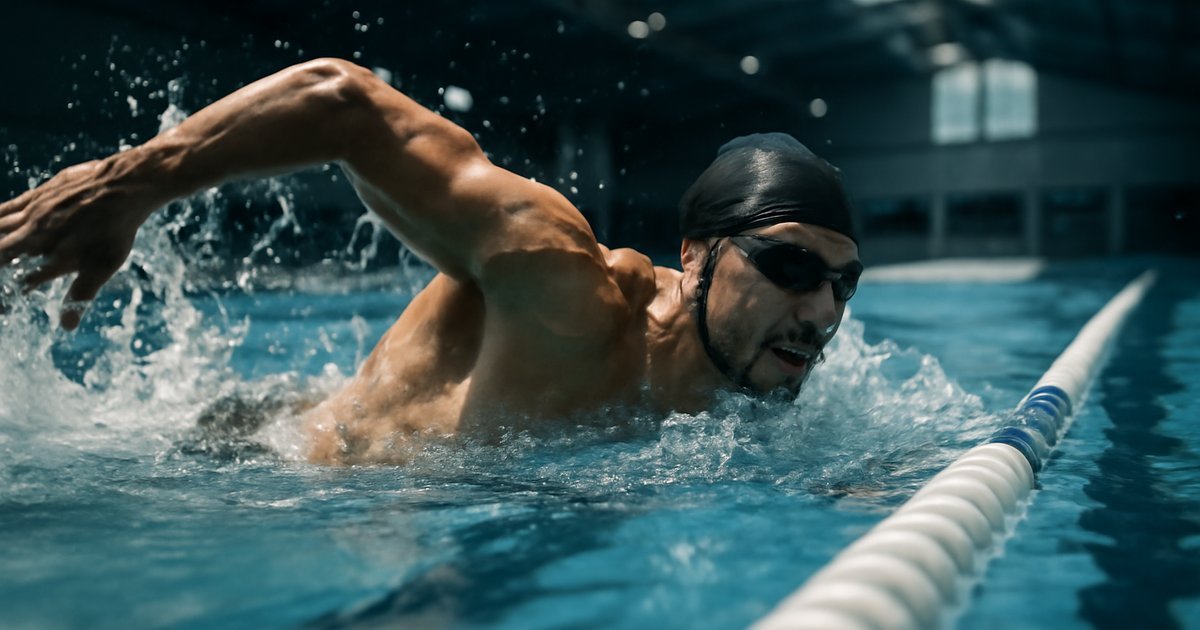
Swim Training for Fitness: Your Complete Guide to Getting Results in the Pool
Most people underestimate swimming — until they try their first serious lap session and can barely make it to the other end.
Here’s a number that might surprise you: swimming engages up to 90% of the body’s major muscle groups in a single workout. Yet it’s one of the most overlooked training methods among adults who are serious about getting fit.
Maybe you had swim lessons as a kid, or you’ve done laps occasionally on vacation — but there’s a big difference between casual swimming and swim training for fitness. When done with intention, swimming builds cardiovascular endurance, lean muscle, joint resilience, and mental clarity in ways that few other forms of exercise can match.
The challenge? Most adults don’t know how to structure a swim workout, what to focus on technically, or how to progress without plateauing after a few sessions. They jump in, swim until they’re out of breath, and wonder why they’re not seeing results.
This guide changes that. You’ll learn why swimming is one of the most effective all-body fitness tools available, how it works physiologically, how to build a real training plan from scratch, and what common mistakes are quietly slowing your progress. Whether you’re a beginner or a returning swimmer looking to level up, this is your roadmap.
Why Swim Training Matters More Than You Think
Swimming often gets written off as a “low-intensity” option — something for older adults in rehab or kids in summer camp. That reputation is outdated and flat-out wrong.
According to the American College of Sports Medicine (ACSM), swimming meets and exceeds the criteria for vigorous-intensity aerobic exercise when performed at moderate to high effort levels. A 155-pound adult can burn between 400 and 700 calories per hour depending on stroke and pace — comparable to running, without the joint impact.
What makes swimming particularly powerful is its dual demand: it trains your cardiovascular system and your muscular system simultaneously. Every stroke requires coordinated effort from your shoulders, back, core, hips, and legs. Your lungs learn to work more efficiently because you can’t just breathe whenever you want — you have to time it.
Research published in the International Journal of Aquatic Research and Education found that regular swimmers had significantly lower rates of cardiovascular disease, better blood pressure profiles, and improved cholesterol markers compared to sedentary individuals. In fact, a long-term study involving over 40,000 men found that swimmers had a 53% lower mortality rate from cardiovascular causes than non-swimmers.
For adults aged 25–60 — especially those managing joint pain, recovering from injury, or returning after a fitness break — swimming offers a way to train hard without stressing the tendons, cartilage, and bones that land-based exercise can aggravate. The buoyancy of water reduces effective body weight by up to 90%, dramatically decreasing impact load while maintaining training intensity.
How Swim Training Actually Works: The Science
Let’s bust the biggest myth first: swimming is not automatically easy on your body. Done incorrectly or with poor technique, it can cause shoulder impingement, neck strain, and lower back issues. Done correctly, it’s one of the most complete training modalities available.
Water is approximately 800 times denser than air, which means every movement you make in the pool is met with constant resistance. Unlike weights, which only load muscles during specific phases of a movement, water provides multidirectional resistance throughout the entire stroke cycle. This is why swimmers develop long, lean, functional muscle — not just isolated bulk.
From a cardiovascular standpoint, the horizontal body position during swimming is uniquely beneficial. When you’re prone in the water, your heart doesn’t have to work as hard against gravity to pump blood back from the legs. This means your heart rate at a given exertion level tends to run about 10-15% lower in water than on land — a phenomenon known as the “aquatic heart rate effect.” This is important when designing workouts: don’t judge swim intensity by heart rate the way you would on a treadmill.
A study published in the Journal of Strength and Conditioning Research demonstrated that 12 weeks of structured swim training significantly improved VO2 max — a key marker of cardiorespiratory fitness — in previously inactive adults. Participants also showed measurable improvements in muscular endurance in the shoulders, back, and core.
The four primary competitive strokes — freestyle, backstroke, breaststroke, and butterfly — each emphasize different muscle groups and energy systems. Most fitness swimmers rely heavily on freestyle, which is efficient and repeatable. But rotating strokes in training creates more comprehensive muscular development and reduces overuse injury risk.
How to Get Started: Building Your Swim Training Plan
You don’t need to swim like an Olympic athlete to get real results. What you do need is structure, progression, and basic technical awareness.
Step 1: Assess your starting point honestly.
Before building a plan, swim 200 meters (8 laps in a standard 25-meter pool) at a comfortable pace and note how you feel. Are you gasping by lap 4? Can you maintain a consistent stroke? This tells you where to start — without ego.
Step 2: Prioritize technique before volume.
For beginners, spending 2–3 sessions working on breathing mechanics, body position, and stroke fundamentals will deliver more long-term results than simply grinding out laps with poor form. Consider one session with a certified swim coach or using a well-reviewed instructional resource to self-assess your technique.
Step 3: Use interval training, not just continuous laps.
Swimming a continuous 30 minutes without structure is a start, but interval training — alternating effort with rest — is where real fitness gains happen. A simple beginner structure:
- Warm-up: 200m easy freestyle
- Main set: 6 x 50m at moderate-to-hard effort, 20–30 seconds rest between each
- Cool-down: 100m easy backstroke or light freestyle
- Total: ~600-700m in 25-35 minutes
Intermediate option: Increase main set to 8 x 75m or 4 x 100m with 15–20 seconds rest. Add a drill set (kickboard work or pull buoy) between warm-up and main set.
Advanced option: Incorporate pyramid sets (50m, 100m, 150m, 200m, back down), threshold sets at race pace, and cross-train with Zone 2 cardio sessions on recovery days for a well-rounded aerobic base.
Step 4: Train 3-4 times per week for meaningful adaptation.
The ACSM recommends at least 150 minutes of moderate-intensity or 75 minutes of vigorous aerobic activity per week. Three to four swim sessions of 30–45 minutes each satisfy this and provide enough frequency for skill improvement and physiological adaptation.
Common Mistakes That Sabotage Your Swim Fitness Progress
Swimming looks fluid and effortless when done well. It rarely starts that way — and several common errors silently drain your progress.
Mistake 1: Only swimming freestyle and ignoring other strokes.
Freestyle is efficient, but exclusively swimming one stroke overloads the same muscle groups, increases shoulder impingement risk, and limits overall athletic development. Even adding backstroke on recovery laps significantly changes the muscular demand and reduces cumulative stress on the rotator cuff. If you’re curious about building balanced upper-body pulling strength, resistance band training for the shoulders can be an excellent dry-land complement.
Mistake 2: Neglecting core engagement in the water.
Many swimmers power entirely from their arms, letting their hips drag low and their legs sink. This destroys efficiency and burns you out quickly. The core — specifically the deep stabilizers — should be continuously active to maintain a horizontal body position. Think of it as a plank that moves forward. Complementing your swim training with dedicated core training on dry land will directly improve your body position in the water.
Mistake 3: Skipping warm-up and cool-down.
Jumping straight into hard effort is a common mistake, especially for time-crunched adults. Cold muscles and limited blood flow to the shoulders make injury significantly more likely. Even a 200m easy warm-up and a 100m cool-down materially affects recovery quality and injury risk over time.
Mistake 4: Never tracking pace or effort.
Swimming aimlessly without tracking distance or pace is the aquatic equivalent of spending 45 minutes on a treadmill at an easy stroll and calling it a hard workout. Use a waterproof fitness tracker or simply count laps and use the pool clock to track 50m or 100m intervals. Progress requires measurement.
Mistake 5: Under-fueling for swim sessions.
Swimming in cool water suppresses the perception of sweat and exertion. Many swimmers underestimate their caloric and fluid needs. The Academy of Nutrition and Dietetics recommends adequate carbohydrate intake before endurance sessions and protein-rich recovery nutrition within 30–60 minutes afterward to support muscle repair.
What to Eat to Support Your Swim Training
Swim training creates real metabolic demand — and your nutrition needs to match that demand to see results in body composition, energy, and performance.
Before swimming (1-2 hours prior): Focus on easily digestible carbohydrates — a banana with nut butter, oatmeal with fruit, or whole grain toast with eggs. Avoid heavy fat or high-fiber meals that slow digestion and can cause stomach discomfort in the horizontal position.
Post-swim recovery (within 60 minutes): Aim for a 3:1 carbohydrate-to-protein ratio. Greek yogurt with berries and granola, a protein smoothie with fruit, or eggs with whole grain toast all work well. According to the USDA Dietary Guidelines, adults engaged in regular vigorous exercise should prioritize high-quality protein sources at each meal to support muscle protein synthesis.
Hydration is non-negotiable: Water temperature suppresses thirst signals, but you are still sweating and losing fluid. Drink 16–20 oz of water before your session and aim to rehydrate with at least 16 oz per 30 minutes of swim training. For sessions over 60 minutes, an electrolyte drink or electrolyte-containing foods (like coconut water or a small handful of salted nuts) can support fluid balance.
Protein intake across the day: For active adults, the Academy of Nutrition and Dietetics recommends 1.2–2.0 grams of protein per kilogram of body weight per day. A 160-pound adult (approximately 73 kg) aiming to build muscle while swimming should target roughly 88–146 grams of protein spread across 3–4 meals.
How Long Until You See Results — and What to Track
This is where honesty matters. Realistic timelines depend heavily on your starting fitness level, session frequency, and sleep and nutrition quality — but here’s a general framework based on available research:
Weeks 1–3: Technique adaptation and cardiovascular adjustment. You’ll likely feel tired, inefficient, and unsure if anything is happening. This is normal. Your nervous system is learning movement patterns, and your lungs are adapting to rhythmic breathing under exertion.
Weeks 4–6: Noticeable improvements in endurance. Intervals that left you gasping will feel more manageable. You may notice improved sleep quality and reduced muscle tension — early benefits that are well-documented in aquatic exercise research from Harvard Health Publishing.
Weeks 8–12: Measurable changes in cardiovascular capacity, and for those pairing swim training with adequate protein, early signs of body recomposition — reduced body fat percentage and improved muscular definition, particularly in the shoulders, back, and core.
What to actively track:
- Lap times per 100m at a consistent perceived effort
- Total weekly yardage or meterage
- Resting heart rate (a reliable marker of improving aerobic fitness)
- How you feel at the end of a set — are intervals that were hard in week 2 now feeling manageable?
If you’ve been swimming consistently for 10–12 weeks and are not seeing any improvement in endurance, energy, or pace, consider consulting a certified fitness professional or registered dietitian to evaluate your training load, recovery, and nutritional intake.
Frequently Asked Questions About Swim Training for Fitness
Q: Can swimming help with weight loss?
Swimming can support weight loss when combined with appropriate nutrition and a consistent caloric deficit. It burns significant calories and preserves lean muscle, which supports long-term metabolic health. However, results vary based on individual factors including diet quality, session intensity, and frequency. Don’t expect swimming alone to override a poor diet.
Q: Do I need to know all four strokes to get fit?
No — most fitness swimmers use freestyle for the majority of their training. However, learning backstroke adds meaningful variety, reduces overuse injury risk, and engages different muscle groups. Breaststroke and butterfly are technically demanding and not necessary for general fitness goals.
Q: Is swimming good for building muscle?
Swimming builds muscular endurance and functional strength — particularly in the upper back, shoulders, and core — but it is not the most efficient method for maximum hypertrophy (muscle size). If building significant muscle mass is your primary goal, pairing swimming with land-based strength training will produce better results than swimming alone.
Q: How do I avoid shoulder pain from swimming?
Shoulder pain in swimmers is usually caused by poor stroke mechanics, too much volume too soon, or neglected shoulder stability work. Focus on high elbow catch position in freestyle, rotate your body with each stroke to engage your back rather than just your shoulder, and incorporate dry-land shoulder stability exercises. If pain persists beyond 2 weeks, consult a physical therapist.
Q: What’s a good beginner swim workout?
Start simple: 200m easy warm-up, 4–6 x 50m moderate effort with 30 seconds rest, and a 100m easy cool-down. Total: 500–700m. Focus on controlled breathing and maintaining form rather than going fast. As your endurance builds over 3–4 weeks, increase the number of intervals or reduce rest time.
Start Where You Are — and Trust the Process
Swim training is one of those rare fitness tools that rewards patience. The first few sessions may feel awkward, breathless, and humbling. That’s not failure — that’s your body learning something new.
What the research consistently shows is that structured swim training delivers real, measurable improvements in cardiovascular fitness, muscular endurance, body composition, and even mental well-being. But it takes consistency, a bit of structure, and enough self-awareness to fix the small errors that hold most people back.
Your next step is simple: book a lane at your local pool this week. Start with the beginner session outlined above — 500 to 700 meters with rest intervals. Track how you feel. Then show up again three days later.
The pool doesn’t reward perfection. It rewards showing up.
This article is for informational and educational purposes only. The content is not intended to replace professional medical, nutritional, or fitness advice. Always consult a qualified healthcare provider, registered dietitian, or certified fitness professional before starting a new health program or making significant changes to your lifestyle.
Content reviewed by our wellness editorial team, with references to peer-reviewed research and guidelines from leading health organizations.
Leave a Reply